Sid Meier's Civilization VI
## Game Introduction ### Overview Sid Meier's Civilization VI is a turn-based strategy 4X game (eXplore, eXpand, eXploit, eXterminate) developed by Firaxis Games and published by 2K Games. It is the sixth main installment in the long-running Civilization series, first released on October 21, 2016 f...

Download & Installation
Download & Installation for Sid Meier's Civilization VI
Overview
Sid Meier's Civilization VI is available on multiple platforms including PC (Windows, Mac, Linux), consoles (PlayStation 4, PlayStation 5, Xbox One, Xbox Series X|S, Nintendo Switch), and mobile devices (iOS and Android). This guide covers official download sources, step-by-step installation for each platform, system requirements, account prerequisites, common errors, and post-installation verification.
---
System Requirements
PC (Windows)
| Component | Minimum | Recommended |
|---|---|---|
| OS | Windows 7 64-bit | Windows 10/11 64-bit |
| Processor | Intel Core i3 2.5 GHz or AMD Phenom II 2.6 GHz | Intel Core i5 2.5 GHz or AMD FX 8350 4.0 GHz |
| Memory | 4 GB RAM | 8 GB RAM |
| Graphics | 1 GB VRAM (NVIDIA GeForce 650 / AMD Radeon HD 7770) | 2 GB VRAM (NVIDIA GeForce 770 / AMD Radeon R9 290) |
| DirectX | Version 11 | Version 11 |
| Storage | 15 GB free space | 15 GB free space |
Mac
| Component | Minimum | Recommended |
|---|---|---|
| OS | macOS 10.12 (Sierra) | macOS 10.14 (Mojave) or later |
| Processor | 2.7 GHz Intel Core i5 | 3.0 GHz Intel Core i7 |
| Memory | 4 GB RAM | 8 GB RAM |
| Graphics | 1 GB VRAM (Intel HD Graphics 5300) | 2 GB VRAM (AMD Radeon R9 M290X) |
| Storage | 15 GB free space | 15 GB free space |
Linux
| Component | Minimum | Recommended |
|---|---|---|
| OS | Ubuntu 16.04/SteamOS 2.0 | Ubuntu 18.04 or later |
| Processor | Intel Core i3 2.5 GHz or AMD Phenom II 2.6 GHz | Intel Core i5 2.5 GHz or AMD FX 8350 4.0 GHz |
| Memory | 4 GB RAM | 8 GB RAM |
| Graphics | 1 GB VRAM (NVIDIA GeForce 650 / AMD Radeon HD 7770) | 2 GB VRAM (NVIDIA GeForce 770 / AMD Radeon R9 290) |
| Storage | 15 GB free space | 15 GB free space |
Console (PlayStation / Xbox / Switch)
- Storage: ~10 GB (varies by platform and DLC)
- Internet: Required for online multiplayer and some features. The base game can be played offline after initial installation.
- Account: PlayStation Network (PS4/PS5), Xbox Live (Xbox), Nintendo Account (Switch).
- iOS: iPad with iOS 12.0 or later, 4 GB RAM recommended, ~5 GB free space. (Not supported on iPhone.)
- Android: Tablet with 4 GB RAM, Android 8.0 or later, GPU: Adreno 530 / Mali-G71 / equivalent, ~5 GB free space.
- Steam: [store.steampowered.com](https://store.steampowered.com)
- Epic Games Store: [store.epicgames.com](https://store.epicgames.com)
- Windows Store (also via Xbox Game Pass for PC): [Microsoft Store](https://www.microsoft.com/store)
- Mac App Store (for macOS): [App Store](https://apps.apple.com)
- Linux: Via Steam (Proton enabled by default)
- PlayStation 4 / PlayStation 5: PlayStation Store
- Xbox One / Xbox Series X|S: Microsoft Store (Xbox)
- Nintendo Switch: Nintendo eShop
- iOS: App Store (iPad only)
- Android: Google Play Store (tablets only)
Mobile (iOS / Android)
---
Official Download Sources
PC
Consoles
Mobile
---
Step-by-Step Installation
PC – Steam
1. Create or log in to your Steam account using the Steam client or website.
2. Open the Steam client and go to the Store tab.
3. Search for "Sid Meier's Civilization VI" and select the game.
4. Click Add to Cart and complete purchase (or click Install if already owned).
5. Navigate to your Library and find Civilization VI in your list.
6. Click Install – choose the installation directory (default is `C:\Program Files (x86)\Steam\steamapps\common\`).
7. Launch the game from your Library after installation completes.
PC – Epic Games Store
1. Download and install the Epic Games Launcher from [epicgames.com](https://www.epicgames.com).
2. Log in or create an Epic Games account.
3. Go to the Store tab and search for Civilization VI.
4. Click Get (or Buy if not free) and complete the transaction.
5. The game will appear in your Library. Click Install and choose a folder.
6. After installation, click Launch.
PC – Windows Store / Xbox Game Pass
1. Open the Microsoft Store app or Xbox app (if subscribed to Game Pass).
2. Search for "Civilization VI" and select the game.
3. Click Install (or Get – if you own a license or have Game Pass).
4. Installation will begin automatically to your default drive (can be changed in Windows Settings > Storage).
5. Once done, click Play from the Microsoft Store or Xbox app.
PlayStation 4 / PlayStation 5
1. Ensure your console is connected to the internet and you are signed in to PlayStation Network.
2. Go to the PlayStation Store from the home screen.
3. Search for "Civilization VI".
4. Select the game and the edition you want (Standard, Digital Deluxe, or Platinum Edition).
5. Click Download (or Purchase first if not already owned).
6. The game will download and install automatically. Monitor progress from the Downloads section.
7. Once finished, the game icon will appear on your home screen – launch it.
Xbox One / Xbox Series X|S
1. Sign in to your Xbox Live account.
2. Open the Microsoft Store (or the Game Pass app if applicable).
3. Search for "Civilization VI".
4. Select the desired edition and click Install (or Get if using Game Pass).
5. The game will download to your console. You can monitor progress in My games & apps > Manage > Queue.
6. After installation, launch from the home screen or My games & apps.
Nintendo Switch
1. Connect your Switch to the internet and sign in to your Nintendo Account.
2. Open the Nintendo eShop from the home menu.
3. Search for "Civilization VI".
4. Choose the edition (Standard, Platinum, etc.) and select Proceed to Purchase (or Download if already bought).
5. Enter your payment details if required and confirm.
6. The game will download automatically. You can see progress on the home screen.
7. Once fully downloaded, the game icon will display normally – tap to launch.
iOS (iPad)
1. Open the App Store on your iPad.
2. Search for "Civilization VI".
3. Tap the Get button next to the game (price will appear; may require Touch ID/Face ID).
4. Wait for the download to complete. The app icon will appear on your home screen.
5. Tap the icon to launch. Ensure your iPad meets the minimum specs (see requirements above).
Android (Tablets)
1. Open the Google Play Store on your Android tablet.
2. Search for "Civilization VI".
3. Tap Install (if free or after purchasing).
4. Accept permissions if prompted.
5. Wait for the download and installation. Launch from the Play Store or app drawer.
---
Account Requirements
| Platform | Required Account | Notes |
|---|---|---|
| PC (Steam) | Steam account | DLC purchased on Steam stays with your account. |
| PC (Epic) | Epic Games account | Cross-platform multiplayer not supported with Steam. |
| PC (Windows Store) | Microsoft account | Xbox Play Anywhere: save/play on Xbox and PC with same account. |
| PlayStation | PlayStation Network (PSN) | Online multiplayer requires PlayStation Plus subscription. |
| Xbox | Xbox Live account | Online multiplayer requires Xbox Game Pass Core or Ultimate. |
| Nintendo Switch | Nintendo Account | Online multiplayer requires Nintendo Switch Online subscription. |
| iOS | Apple ID | Single device license; cloud save via Apple Game Center. |
| Android | Google account | Cloud save via Google Play Games. |
First Launch Setup
1. Language Selection: On first launch, the game may prompt you to choose a language. This can be changed later in Options > Interface > Language.
2. Graphics Options: PC users can adjust resolution, quality preset, and other settings. Console/mobile users typically have auto-detection.
3. Account Linking (PC/Console): Some platforms (e.g., Steam) may link to a 2K account for cloud saves and cross-progression (only between Steam versions, not across platforms).
4. Tutorial: The game offers an interactive tutorial. It's recommended for new players.
5. Mods (PC): If you intend to use mods, subscribe via Steam Workshop or manually install from reputable sites. Enable mods from the main menu > Additional Content.
6. Online Multiplayer: You may be asked to create a 2K account or sign in to enable multiplayer features.
---
Common Installation Errors and Fixes
Error: "Missing MSVC Runtime" (PC)
- Fix: Install the latest Microsoft Visual C++ Redistributable from [Microsoft's official site](https://support.microsoft.com/en-us/topic/the-latest-supported-visual-c-downloads). Restart your PC and relaunch the game.
- Fix: Free up at least 15 GB (more with DLC). Check your installation drive. Delete temporary files or move other games to external storage.
- Fix:
- Fix: Reinstall DirectX. In Windows, run `dxdiag` to check version. Install the DirectX End-User Runtimes from Microsoft.
- Fix: Check your internet connection. Restart the console/device. Ensure your accounts (PSN, Xbox Live, Nintendo Account) are signed in properly.
- Fix: Pause and resume the download. If that fails, restart the launcher. Verify game files.
- Fix: Ensure your device is on the supported list (iPad only for iOS; Android tablets with 4GB RAM minimum). Check OS version updates.
- The App Store/Google Play Store automatically verifies installation. To check for updates, go to the store, search for Civilization VI, and see if an Update button appears.
- If the app crashes, try uninstalling and reinstalling (back up saves via cloud after linking your account).
- Cross-Platform Saves: Not supported between different platforms. However, Xbox and Windows Store (Microsoft Store) versions share saves via Xbox Play Anywhere.
- DLC and Add-ons: Purchase DLC from the same store as the base game. Steam Workshop mods are only compatible with the Steam version.
- Backup Saves: On PC, save files are located at `Documents\My Games\Sid Meier's Civilization VI\Saves` (Windows) – back them up regularly.
- Performance: If the game runs slowly on PC, lower graphics settings or disable fog of war animations. Mobile devices may benefit from closing background apps.
Error: "Insufficient Disk Space"
Error: "Game fails to launch / black screen on startup" (PC)
1. Update your graphics drivers.
2. Disable overlays (Steam overlay, Discord overlay).
3. Verify game files (see Post-Installation Verification below).
4. Run the game as administrator (right-click exe > Properties > Compatibility).
Error: "DirectX Error"
Error: "Unable to connect to server for authentication" (Console/Mobile)
Error: "Download stuck at 99%" (Steam/Epic)
Error: "The game is not compatible with your device" (Mobile)
---
Post-Installation Verification
PC – Steam
1. In your Steam Library, right-click Sid Meier's Civilization VI.
2. Select Properties > Local Files.
3. Click Verify integrity of game files. Steam will check and repair any corrupted files.
PC – Epic Games Store
1. Open Epic Games Launcher, go to Library.
2. Click the three dots (…) under Civilization VI and select Verify. The launcher will scan and fix issues.
PC – Windows Store / Xbox App
1. Open the Xbox app or Settings > Apps > Apps & features.
2. Find Civilization VI, select Advanced options.
3. Scroll down to Reset and click Repair or Reset (reset will not delete saves but may require reconfiguring settings).
PlayStation
1. From the home screen, highlight Civilization VI and press the Options button.
2. Select Check for Update to ensure the latest version is installed.
3. If you experience issues, go to Settings > Storage > System Storage > Applications > Civilization VI, then choose Delete and reinstall (saves are stored separately).
Xbox
1. Press the Xbox button to open the guide, go to My games & apps > See all > Games.
2. Highlight Civilization VI, press the Menu button and select Manage game and add-ons.
3. Under File info, you can check for updates. For repair, you can uninstall and reinstall.
Nintendo Switch
1. From the home menu, highlight the game, press the + button.
2. Select Software Update > Via the Internet to check for updates.
3. If bugs occur, archive the game (Settings > Data Management > Archive Software) and redownload.
Mobile (iOS/Android)
---
Additional Tips
This guide covers all major legitimate platforms. Always download from official storefronts to avoid malware and ensure updates.
Game Introduction
Game Introduction
Overview
Sid Meier's Civilization VI is a turn-based strategy 4X game (eXplore, eXpand, eXploit, eXterminate) developed by Firaxis Games and published by 2K Games. It is the sixth main installment in the long-running Civilization series, first released on October 21, 2016 for Windows, with subsequent releases on macOS, Linux, and various consoles. The game challenges players to lead a civilization from the ancient era into the information age, pursuing one of several victory conditions: Domination, Science, Culture, Religion, or Score.
Genre
Turn-based strategy, 4X (eXplore, eXpand, eXploit, eXterminate), Grand strategy.
Developer & Publisher
- Developer: Firaxis Games (lead), with contributions by Aspyr (ports)
- Publisher: 2K Games
- Windows: October 21, 2016
- macOS & Linux: October 21, 2016 (Aspyr)
- iPadOS: December 21, 2017
- PlayStation 4 & Xbox One: November 22, 2019
- Nintendo Switch: November 16, 2018
- PlayStation 5 & Xbox Series X|S: November 22, 2019 (backward compatible, with enhancements later)
- PC: Windows, macOS, Linux
- Consoles: PlayStation 4, PlayStation 5, Xbox One, Xbox Series X|S, Nintendo Switch
- Mobile: iPad (iOS only, not iPhone)
- Cloud: GeForce Now, Stadia (defunct)
- America - Teddy Roosevelt: Bonus to culture and military when defending the continent.
- Egypt - Cleopatra: Trade route bonuses and ability to build districts faster.
- India - Gandhi: Religious bonuses, and a notorious hidden agenda that leads to nuclear proliferation.
- Rome - Trajan: Automatic monuments in new cities and free roads.
- Japan - Hojo Tokimune: Adjacency bonuses for districts and civilian units.
- Age: Mostly 13+ (rated E10+ by ESRB / PEGI 12)
- Skill level: From newcomers (via tutorials and advisor) to hardcore fans
- Interests: History buffs, strategy gamers, city-builders, and those who enjoy deep systems.
- Single Player: Play against AI opponents (up to 20 leaders) on various map sizes and difficulties.
- Multiplayer: Up to 20 players in hot-seat, LAN, or online (via 2K account). Includes team play.
- Scenarios: Preset historical scenarios like "Outback Tycoon" (Australia) or "Conquest of Arabia."
- Tutorials: The "First Look" videos and in-game advisor help beginners.
- Offline: Full single-player without internet required.
- Online: Multiplayer requires internet connection and a 2K account. Cloud saves available across platforms (via Steam, Epic, or 2K account). Leaderboard and challenges (occasional online events).
- Rise and Fall (Feb 2018): Adds Great Ages, Loyalty, Governors, Emergencies, and new leaders.
- Gathering Storm (Feb 2019): Introduces climate change, natural disasters, World Congress, diplomatic victory, and more.
- New Frontier Pass (May 2020-Sep 2021): A season pass including 8 new civilizations/leaders, 9 game modes (like Apocalypse, Secret Societies, and Zombie Defense), and new world wonders.
- Leader Pass (Nov 2022-Feb 2023): Adds new personas and leaders for existing civilizations, plus the ability to choose any leader for any civilization.
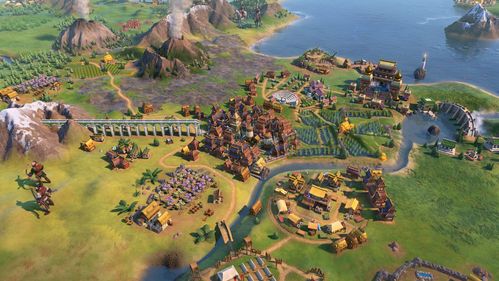
- Districts & Wonders: Cities are built on the map with districts (campus, holy site, etc.) requiring careful placement for adjacency bonuses. Wonders now take up a tile.
- Active Tech & Civics Trees: Players can boost research by performing in-game actions (e.g., building a quarry boosts Masonry). Eurekas and Inspirations speed up progression.
- Government Policies: A flexible card system that changes over time (e.g., Autocracy, Republic, etc.) with policy slots for military, economic, diplomatic, and wildcard bonuses.
- Unstacked Units: Military units can no longer stack, making positioning and warfare more tactical.
- Dynamic Diplomacy: A more complex AI with hidden agendas and possibilities for alliances, trade, and espionage.
- World Congress (in Gathering Storm): Players vote on global resolutions, affecting the game world.
- Environmental Simulation (Gathering Storm): Climate change, rising sea levels, volcanoes, hurricanes, and floods add unpredictability.
Release Timeline
Platforms
Story Overview & Setting
Civilization VI does not have a traditional narrative; instead, it offers a sandbox historical simulation where players rewrite history. The game spans over 6,000 years of human history, from 4000 BC to the near future. Each game is procedurally generated on a new map, ensuring no two playthroughs are identical. Players choose from dozens of civilizations (including famous leaders like Cleopatra, Gandhi, and Teddy Roosevelt) and guide them through eras, technologies, government policies, and cultural advances.
Main Characters (Leaders)
Each civilization is led by a historical figure with unique abilities, units, and infrastructure. Examples:
Many leaders have multiple personas (e.g., Rough Rider Teddy Roosevelt vs. Bull Moose Teddy Roosevelt) added via DLC.
Core Appeal
The game's appeal lies in its deep strategic layer: balancing expansion, military, economy, culture, science, and diplomacy. The "one more turn" phenomenon is legendary – players often find themselves immersed for hours. The hexagonal tile grid, active research trees, policy cards, and district systems (introduced in Civ VI) allow for complex city planning and specialization.
Target Audience
Game Modes
Online & Offline Support
DLC & Expansions Overview
Civilization VI has extensive post-launch content:
Additionally, there are smaller DLC packs (e.g., Persia & Macedon, Australia, Vikings, Poland, etc.). The complete edition includes all major expansions and DLC.
What Makes Civilization VI Unique?
The combination of historical leaders, deep strategic choices, and endless replayability makes Civ VI a benchmark in the 4X genre.
Conclusion
Whether you're a veteran strategist or a newcomer, Sid Meier's Civilization VI offers an unmatched journey through human civilization. With constant updates, a vibrant modding community, and multiple ways to win, it remains one of the most engaging strategy games on the market.
Getting Started
Getting Started with Sid Meier's Civilization VI
Your First Hour: A Step-by-Step Walkthrough
Civilization VI is a deep turn-based strategy game where you guide a civilization from the Stone Age to the Space Age. As a brand-new player, your first hour sets the foundation for your entire game. Follow this walkthrough:
1. Launch the Game and Start a New Game
- From the main menu, select Single Player > Play Now (or New Game for more settings).
- Play Now uses default settings (Continents map, Prince difficulty, standard speed) – ideal for beginners.
- If you click New Game, leave most settings default. Choose a simple civilization like Rome (Trajan) or Egypt (Cleopatra) – they have straightforward bonuses.
2. Choosing Your Civilization ("Character Creation")
- There is no traditional character creator. You select a historical leader, each with unique bonuses, units, and buildings.
- For your first game, pick Rome (Trajan). Bonuses: +1 Production per city (from the start), free monument in every city, and stronger roads. Very newbie-friendly.
- Avoid advanced civs like Germany (district-focused) or Japan (requires careful placement).
3. The First Turn – Spawning & Settling
- Your starting Settler and Warrior appear somewhere on the map. The game suggests a settle location (white hex with a blue circle).
- Before moving your Settler, move your Warrior one or two hexes to scout the immediate area. Look for:
- Fresh water: River, lake, or oasis (without fresh water, your city will grow slowly).
- Good terrain: Plains (2 food, 2 production) are best. Avoid tundra and desert.
- Avoid moving your Settler more than 2-3 hexes – it's risky and wastes turns.
- Once you find a good spot, click the Settler and then the Found City button (looks like a tent) on the hex. Name your capital (default is fine).
4. First City Production & Tech Choice
- After founding, the city screen opens. Your city will start building a Scout by default. Keep this – Scouts are vital for exploring.
- Research: Open the tech tree (top-left corner, lightbulb icon). Research Pottery first – it unlocks the Holy Site district and allows farms (more food).
- Civic Tree: Open the civic tree (top-left, wings icon). Research Code of Laws – it grants your first government policy card (usually choose God King for +1 Faith early).
5. Turn 2-20: Exploration & Early Build Order
- Warrior movement: Scout in one direction until you encounter other civs or city-states. Hug hills for better vision.
- Scout movement: When the Scout finishes, send it in the opposite direction. Put it on "/explore" mode (right-click map with Scout selected, but manual is better).
- Build order:
1. Scout (already in progress)
2. Builder (worker) – after Scout, build a Builder to improve tiles.
3. Monument (optional) – but Rome gets it free, so build a Slinger (ranged unit) instead.
- Important: Do not build more than 2-3 units early. You need an army but not too many – they cost gold maintenance.
6. First 30 Turns: Found Second City & Meet Others
- After researching Pottery and then Writing, start building a Settler in your capital once it reaches population 2 (around turn 25-30).
- When the Settler finishes, send it with a Warrior escort to a new location. Look for fresh water again.
- Meanwhile, explore to find city-states and other civs. Sending a delegation (diplomacy) costs 25 gold – worth it to build relations.
- Tip: Do not declare war or provoke anyone in the first 60 turns.
Controls Across All Platforms
Civilization VI is available on PC, PlayStation 4/5, Xbox One/Series X|S, Nintendo Switch, and mobile (iOS/Android). Controls vary slightly but the core actions are similar.
#### PC / Mac / Linux (Keyboard & Mouse)
- Left-click: Select unit/building;
- Right-click: Move unit, attack (if enemy tile), or open context menu;
- Mouse Wheel: Zoom in/out;
- W/A/S/D: Scroll map;
- Escape: Open menu/back;
- B: Activate a unit’s action (e.g., Builder improvements);
- N: Next unit;
- F1: Empire overview;
- F2: Tech tree;
- F3: Civics tree;
- F4: Culture overview;
- Enter: End turn.
- Left Stick: Move cursor;
- Right Stick: Scroll map;
- A (Xbox) / X (PS): Confirm/select;
- B / Circle: Cancel/back;
- Y / Triangle: Open action/unit menu;
- X / Square: Quick unit action (e.g., fortify, plant forest);
- RB/R1 + LB/L1: Cycle through units/cities;
- View/Select: Open empire overview;
- Menu/Options: Game menu.
- Same as Xbox/PS but with A (confirm), B (back), X (quick action), Y (action menu).
- ZL/ZR to scroll map faster.
- Tap to select and move; drag to scroll; pinch to zoom.
- Bottom toolbar has action buttons for current unit.
- Top Bar:
- Bottom Panel:
- Left Side Icons (vertical):
- Right Side:
- City Banner: Colored bar on each city with health bar, culture/growth progress.
- Don't settle without fresh water – unless you have no choice (reload the game or accept slow growth).
- Don't build too many military units early – they drain gold. Stick to 2-3 units until you have 3 cities.
- Don't ignore amenities – If your city is unhappy (frowning face), growth stops. Have at least one Luxury resource improved.
- Don't try to build every wonder – Wonders are risky. Only try one early wonder if you have strong production.
- Don't declare war without a plan – Early wars are costly and distract from development.
- Don't neglect science – Research is king. Always have a tech in progress.
- Don't let your Scout die – They are fragile. Keep them away from barbarians.
- [ ] Start a new game as Rome (or Egypt).
- [ ] Move Warrior to scout immediate area.
- [ ] Settle capital on fresh water (preferably on Plains Hills).
- [ ] Start building a Scout.
- [ ] Research Pottery.
- [ ] Send delegation to first civilization met (costs 25 gold).
- [ ] Select first civic: Code of Laws.
- [ ] Assign policy card "God King" (yields +1 Faith).
- [ ] When Scout finishes, send him exploring in opposite direction of Warrior.
- [ ] Build a Builder.
- [ ] Research Writing.
- [ ] Use Builder to improve a wheat/rice tile (farm) and a hill (mine).
- [ ] Find and kill any barbarian scouts near your borders.
- [ ] When population reaches 2, start building a Settler.
- [ ] Choose Pantheon after earning enough Faith (prefer Religious Settlements).
- [ ] Meet at least one city-state and get the free envoy.
- [ ] Place your first district (Campus if possible) in the capital.
- [ ] Use the "Next Action" hotkey to ensure no idle units.
#### Xbox & PlayStation (Controller)
#### Nintendo Switch
#### Mobile (iOS/Android)
UI Overview – Key Elements
When you start a game, the screen shows:
- Left: Civ name, leader icon, and gold, science, culture, faith, and diplomatic favor totals (in that order from left).
- Right: Turn counter, time, and achievements.
- Left: Mini-map (click to expand).
- Center: Current unit/city action buttons (e.g., move, attack, found city).
- Right: End Turn button (big arrow).
- Tech Tree (lightbulb)
- Civics Tree (wings)
- Great People (star)
- Religion (scroll) – only after founding a religion
- Government (palace)
- Trade Routes (cart)
- Envoy screen (flag)
- Empire lens (cog)
- Notifications (events, diplomatic messages) appear as small pop-up boxes. Click to see.
- Combat preview (when selecting an enemy unit).
Pro tip: Mouse over any icon to see a tooltip explaining it.
Essential Early Objectives (First 50 Turns)
1. Settle your capital on fresh water – No fresh water = -2 Food per turn. Huge penalty.
2. Explore with Scout and Warrior – Map knowledge = better decisions. Encountering city-states early gives a free envoy.
3. Improve a tile with a Builder – Build a farm on a wheat/rice tile (3 food) or a mine on a hill (2 production).
4. Found a second city – Ideally before turn 40. More cities = more production.
5. Meet at least one other civ and one city-state – Send delegation (25 gold) to the first civ you meet to boost diplomacy.
6. Choose a pantheon (around turn 10-20) – When you get enough Faith, pick a pantheon belief. "Religious Settlements" (free Settler) is excellent for beginners or "Fertility Rites" (faster growth).
7. Research Writing – Unlocks Campus district (science) and ability to build libraries.
What to Do First & What to Avoid
#### ✅ Do This First (In Order)
1. Move Scout and Warrior to explore.
2. Settle city on first turn or after one move.
3. Start building a Scout.
4. Research Pottery.
5. Send delegation to first meeting.
6. Build a Builder.
7. Improve tiles (farm, mine).
8. Research Writing.
9. Build a Settler as soon as population hits 2.
10. Place your first district (Campus or Holy Site).
#### ❌ Avoid These Mistakes
Early Resource Priorities
| Resource | Priority | Why?
|----------|----------|------
| Food | Highest | Grows your city population. More pop = more districts and production.
| Production | Highest | Builds everything faster. Focus on hills and mines.
| Science | High | Unlocks better units, buildings, and improvements.
| Culture | Medium | Unlocks civics (policies, governments). Important but not as urgent as science early.
| Gold | Medium | Pays for unit maintenance, bribes, and upgrades. Don't overspend.
| Faith | Low-Medium | Needed for religion. If not going for religion, ignore until later.
Golden rule: Always work the best tiles. In the city screen, you can lock tiles to prioritize food if city is starving, or production if you need a building fast.
Common Beginner Mistakes & How to Avoid Them
1. Moving units too far away – Units take damage if they end turn outside your borders without heal support. Keep Warriors near your cities.
2. Not checking the "Lens" views – Click the lens icon (bottom-left) to see yield, appeal, or resources. Use "Settler" lens when placing cities.
3. Forgetting to improve tiles – An unimproved tile gives only 1 food and 1 production. A farm raises food, a mine raises production. Builders are critical.
4. Not paying attention to barbarians – Barbarian camps spawn scouts that reveal your cities. If you see a red scout near your city, kill it before it returns to camp or it will spawn raiders. Keep a unit near your city to intercept.
5. Overbuilding districts – You can only build one district per population. Don't start districts if city is small – grow first.
6. Ignoring the civic tree – Civics unlock policies. Always research a civic (like Code of Laws, then Early Empire).
7. Clicking "End Turn" without reviewing notifications – Check for events (e.g., "Barbarian camp spotted" or "City-state quest available").
Day-One Checklist (First 20 Turns)
Final advice for your first game: Click "Play Now" and accept the default settings. Don't be afraid to reload an autosave if things go badly. Use the Civilopedia (F7) for any questions. Most importantly, have fun building your empire!
Core Gameplay
Core Gameplay of Sid Meier's Civilization VI
Civilization VI is a turn-based 4X strategy game where you lead a civilization from antiquity to the information age. The core gameplay loop revolves around explore, expand, exploit, and exterminate—all while advancing through technology and civics to achieve one of five victory conditions. This guide breaks down the game into four progression tiers with detailed explanations and examples.
The Main Gameplay Loop
1. Take Turns: Each turn you issue orders to units, cities, and diplomats. Units move, cities produce things, and research/ culture accumulate.
2. Manage Cities: Choose production (units, buildings, wonders, districts), allocate citizens to work tiles or specialist slots, and manage growth and amenities.
3. Advance Technology & Civics: Research techs (e.g., Writing, Bronze Working) and civics (e.g., Mysticism, Political Philosophy) to unlock new units, buildings, districts, and policies.
4. Interact with Others: Trade, declare war, form alliances, or engage in diplomacy with other civilizations and city-states.
5. Pursue a Victory Condition: The game ends when you or another player wins via Domination, Science, Culture, Religion, or Diplomacy.
---
Progression Tiers (by Era & Turn Count)
Early Game (Ancient Era – Classical Era, Turns 1–100)
#### Exploration
- Start: You begin with a Settler and a Warrior (or Scout depending on civ). The first priority is to explore your immediate surroundings.
- Unit Roles: Scouts are fast and ignore terrain movement penalties—use them to reveal the map, find tribal villages (goodie huts), and meet other civs/city-states. Warriors defend your Settler and fend off barbarians.
- Barbarians: Scouting reveals tribal huts but also barbarian camps. Each camp spawns scouts that will find your cities and trigger raids. Kill the scout before it returns to camp, or destroy the camp with a melee unit.
- City-State Contacts: Meeting a city-state first grants +1 Envoy, and you may choose to become the Suzerain (suzerain bonus) later. Early envoys provide bonuses like +2 Science in your Capital (Scientific city-state).
- Foundation: Your first Settler founds your capital. Balance food (growth) and production (speed). Prioritize tiles with 2+ food and 2+ production.
- Gold: Trade routes become available after researching Writing (for Harbors) or Pottery (for Commercial Hubs). Early gold can be used to buy units or tiles.
- Housing & Amenities: Housing limits city growth; build Granaries, Aqueducts, and later Neighbourhoods. Amenities come from luxury resources, Entertainment Complexes, or Civics. Unhappy cities stop growing and may rebel.
- Example: At turn 10, you might build a Scout first, then a Warrior, then a Settler. Your cities produce a Monument for culture or a Granary for housing.
- Units: Early units include Warrior, Archer, Slinger, Spearman, and Scout. The Slinger upgrades to Archer after researching Archery. Melee units are strong vs anti-cavalry, ranged units for defense.
- Combat Mechanics: Units use a rock-paper-scissors system: anti-cavalry (Spearman) beats cavalry, ranged beats melee, etc. Terrain (forest, hills, rivers) provides defensive bonuses. Flanking and support bonuses exist but are less impactful early.
- Barbarian Defense: Build 2–3 military units early to defend. Walls can be built after unlocking Masonry.
- First Contact: Meeting other civilizations triggers a diplomatic screen. You can declare friendship, but early relations are neutral. Avoid being denounced or attacked.
- Technology Path: Prioritize Pottery for Granary and Writing (for Campus and early Great Scientist points). Then Animal Husbandry (horses), Mining (production boost), Archery (ranged units).
- Civic Path: Start with Code of Laws, then State Workforce (for Oligarchy government) or Early Empire (for Colonization policy). Mysticism unlocks the Holy Site district for religion.
- Eurekas & Inspirations: Boost research by completing in-game actions. For example, founding a Pantheon boosts Mysticism; build a Quarry for Masonry eureka; kill a barbarian with a Slinger for Archery eureka.
- City-State Quests: City-states give envoy bonuses when you complete a quest (e.g., grow your capital to 7 population, train a certain unit, send a trade route). Completing a quest gives 2 Envoys.
- Tribal Villages: Scattered across map, they yield gold, units, technology boosts, or a free Builder.
- First Pantheon: Earn a Great Prophet or accumulate enough Faith (from Holy Sites) to found a Pantheon. The first Pantheon is usually God of the Open Sky (culture from pastures) or Divine Spark (+1 Great Person point in Holy Sites, Campuses, etc.).
- Units: Warriors can upgrade to Swordsmen (after Iron Working) for a cost, preserving their experience. Promotions: choose between e.g., Battlecry (+7 combat vs melee) or Tortoise (+10 strength vs ranged).
- Governors: As you progress, the Governor System unlocks (from the Governments civic tree). Appoint Governors (e.g., Magnus for chops, Liang for builder charges, Pingala for science/culture). Early game: Liang in your capital to prevent population loss from natural disasters.
- Religion: If you want a Religious Victory, build a Holy Site early, pick a Pantheon, and earn a Great Prophet before the classical era ends.
- Naval Expansion: Caravels unlock in Renaissance for ocean exploring. Send them to find new continents, uncover natural wonders, and meet isolated civs.
- Territorial Claims: Expand by settling new cities or capturing via war. Use Settlers (escorted by military) to claim strategic resources (iron, horses, niter).
- Map Regions: Distinguish between your home continent and foreign lands. Some bonuses (e.g., Colonization policy) reward settling on new continents.
- Trade Routes: Build Commercial Hubs and Harbors for trade routes. Internal trade routes (domestic) provide food and production; international routes give gold and science/culture based on the destination.
- District Specialization: Plan districts to maximize adjacency bonuses. Example: Place a Campus adjacent to two mountains (+2 Science) and a Holy Site (+0, but with policy card +1).
- Great People: Earn Great Points via districts and wonders. Great Scientists (e.g., Hypatia) grant instant techs or bonuses. Great Engineers (e.g., Leonardo da Vinci) rush wonders. Save Faith to buy Great People with the Theocracy government.
- Luxuries & Strategy Resources: Connect luxuries via improvements to boost amenities (Amenities = Empire-wide happiness). Strategic resources (horses, iron, niter) are needed for units; trade extra copies for gold.
- Unit Upgrades: Medieval units: Swordsmen → Longswords; Archers → Crossbowmen; Horsemen → Knights. Upgrade costs gold but retains promotions. Use Armories to give units +1 promotion level when built.
- Siege Warfare: Trebuchets and Bombards become available to bring down city walls. Place them in a district (Encampment) or as separate units. Use support units like Battering Rams or Siege Towers early, but later upgrade.
- Religious Combat: If you founded a religion, use Apostles with promotions (e.g., Debater +20 strength) to convert other cities. Theologians can increase religious pressure.
- Diplomacy: Form Alliances after gaining Diplomatic Service civic. Alliances provide bonuses: e.g., Research Alliance adds science for both when one researches a tech. Trade goods, open borders, and request declarations of friendship to gain favor and avoid early war.
- Technology Key Techs: Education (universities, Great Scientist points), Military Tactics (Pikemen), Machinery (Crossbowmen), Astronomy (observatories), Banking (banks).
- Civic Key Civics: Civil Service (medieval walls, Moats), Feudalism (Serfdom policy for extra builder charges), The Enlightenment (World Congress eventually), Theocracy or Merchant Republic government forms. Pick a government that suits your victory path: Theocracy for faith, Merchant Republic for economic, Monarchy for defense.
- Policy Cards: Use the Military policy card for +50% unit production, Serfdom for +2 builder charges, Colonization for Settler bonuses, Rationalism for campus adjacency (after Renaissance). Rotate policies based on current needs.
- World Congress: After researching Diplomatic Service, the World Congress convenes every 30 turns or when certain resolutions appear. Vote on resolutions (e.g., ban a luxury, global sport). Earn Diplomatic Victory Points (DVPs) from resolutions and emergencies.
- Emergencies: If a player captures a city-state or uses a nuclear weapon, an emergency triggers. Join to defend or attack. Rewards include gold, envoys, and DVPs.
- City-State Quests: Continue completing quests to earn more Envoys. Become Suzerain of city-states to control their territory and use their bonuses.
- Governors: Appoint promotions for Governors (e.g., Magnus has “Surplus Logistics” for +1 population per internal route, “Groundbreaker” for +50% production to settlers). Pingala’s “Grants” gives culture per resident. Use the Governor’s abilities to accelerate your strategy.
- Unit Promotions: Aim for level 3–4 promotions. For example, a Knight with “Charge” (+7 vs wounded) and “Escort” (+5 vs garrison) is lethal. Ranged units can pick “Logistics” to attack twice if they don’t move.
- Great People Generation: Build districts and wonders to generate Great People points. Early Great Scientists help with eurekas; later ones give powerful bonuses like +100% campus adjacency.
- Deep Ocean & Ice: Research Steam Power (Industrial) unlocks Ironclads; Electricity unlocks Battleships. Explore all ocean tiles to find remote islands, and possibly settle for unique resources like oil or aluminum.
- National Parks: Use Naturalists to create National Parks on tiles with high appeal (e.g., around mountains, forests). This boosts tourism and culture.
- Industrialization: Build Factories (Industrial Zone) to boost production across multiple cities. Use Worcester’s or Birmingham’s adjacency bonuses. Build Coal and Oil power plants to boost power; without power, you lose district yields starting in Industrial era.
- Corporations & Monopolies (if playing with Monopolies & Corporations optional game mode): Trade routes generate monopoly points for luxury resources. Completing a monopoly gives +1 amenity and extra gold/tourism.
- Stock Exchanges & Research Labs: In Atomic Era, Stock Exchanges in Commercial Hubs boost gold; Research Labs boost science. Build them in your most productive cities.
- Modern Units: Infantry (replaces Riflemen), Artillery, Tanks, Fighter planes, Bombers. Use combined arms: send an Artillery unit with a spy to spot enemies; soften defenses with bombers, then capture cities with Infantry or Tanks.
- Air & Naval Superiority: Build Airports to produce fighters for air superiority. Bombers can destroy districts and units. Carriers transport planes. Naval units can blockade and bombard coastal cities.
- Espionage: Spies (unlocked after Computers or earlier with Spy Agency promotion) can perform missions: steal gold, disrupt rocketry, siphon tech boosts, or sabotage districts. Counter-spies protect your cities.
- Technology Key Techs: Industrialization (Factories), Replaceable Parts (machine guns), Flight (biplanes), Radio (airports), Atomic Theory (Manhattan Project), Rocketry (Apollo Program).
- Civic Key Civics: Scorched Earth (allows pillaging without movement), Cold War (more spy ranks), Social Media (culture/tourism boost), Environmentalism (appeal improvements).
- Ideologies (Government): After Ideology (Civic: Industrialization or Fascism/Communism/Democracy), choose one: Fascism (+5 combat vs all, +2 movement for military), Communism (+1 production per four citizens), Democracy (+1 trade route per city-state suzerain, +4 housing). Align your victory path: Fascism for Domination, Democracy for Culture/Diplomacy, Communism for Science.
- Policy Cards Endgame: International Space Agency (space race production), Military First (unit production), Globalization (+5% science per trade route), DIY Movement (culture per district).
- Eurekas & Inspirations: Late game eurekas include: build an Industrial Zone with 3 adjacent districts (for Steel), complete a Rocket (for Advanced Rocketry). Seek these boosts to stay ahead.
- World Congress: Resolutions become critical for Diplomatic Victory. Vote on resolutions that grant DVPs (e.g., “Global Mitigation” gives 1 DVP to all who send aid). Use Diplomatic Favor to buy votes.
- Emergencies: Nuclear emergencies or liberation emergencies appear. Participating can give large DVP or gold rewards.
- Governors: Upgrade Governors to tier 3 abilities e.g., Magnus “Vertical Integration” for +100% production to space projects in that city; Pingala “Space Initiative” for +20% science towards space race. Assign Governors to your best cities around the time of the Space Race.
- Great People: Focus on Great Engineers with wonders or projects (e.g., Wernher von Braun gives a free Spaceport, Carl Sagan gives instant space project per campus).
- Unit Promotions: Specialize units: promote Infantry to “Cover” (reduces damage from ranged) and “Supply” (heal without moving). Armor units can get “Leader” (+7 combat after promotion). Use corps and armies (unlocked after Nationalism and Mobilization) to combine 2 or 3 units into a single powerful unit. Corps: +10 CS, Armies: +17 CS.
- Final Frontiers: The map is fully explored. Use Moon Landing and Martian expeditions to reveal the final bonus/resources on the map (some mods add more). All strategic resources are now visible.
- Optimization: All cities should have core districts: Industrial (with coal/oil), Campus, Commercial/Harbor, and Theater Square (for culture). Build Seasteads (if Gathering Storm) to expand into ocean tiles.
- Space Race Economy: Commit production to space projects. Use the International Space Station policy and Wernher von Braun Great Engineer to finish projects instantly.
- Tourism: If going Cultural, build wonders like Sydney Opera House, Eiffel Tower, and use Rock Bands (from Cold War civic) for targeted tourism battles.
- Domination Victory: Capture all original capitals. Use Giant Death Robots (GDR) if you have the Gathering Storm DLC (unlocked after Advanced Aeronautics). GDRs are extremely powerful but expensive—use them to eliminate final capitals. Alternatively, use Nuclear Missiles (Manhattan Project + Advanced Rocketry) to devastate cities before attack.
- Nuclear Warfare: Use thermonuclear weapons (after Nuclear Fission tech) to destroy units and obliterate defenses. Be aware of diplomatic backlash and emergencies.
- Religious Victory: Convert the last enemy capital to your religion using Apostles and Inquisitors. Ensure your civ is the majority religion across all civs. Use Theocracy for cheaper Apostles.
- Diplomatic Victory: Win the final vote at World Congress. Accumulate 20 Diplomatic Victory Points. Influence city-states (become Suzerain of many) and vote on winning resolutions (e.g., Global Peace Council, Promotion of Growth). Use great diplomats and high influence points.
- Final Techs: Smart Materials (boost to space projects), Nanotechnology (GDR), Future Tech (repeating tech, gives +1 score per era).
- Final Civics: Globalism (double tourism to other continents), Social Media (tourism from internet), Governance (enables Tier 4 government: Digital Democracy, Synthesis, Corporate Libertarianism). Pick the government that fits final push: Digital Democracy for science/culture, Synthesis for domination, Corporate for economy.
- Victory Projects: For Science Victory: complete the Exoplanet Expedition project (requires all prior space projects and a city with a Spaceport). For Culture Victory: achieve 100% tourist conversion relative to other civs. For Domination: capture all capitals. For Religious: own the majority religion globally. For Diplomatic: score 20 DVPs.
- World Congress Finale: If leading in DVPs, you become the target of resolutions that reduce your points. Spend Diplomatic Favor wisely. You can still win via emergency events.
- Space Race Quests: The “Race to the Exoplanet” is a project. Use the “Space Race” lens to see progress against opponents.
- Last Challenges: City-states may ask for a final quest (e.g., send a trade route, produce a unit). Completing it yields 2 Envoys, possibly tipping Suzerain status and granting you additional victory points.
- Governors: Finalize all Governor promotions. Use Magnus in every city with a Spaceport for vertical integration. Pingala in your strongest science city for double space race production. Liang in coastal cities for fisheries/oil rig improvements.
- Great People: Focus on Great Scientists like Carl Sagan and Albert Einstein for boosts to space projects. Great Engineers like Sergei Korolev (free parts) are essential. Purchase them with Faith if you have a strong religion (Theocracy government).
- Unit Promotions: High-level units (level 5+) have powerful abilities like “Double Attack” for ranged, “Surprise Attack” for cavalry. Use them to finish weakened opponents.
#### Economy
#### Combat & Interaction
#### Progression (Tech & Civics)
#### Quests & Missions
#### Character/Build Growth
#### Early Game Example
Settle your capital on a plains hill next to a river for fresh water. Build order: Scout → Warrior → Builder → Monument. Research Pottery → Mining → Writing. Explore with Scout to meet 2 city-states and discover a natural wonder (+2 Faith from tiles). After Writing, build a Campus to start accumulating Great Scientist points for early bonuses.
---
Mid Game (Medieval Era – Renaissance Era, Turns 100–200)
#### Exploration
#### Economy
#### Combat & Interaction
#### Progression (Tech & Civics)
#### Quests & Missions
#### Character/Build Growth
#### Mid Game Example
You have 5 cities. Research Education to build Universities. Build Commercial Hubs in secondary cities. Appoint Magnus in your capital and use “Provision” promotion to chop forests for rapid Settler production (using the Colonization policy). Expand aggressively to 8–10 cities by the Renaissance. Also, start a religion with Holy Sites and enhance it with “Religious Community” belief for +1 housing per Holy Site. This mid-game expansion will fuel your late-game victory push.
---
Late Game (Industrial Era – Atomic Era, Turns 200–300)
#### Exploration
#### Economy
#### Combat & Interaction
#### Progression (Tech & Civics)
#### Quests & Missions
#### Character/Build Growth
#### Late Game Example
You’ve settled 12 cities. Choose Democracy for internal growth and trade routes. Research Rocketry, then build the Apollo Program. Use Magnus in your highest production city with “Vertical Integration” to chop forests and hurry Spaceports. Build a Spaceport in 2–3 cities. Queue up Earth Satellite, Moon Landing, then Martian Colony projects. Meanwhile, use spies to sabotage opponents’ space programs. For defense, build Artillery and Infantry armies to deter aggression, and maintain a strong navy (Battleships) to protect coastlines.
---
Endgame (Late Information Era – Modern Era, Turns 300+)
#### Exploration
#### Economy
#### Combat & Interaction
#### Progression (Tech & Civics)
#### Quests & Missions
#### Character/Build Growth
#### Endgame Example
You are 5 turns away from completing the Exoplanet Expedition. Russia has 18 Diplomatic Victory Points and is winning the Diplomatic Victory. You must speed up. Use Magnus in your capital to chop remaining forests and finish the project in 3 turns. Meanwhile, send a spy to sabotage Russia’s diplomatic reputation. Also, activate the Carl Sagan great scientist to instantly complete a space project (e.g., Moon Landing) and get a final boost. Alternatively, if pursuing Domination, launch a nuclear strike on Russia’s biggest cities and then send GDRs to capture Moscow and St. Petersburg. You can also vote against Russia in the World Congress to reduce their DVP. Be prepared for the final turn—check that no one else achieves their victory condition before you.
---
Victory Conditions Summary
| Victory Type | Primary Goal | Key Actions | Key Techs/Civics | Endgame Focus |
|---|---|---|---|---|
| Science | Build and launch spaceship to exoplanet | Reach Moon, Mars, exoplanet projects | Rocketry, Satellites, Nanotechnology, Future Tech | Maximize production in Spaceport cities, use Great Scientists/Engineers |
| Culture | Generate more tourists than opponents’ domestic tourists | Build wonders, tile improvements, trade routes, rock bands | Flight, Radio, Cultural Heritage, Social Media | Maximize tourism output; use theming bonuses, great works |
| Domination | Capture all original capitals | Military units, armies, bombers, nukes | Military Tactics, Ballistics, Nuclear Fission, Robotics | Build a powerful, upgraded military; control strategic resources |
| Religious | Spread your religion to all other civs | Apostles, missionaries, Inquisitors | Theology, Reformed Church, Theocracy | Faith generation, religious combat promotions, worldwide conversion missions |
| Diplomatic | Earn 20 Diplomatic Victory Points | Suzerain city-states, win World Congress votes, emergencies | Diplomatic Service, Global Governance, Cold War | Accumulate Diplomatic Favor, build Statue of Liberty, win emergencies |
Conclusion
Mastering the core gameplay loop in Civ VI requires adapting to each tier’s challenges. Early expansion sets your foundation, mid-game specialization cements your economy, late-game escalation defines your path, and endgame execution seals your victory. Always stay flexible—if your initial strategy fails, pivot to a different victory condition using your existing build. Remember to exploit eurekas, inspirations, and policy cards to accelerate progress, and use diplomacy to manipulate other civs. With this guide, you’ll be equipped to guide your civilization through the ages to triumph.
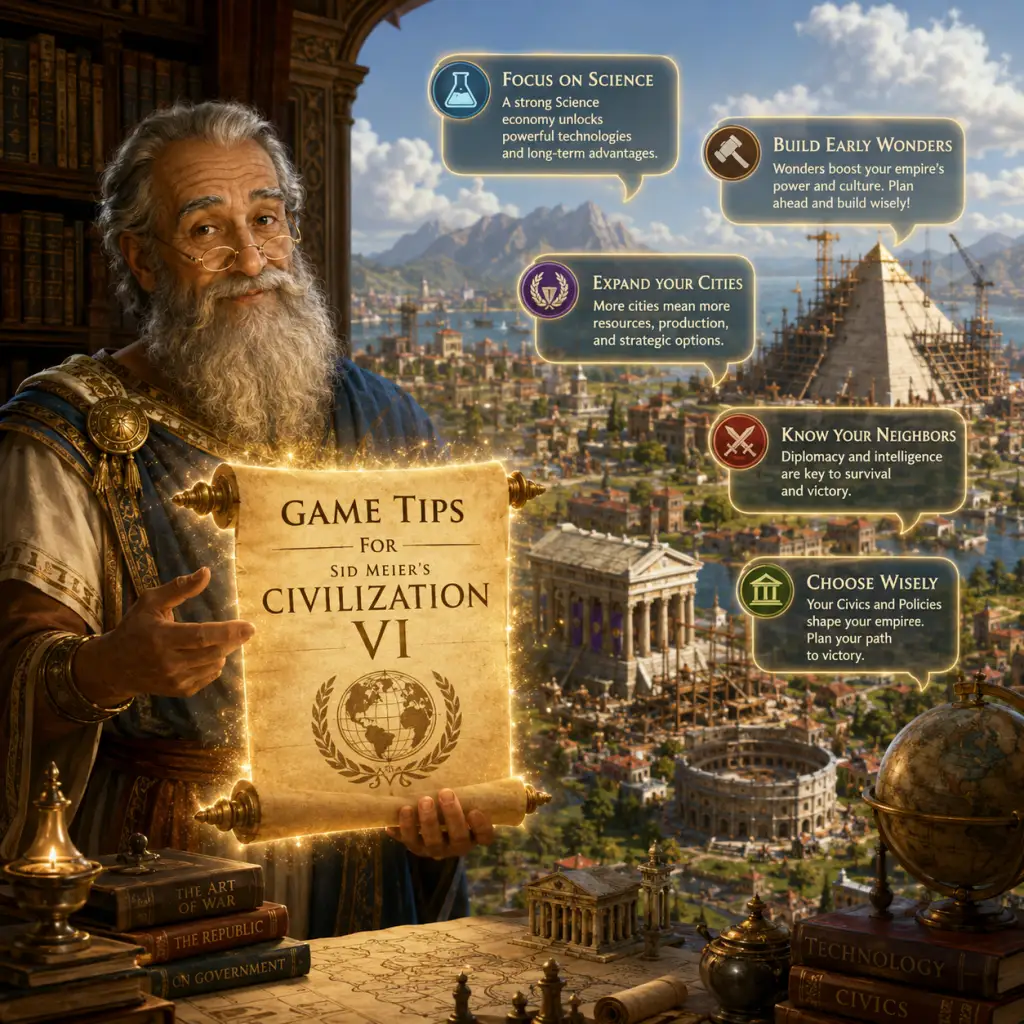
Game Tips
Game Tips for Sid Meier's Civilization VI
This guide covers essential tips for players of all skill levels, from foundation principles to advanced optimizations. Each tip includes a clear explanation and analysis of when and why it works.
---
1. Early Game Foundation
Tip 1: Settle on Turn 1 – Every Time
Do not move your Settler unless you see a clearly superior spot within 1-2 tiles (e.g., a natural wonder or a coast with sea resources). Each turn of delay costs you growth. If you move the Settler, you lose a full turn of production and science. Only move if the starting location is terrible (e.g., tundra with no resources).
Tip 2: Build a Scout First (Most Games)
A Scout lets you explore tribal villages, meet city-states first, and find good settle locations. Early tribal villages give free units, faith, or gold. Scout also activates Eurekas for writing and foreign trade. Exceptions: if you are on a small island or Pangaea with few landmasses, a Slinger or Builder might be better.
Tip 3: Prioritize Early Eurekas & Inspirations
Unlocking techs and civics faster is huge. For example, to get the Eureka for Writing (Astrology), improve a resource with a Builder. For Craftsmanship (Military Tradition), build three units. Plan your first few builds and improvements around these boosts. Check the tech/civic tree often.
---
2. Exploration
Tip 4: Meet All Civs ASAP
Knowing enemy locations helps you plan defense or offense. Trade routes, delegations, and embassies become available. Also, discovering all civs gives you a boost to era score (for early Golden Age). Send your Scout(s) in different directions; don't clump them.
Tip 5: Use the "Reveal Map" Function Wisely
If you get a free Great Person (e.g., Great General) that reveals the map, activate it only when you have a specific goal, like finding a lost city-state. Otherwise, save for a later emergency.
Tip 6: Claim Tribal Villages with Care
Tribal villages (goody huts) give random rewards. Prioritize them early, but be aware that military units near a city-state might cause them to levy troops against you. Also, if a barbarian camp is nearby, clear it before looting.
---
3. Combat
Tip 7: Never Declare War Without a Plan
Even if you have a larger army, attacking blindly leads to attrition. Always have a clear objective: capture a city, pillage districts, or raze a settlement. Use siege units (Catapults, Trebuchets) to reduce city walls, and melee units to capture. Ranged units provide support; promote them to increased range or double attacks.
Tip 8: Use Terrain to Your Advantage
Units on hills, forests, or across rivers get defensive bonuses. When attacking, try to remove those bonuses by flanking or using siege support. Rivers are especially good for defense: they force the attacker to cross with a movement penalty and no attack bonus.
Tip 9: Promote Units Strategically
Promotions are permanent. Think ahead: for melee units, "Shock" promotions (bonus vs. cavalry) are often better early; for ranged, the "Garrison" line (defense in districts) is situational. Always consider the next era's enemy types.
Tip 10: Use Support Units (Battering Ram, Siege Tower, etc.)
These units are essential for taking down city walls before the Renaissance era. A Battering Ram allows melee units to do full damage to city walls. A Siege Tower lets melee units bypass wall defense bonuses entirely. Build them before attacking a city with ancient/classical walls.
---
4. Economy & Resources
Tip 11: Balance Food and Production
Food grows your population, which increases science and culture yields from districts. Production builds things faster. In early cities, prioritize food tiles (wheat, rice) to grow quickly, then shift to production tiles (hills, forests) to build districts and units. Use the "Citizen Management" to lock specific tiles.
Tip 12: Trade Routes are Gold Mines
Internal trade routes (between your own cities) are best in early game to boost production and food. External routes give more gold and can spread religion. Always build a Commercial Hub or Harbor in every city eventually to unlock trade route capacity. Use the "International" trade policy for extra gold.
Tip 13: Improve Strategic Resources Immediately
Horses, Iron, Niter, Coal, Oil, Aluminum, and Uranium are critical for unique units and later military. If you have a source, improve it before the tech that reveals it. Otherwise, you might be locked out of building certain units. Always keep a minimum of 1 of each strategic resource; excess can be traded.
Tip 14: Luxury Resources Provide Amenities
Amenities affect city growth and yields. Each unique luxury resource (multiple copies of the same don't stack) provides 1 amenity to 4 cities, if you have the most copies. Trade duplicates to AI civs for gold or other luxuries. Maintain at least 1 amenity per city to avoid unhappiness.
---
5. District Placement & City Planning
Tip 15: Plan Districts for Adjacency Bonuses
Districts adjacent to certain features gain bonus yields. For example, a Campus next to mountains and reefs gets +1 science each. A Holy Site adjacent to natural wonders gets +4 faith. Hover over each district placement to see the predicted adjacency. Good planning can double your yields.
Tip 16: Build the Government Plaza Early
The Government Plaza is a unique district that provides a large bonus to the capital and allows you to place two powerful buildings: the Audience Chamber (for domestic trade) and the Warlord's Throne (for unit production). It also gives a free governor title. Build it in your second or third city, as its adjacency bonus (from other districts) is less critical.
Tip 17: Cluster Districts for Eurekas
Many Eurekas require having X districts or improvements. For example, the Eureka for Education requires three Campuses. Plan to build necessary districts early to trigger these boosts.
Tip 18: Don't Overbuild Districts in Early Cities
Each city needs a few districts to be productive, but building too many early stalls growth and military. Aim for 2-3 districts per city before the Renaissance era. Prioritize the district that matches your victory path (Campus for science, Holy Site for religion, etc.)
---
6. Build Orders & Production
Tip 19: Use the Production Queue
The queue (available in the city panel) lets you plan a series of builds. Always have the next item queued to avoid wasted turns. You can reorder, delete, or change as needed.
Tip 20: Build Settlers with the "Colonization" Policy
When you slot the Colonization policy card (reduces Settler production cost by 50%), mass-produce Settlers. This is the most efficient way to expand. Combine with the Ancestral Hall (Government Plaza building) for a free Builder per Settler.
Tip 21: Churn out Builders at Key Moments
Builders are essential for improvements and chop resources. However, never build more than 2-3 at a time if you are not chopping. Use the "Serfdom" policy card (two extra build charges) when producing many Builders.
Tip 22: Choose City Projects Wisely
City projects (like Campus Research Grants) are useful when you have nothing else to build. They provide great person points and a one-time yield. Use them to generate Great Engineers for wonders or Great Scientists for science victory.
---
7. Technology & Civics
Tip 23: Beeline Your Victory Tech Path
For a Science Victory, prioritize Astrology (for Campus), Writing (for Library), Education (for Universities), and then Flight/Rocketry. For Domination, focus on Military Tactics (for Siege units) and Steel (for stronger units). Always check the Eureka triggers for these key techs.
Tip 24: Don't Ignore Civic Tree
Civics unlock governments, policies, and envoys. Early civics like Code of Laws, State Property, and Military Tradition are crucial. Aim for Political Philosophy (Classical Republic or Oligarchy) early for a government bonus.
Tip 25: Use Policy Cards Actively
Swap policies as your situation changes. In peacetime, use science/culture/gold economic policies. During war, switch to military production and maintenance reductions. The policy that grants +100% campus adjacency can double your science output.
---
8. Religion
Tip 26: Only Found a Religion if You Can Defend It
Religion requires investments: Holy Sites, Shrines, and eventually Apostles. If you neglect religion, opponents will convert your cities, causing unrest. If you do found one, use Apostles with the Debater promotion to fight theological battles. Use Inquisitors to remove foreign religion from your lands.
Tip 27: Choose Beliefs That Synergize with Your Strategy
For a religious victory, choose beliefs that spread faith (e.g., Mosques for extra spread charges). For other victories, pick beliefs that give other bonuses: Work Ethic (faith to production) for early production boost, Jesuit Education (faith to buildings) for non-religious wins, or Cross-Cultural Dialogue (science per 4 followers) for science.
Tip 28: Use Holy Site Prayers Project
If you are falling behind in Great Prophet points, run Holy Site prayers project to generate extra points and possibly snatch the last Great Prophet before it's too late.
---
9. Diplomacy & Espionage
Tip 29: Send Delegations Immediately
As soon as you meet another civ, send a delegation (requires gold). This increases your relationship and often prevents early surprise wars. If you reject a delegation request, it damages relations. Always accept.
Tip 30: Use Espionage for Intel and Sabotage
Spies can steal technology, siphon gold, destroy districts, and recruit partisans. Build an Intelligence Agency (Government Plaza building) for extra spy and capacity. Use Spies in rival cities to steal boosts or damage key districts. Prioritize Stealth tech for easier spy operations.
Tip 31: Avoid Denouncing Without Cause
Denouncing a civ gives you a casus belli (just cause for war) but also increases warmonger penalties. Only denounce if you plan to declare war soon. Otherwise, maintain friendly relations to avoid being ganged up on.
---
10. Advanced Strategies (Victory-Specific)
Tip 32: Science Victory – Plan Your Spaceport City
Your spaceport city needs high production (preferably with a Dam and Industrial Zone adjacency). Build the Royal Society building to use builders for space race projects. Also, build the Ruhr Valley wonder in that city for massive production.
Tip 33: Culture Victory – Great Works and Tourism
Amass Great Works (art, artifacts, writing) and display them in Theater Squares and wonders. Build wonders like Eiffel Tower and Cristo Redentor for tourism boosts. Use rock bands in the late game to generate massive tourism per performance.
Tip 34: Domination Victory – Timing Attacks
Attack when you have a technological edge (e.g., when you unlock Cavalry while enemy still has Knights) or after a Natural Disaster weakens their cities. Use Corps and Armies (after unlocking the corresponding civic) for more powerful units.
Tip 35: Religious Victory – Convert Key Cities
Focus on converting the capitals of other civs. Use Apostles with the "Translator" promotion for stronger conversion. Do not waste faith on spreading to city-states unless they are a holy city.
---
11. Multiplayer Tips
Tip 36: Player vs. Player Requires Faster Expansion
In multiplayer, players are smarter and will settle aggressively. Always have a 2nd Settler by turn 30. Deny key resources to opponents by settling first. Use rapid expansion to control territory.
Tip 37: Use Diplomacy Strategically
In multiplayer, forming temporary alliances can help against a common enemy. However, trust is limited. Do not share your entire plan. Use trade deals to get resources and gold without giving away strategic advantage.
Tip 38: Pay Attention to Civ Picks
Strong domination civs like Alexander (Macedon), Scythia, or Aztecs are often banned or countered. Pick civs with strong bonuses that match your playstyle. For beginners, Rome (free monuments, roads) and Germany (extra district) are forgiving.
---
12. Common Mistakes to Avoid
- Not building enough military – Even peaceful civs need defense. Barbarians and aggressive neighbors will steamroll you if you have no units.
- Over-choping forests – Forests provide early production. Chopping them in the Ancient era gives a one-time boost but removes long-term production from lumber mills. Use chopping sparingly.
- Ignoring external threats – If an AI has a huge army and your relationship is poor, they may declare war. Keep an eye on the "Demographics" screen (army strength) and maintain defensible borders.
- Spending all gold on buildings – Gold is better used for purchasing units in emergencies or rushing a key building with a Great Engineer. Keep a gold reserve for emergencies.
- Not using faith generation – If you don't found a religion, faith still can be used to buy units (Grand Master's Chapel) or naturalists/rock bands later. Don't neglect faith entirely.
---
This guide covers the essentials. For deeper dives, consult the Civilopedia in-game or specialized strategy forums. Remember that every game is different, so adapt your strategy to the terrain, resources, and opponents you face.
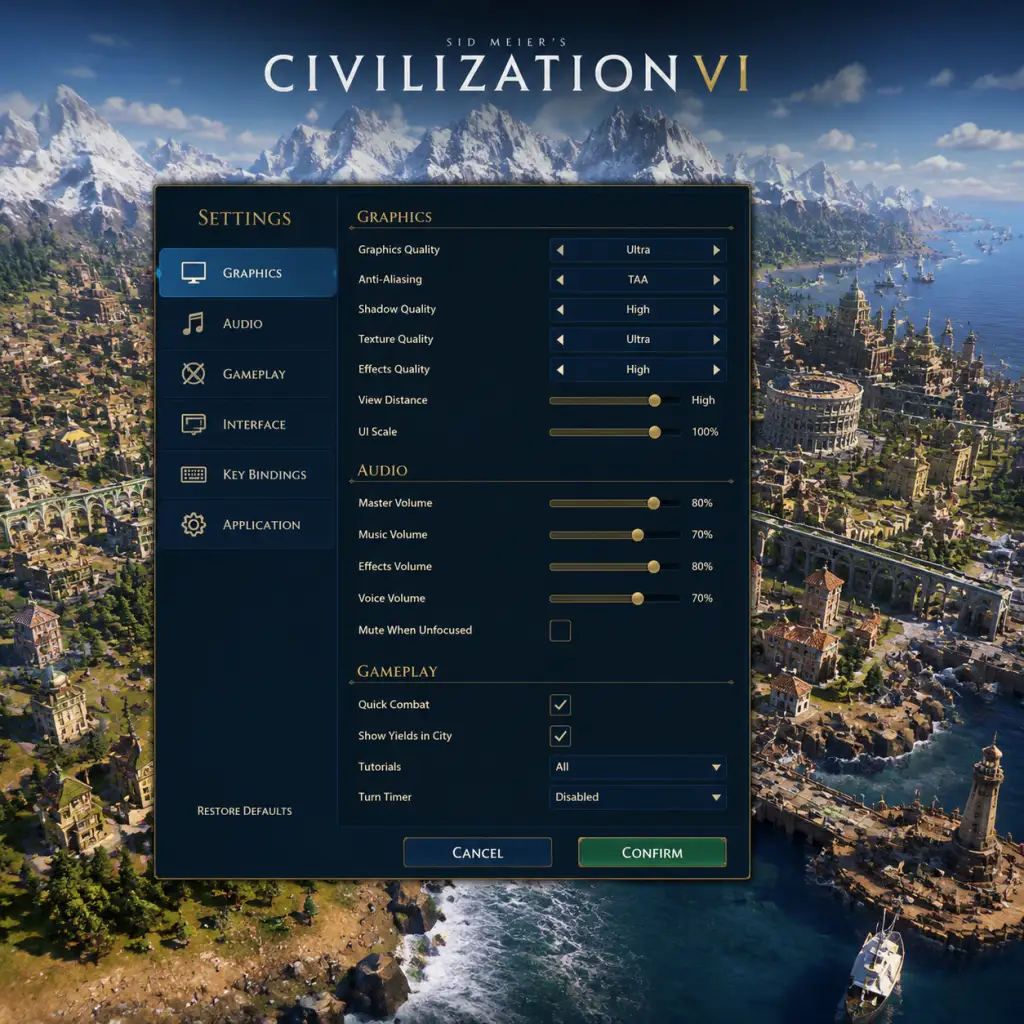
Game Settings
Game Settings
Overview
Civilization VI offers extensive settings across Graphics, Audio, Controls, Accessibility, Language, Network, and Gameplay. Proper configuration enhances both visual quality and performance, especially crucial in the late game when turn times increase. Settings are saved per profile and can be accessed from the Main Menu or in-game pause menu. On PC, the configuration file is located at `Documents/My Games/Sid Meier's Civilization VI/AppOptions.txt`.
Graphics Settings
#### Display Options
- Resolution: Match your monitor’s native resolution. Dropping to 1080p from 1440p/4K can significantly boost FPS on weaker GPUs.
- Fullscreen vs. Borderless Windowed: Fullscreen offers slightly better performance; borderless helpful for multi-monitor setups.
- Video Quality Preset: Low, Medium, High, Ultra. Custom overrides per option below.
- V-Sync: On prevents screen tearing but adds input lag. Off for competitive multiplayer or if frame rate is already stable.
- Frame Rate Cap: Limits max FPS. Useful for thermal management on laptops.
#### Advanced Graphics
| Setting | Impact | Recommendation |
|---|---|---|
| Anti-Aliasing (AA) | Smooths edges. FXAA is light; MSAA 4x/8x heavy. | Low/medium systems: FXAA. High: MSAA 2x. Ultra: MSAA 4x or TAA. |
| Shadow Quality | High hits FPS. Low turns shadows into blobs. | Low-end: Medium. Mid: High. High: Ultra. |
| Texture Quality | VRAM usage. Low blurs terrain/wonders. | 2GB VRAM: Medium. 4GB: High. 6GB+: Ultra. |
| Water Quality | Reflections and transparency heavy on GPU. | Medium or High; Ultra only for strong GPUs. |
| Terrain Quality | Distant view detail. | Medium is a good balance. |
| Leaf Quality | Tree/foliage detail. | Medium unless you love forests. |
| Cloud Quality | Extremely heavy. Low turns clouds off. | Off for performance; High looks nice but costs 5–10 FPS. |
| Leader Animation | Character model quality and diplomacy scenes. | Can be set to Full, Minimal (static image), or None. Turning off speeds up diplomacy. |
| Screen Space Reflections | Real-time reflections on water/wet surfaces. | Off on low/mid systems. |
| Hardware Tier | Expected GPU | Ideal Settings |
|---|---|---|
| Low-end | Integrated Intel UHD 630 / Vega 8 | 720p or 1080p, Low preset, Anti-Aliasing FXAA, Shadows Low, Clouds Off, Leader Animation Minimal, V-Sync Off. |
| Mid-range | GTX 1060 / RX 580 | 1080p, High preset, Shadows High, Water High, Clouds Medium, Leader Animation Full or Minimal (depending on preference). |
| High-end | RTX 2070 / RX 5700 | 1440p or 1080p, Ultra preset, TAA, Shadows Ultra, Water Ultra, Clouds High. |
| Ultra | RTX 3080 + / RX 6800 XT + | 4K, Ultra preset, MSAA 4x, everything maxed. Alternatively, use Dynamic Resolution Scaling for smooth 4K. |
- Dynamic Resolution Scaling (DRS): Found under Advanced Graphics. When enabled, the game automatically lowers internal resolution during heavy scenes to maintain FPS. This can cause sudden blurriness; disable if you notice pop-in.
- Graphics API: Options include DirectX 12 (default), DirectX 11, or Vulkan (Linux/Mac). DX12 is best for Windows, but if you experience crashes, switch to DX11. Vulkan is optimal for Linux. Changing API requires restart.
- Leader Animation: Many new players leave it on by default. Set to "Minimal" or "None" to drastically speed up AI turns and diplomacy interruptions.
- Quick Combat / Quick Movement: Located in Gameplay settings, not Graphics. Enabling both massively speeds up late-game turns (especially on low-end CPUs) but removes visual feedback. Recommended for multiplayer.
- Master Volume: Overall sound level.
- Music Volume: Background soundtrack.
- Effects Volume: Unit sounds, explosions, city noises.
- Voice Volume: Leaders speaking, narrator.
- UI Volume: Menu clicks, notifications.
- Loudness Equalization: Use in-game only if your system lacks it. Avoids sudden loud music after quiet moments.
- Hotkeys: All actions can be rebound. Open Controls > Change Key Bindings. Common shortcuts:
- Camera Controls: Middle mouse button pan, scroll to zoom, hold right mouse to rotate. Customize in the camera section.
- Controller Support (Consoles & PC): Full gamepad support with custom button mapping. On PC, you can switch freely between mouse and controller.
- Auto Unit Cycle: On by default; if you prefer manual control, set "Automatically Cycle to Next Unit" to Off.
- Quick Save / Load: Default keys F8 (quick save) and F9 (quick load). Very useful in Civ VI.
- UI Scale: Adjusts the size of all interface elements. Essential for 4K displays or HDTVs. Set to 100% for 1080p, 125% or 150% for 1440p/4K. Too small makes text unreadable.
- Colorblind Mode: Three presets (Protanopia, Deuteranopia, Tritanopia) modify map colors and indicators.
- Tooltip Delay: How long before a tooltip appears. Set to 0 for instant info.
- Subtitle Display: Enable to see spoken dialogue as text.
- High Contrast Mode: Improves readability of text and icons.
- Auto-End Turn: Automatically ends your turn after all units move (can be dangerous). Use with caution.
- Game Text: Choose from 14+ languages including English, French, German, Italian, Japanese, Korean, Polish, Portuguese, Russian, Spanish, Swedish, Turkish, Chinese (Simplified/Traditional).
- Audio Language: Often locked to text language; some versions allow separate audio track (e.g., English voices with Japanese text).
- Important: Changing language may require downloading additional files and restarting the game.
- Internet vs LAN: Select connection type. Internet is default; LAN reduces latency for local games.
- Port Forwarding: Civ VI uses UDP ports 20581-20585 for direct connections. If playing with friends, ensure these ports are open in your firewall.
- Cloud Saves: Enable in Settings > Network to sync saves across platforms. Requires a 2K Account or Steam Cloud.
- NAT Type: Show in the multiplayer lobby. Strict NAT may cause connection issues.
- Voice Chat: In-game voice available on PC (uses peer-to-peer). You can mute individual players.
- Multiplayer Options:
- Quick Combat: Disables combat animations. Crucial for speed – see Graphics section.
- Quick Movement: Disables movement animations. Both recommendations: Enable for multiplayer and late-game solo sessions.
- Show Yields: Toggles resource yields icon overlay on map tiles. On by default; recommended to keep on.
- Show Resources: Highlights strategic/luxury resources.
- Show Trade Routes: Displays active trade route paths.
- Tile Grid: Turns on a grid overlay for better city planning.
- Hex Coordinates: Shows coordinates on each tile (debugging or coordinated play).
- Lens Presets: Quick toggles (found in bottom-left of map) for Settler, Military, Religion, etc. Not in settings but useful.
- Auto-Explore: Unit will automatically uncover fog of war. Available per unit by pressing E.
- Auto-Save Frequency: Sets intervals for autosaves (1–50 turns). Recommended every 10 turns to avoid losing progress.
Audio Settings
Special Note: If you play with the game window unfocused (e.g., browsing between turns), enable "Play Audio When Game is in Background" – located in the Audio tab.
Controls (Keyboard & Mouse / Controller)
- `E` : set unit to explore.
- `N` : next unit.
- `W` : wait.
- `F` : found city.
- `Shift + Enter` : force end turn.
Misconfiguration Tip: The "Quick Course" option (Controls tab) enables mouse-over tooltips. Disabling it removes extra information windows – not recommended for beginners.
Accessibility
Language
Network & Multiplayer
- Timer Turn: Set per-turn time limits (Blitz, Quick, etc.) to prevent slow play.
- Simultaneous Turns: All players move at once (fast) vs. sequential (slower but fair).
- Allow Teams: Enable allied victories.
Gameplay Settings
Misconfiguration Warning: Turning off Show Yields can hide vital information, making it hard to evaluate tile improvements. Turn off only if you know the map well.
Special Attention Points During Setup
1. First Launch: Always update your GPU drivers. Civ VI is particularly sensitive to outdated drivers, causing random crashes.
2. DirectX Version: If you encounter black screens or crashes on launch, start the game with `-dx11` command line (Steam: Properties > Launch Options) to force DX11.
3. Leader Animations: Consider turning off or to minimal even on high-end systems – saves minutes per game.
4. Save Files: Enabled cloud saves cause sync delays. Disable if you prefer manual backups.
5. Resolution Scaling: On low-end GPUs, keep render resolution at 100% or lower – never go above 100% unless you have spare GPU power.
6. Controller vs. Keyboard: Civ VI is best played with keyboard + mouse. Controller is supported but slower for precise map actions.
7. Benchmark Mode: Not built-in, but you can use quick start (new game with all default settings) to test FPS. Use MSI Afterburner for detailed metrics.
By fine-tuning these settings, you can enjoy a smoother, visually pleasing, and strategically clear Civilization VI experience tailored to your hardware.
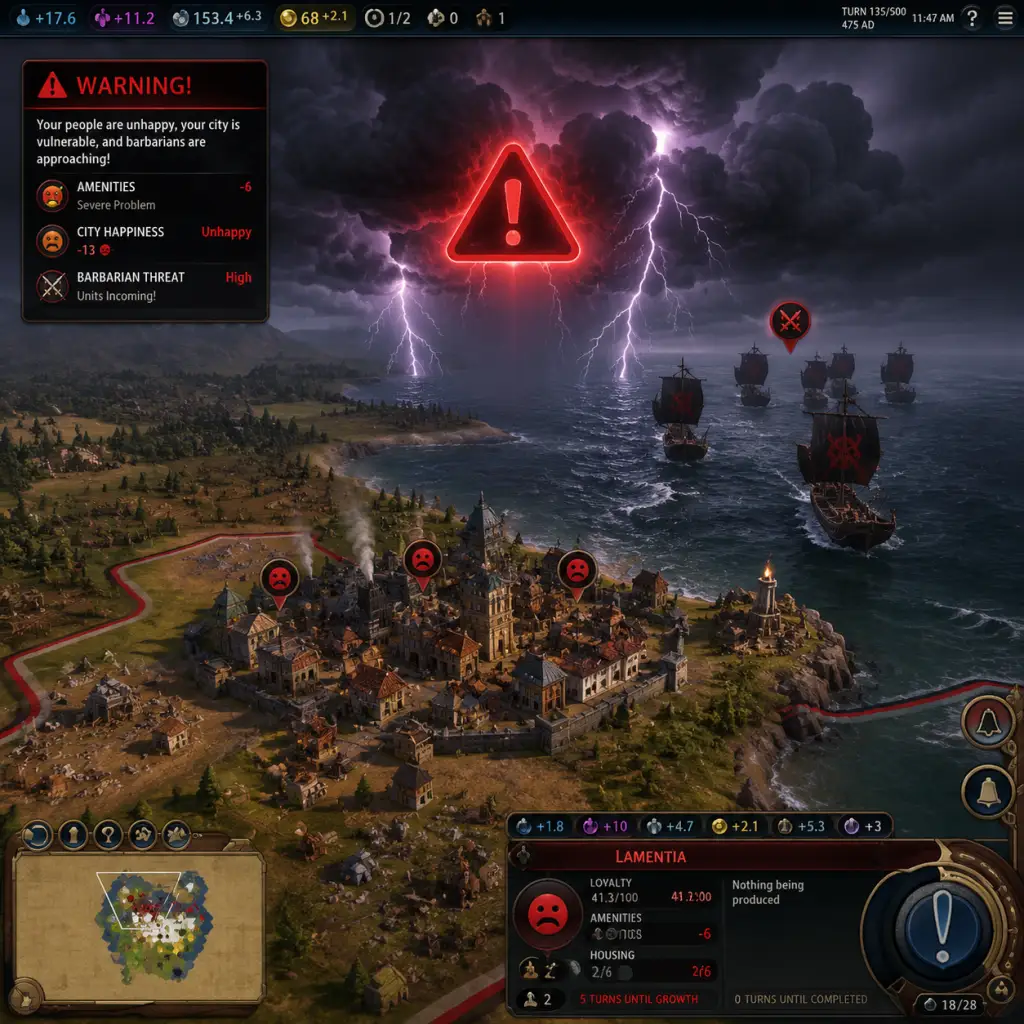
Important Notes
Important Notes for Sid Meier's Civilization VI
Warnings and Pitfalls
- Over-expansion without infrastructure: Settling cities too quickly without building up their core districts (especially the Aqueduct, Commercial Hub, and Industrial Zone) can cripple your economy. New cities cost increasing amounts of gold maintenance as your empire grows. Always couple expansion with builders to improve tiles and internal trade routes to boost new cities.
- Ignoring the Culture Victory potential: Even if you are pursuing a Domination or Science victory, neglect of Theater Square districts and Great Works can allow an AI opponent to race ahead on Culture and win a surprise Culture Victory in the late game. Keep an eye on the Culture Victory progress screen and use Rock Bands (late game) or spies to disrupt enemy tourism if needed.
- Not understanding district adjacency bonuses: Placing districts haphazardly loses massive yields. For example, Campus districts get +1 Science per adjacent mountain tile, so cluster them near mountains. Commercial Hubs and Harbors get bonuses from rivers and sea resources. Use the map tacks (pin tool) to plan your cities; a well-planned Industrial Zone can pump out +10 Production with the right adjacency (Aqueduct, Dam, Canal, other districts).
- Trading with the AI carelessly: The AI often offers unfair trades. Never accept a deal just because you want a resource. Always check what you are giving away, especially gold per turn or strategic resources. The AI might trick you into selling a luxury that later causes unhappiness when you need it.
- Neglecting barbarians early: Barbarian camps that are not cleared can spawn units that pillage your trade routes and attack your settlers. Always keep a ranged unit and a melee unit near your exploring units. The ‘Barbarian Clans’ game mode (if enabled) makes barbarians even more dangerous because they can evolve into city-states.
- Choosing a Pantheon: The first pantheon you adopt (from earning enough Faith) is permanent for the whole game. Choose carefully: which belief best suits your strategy? For a Religious Victory, the best is often Divine Spark (+1 Great Person points from Holy Sites, Campus, Theater Square) or Settler (bonus to settler production early). For a Domination victory, God of War (faith from kills) or Religious Settlements (extra settler) are common. You cannot change or remove a pantheon later.
- Great Person recruitment: Once you recruit a Great Person, that specific one is gone for all players. If you spend the resource (e.g., Great Scientist points) on a weak one, you cannot get the same points back. Save Great Person points for the ones that truly benefit your current victory path (e.g., Ada Lovelace for Science, Michelangelo for Culture).
- Government policies and forms of government: While you can switch governments later in the game (via civics), each government type offers specific policy slots and sometimes unique abilities. Changing government requires an anarchic turn (unless you use certain Great People or the Alhambra wonder). Choose your government based on your current goals. For example, Monarchy is good for an empire with many cities, Theocracy for faith-based victories, and Democracy for science. Switching too often costs production.
- Alliance types: When you form an alliance, you choose a specific type (e.g., Research Alliance, Military Alliance). This cannot be changed for the duration of the alliance (30 turns). Pick accordingly: you may lock yourself out of a different bonus.
- Wonders allocation: Many wonders have global effects and are unique (only one can be built). If you start a wonder and someone else completes it first, you lose all production invested. Plan wonders ahead; never start a wonder you cannot finish quickly unless you have a production stockpile.
- Religious Beliefs: Your founded religion's beliefs (e.g., Choral Music, Work Ethic, Religious Community) are chosen once and cannot be changed. Some beliefs, like Work Ethic (Production from Holy Site adjacency), are incredibly powerful for any victory. Choose beliefs that synergize with your civ and intended strategy.
- First contact with city-states: When you first meet a city-state, sending them a small amount of gold immediately makes you the Suzerain (if no other player has already sent envoys). This early influence can be lost if you delay. Also, city-states have unique quests; completing them grants envoys. Miss these early quests and you may fall behind in city-state bonuses for the rest of the game.
- Goody huts (Tribal Villages): These scatter across the map and disappear once claimed. They give bonuses like free tech boosts, gold, scouts, or eurekas. Rush your scout to explore early–those bonuses are time-sensitive and can accelerate your early game significantly.
- Heroes and Legends game mode: If enabled, there are 12 legendary heroes who can be summoned only once per hero across the entire game. If you do not recruit a hero, they are gone. Each hero has unique abilities and can be recalled later but with increased cost. Missing a hero like Hercules or Mulan is a big loss.
- Natural Wonder discoveries: Some Natural Wonders (e.g., Mount Everest, Eye of the Sahara) grant special bonuses when you discover them (e.g., +1 to movement, +3 Science). They also provide adjacency bonuses to the campus and holy site if you settle nearby. Explore to find them early before other civs block your path.
- Secret Societies game mode: If active, you are offered a choice to join one of four secret societies. This is a one-time permanent choice; you cannot change it later. Each society offers unique abilities and buildings. The bonuses are locked to that society; missing the chance to choose early (or choosing unwisely) can lead to regret.
- King and above: The AI gets free starting bonuses (extra Settler, additional military units, boosted yields). For new players, staying at Prince (Normal) until you understand district planning and warfare is advisable. The jump to King is noticeable because the AI expands faster and earlier wars are harder.
- Barbarian Clans mode: If you enable barbarian clans, they can evolve into city-states, creating new diplomatic powers. This makes early exploration and barbarian suppression more urgent.
- Apocalypse game mode: Frequent disasters (comets, floods, volcanoes) can devastate your carefully planned districts and improvements. New players should avoid this mode until they master standard rules.
- Deity difficulty: AI gets +1 free Settler, +2 free builders, +40% production toward wonders, +20% combat strength, and other huge bonuses. Your first 100 turns will be defensive. Extensive experience with district planning and timing attacks is required.
- Building every district in every city: Not all cities need every district. Focus on a few specialized cities. For example, a city on a river with high adjacency might become a Commercial Hub + Industrial Zone core. Another city near mountains becomes a Campus city. Building unnecessary districts drains production and population growth.
- Chasing all great people: You cannot get all Great People. Those points are competitive; if you spend your limited points on a weak Great Person, you lose out on more valuable ones later. Prioritize those that advance your chosen victory path.
- Overbuilding units in peacetime: Maintaining a huge army when not at war costs massive gold and strategic resources. Build only enough to defend or deter aggression; supplement with walls and garrisoned ranged units. Use the garrison discount policy when at peace.
- Endless wonder-chasing: A common trap is trying to build every Ancient/Classical wonder. Many wonders are not essential, and failing to finish them wastes production. Build wonders only if they directly support your strategy and your city can complete them before an AI.
- Multiplayer etiquette: In multiplayer games, especially with strangers, communicate ahead of time about speed and victory conditions. Use in-game chat to avoid misunderstandings. Do not constantly reconnect or slow down the game; be present when it's your turn.
- No mods allowed in multiplayer by default: Most online games require a ‘no mods’ rule to avoid cheating or imbalance. If you use mods that change gameplay (like UI mods that reveal hidden tiles), you may be banned from multiplayer lobbies.
- Exploits that are considered cheating: Exploits like the ‘lens bug’ (which revealed hidden units) or ‘sell all luxuries every turn’ are not allowed in competitive play. The community uses the ‘Play as Intended’ rule. Avoid any exploit that gives you an unfair advantage.
- Leavers/quitting early: In team games, leaving before the game ends is considered bad form unless you are clearly defeated. Communicate your surrender to opponents.
- Anti-cheat features: Civilization VI has no active anti-cheat software (e.g., no PunkBuster). However, players can report suspicious behavior or use mods to see logs. The honor system prevails in most lobbies.
- Use multiple save slots: Civilization VI autosaves every turn (by default) but keep at least 3-5 manual saves at key moments: before a major war, before choosing a pantheon or religion, after a golden age. The autosave interval can be set to every 5 or 10 turns in options.
- Hotseat mode: If playing in hotseat multiplayer, ensure each player has their own saves and labels them clearly to avoid confusion.
- Ironman mode: There is no official Ironman mode, but you can self-enforce (no reloading). For achievements, be aware that reloading a turn before a decisive battle may invalidate the achievement (e.g., winning without reloading). Check the achievement requirements.
- Back up save files: On PC, Civilization VI saves are in your Documents/My Games/Sid Meier's Civilization VI/Saves folder. Back this up if you plan to reinstall or use different mods. Corrupted saves can happen after updates; having a backup prevents loss of long campaigns.
- Mod compatibility: Before applying major mods, make a clean save with no mods active. Loading a modded save without the mod can cause errors. Always note which mods are active in a particular save.
- You can pin tile improvements (Map Tacks): Right-click on the map while in the city view to place pins for planned districts, wonders, and improvements. This helps you visualize adjacency bonuses and avoid overlapping districts. Many new players ignore this tool and later regret poor district placement.
- Roads are only built by traders: Traders automatically build roads between your cities (upgrading over time). You cannot manually build roads. Use internal trade routes to connect your capital to new cities to speed up movement and production.
- Great Scientists and Engineers can be used to speed up wonders: Using a Great Engineer on a wonder gives instant production towards it. This is critical for wonders that are about to be stolen. Save appropriate Great Engineers for that situation.
- The Religion screen has a purchase menu: You can buy Missionaries and Apostles directly from the Holy Site district screen, not just from the city. The Religion lens shows religious pressure; check this often to spread your religion efficiently.
- You can rename units: Click on a unit's name in the bottom bar to rename it. This is useful for organizing armies or giving thematic names.
- City-state envoys stack: Sending 1 envoy to a city-state gives the bare minimum bonus. Sending 3 gives a major bonus (Suzerain) and unlocks additional yields (like +2 food to all cities, etc.). Always aim for 3 envoys if you want the city-state's bonus.
- Selling strategic resources makes sense even if you have a surplus: You can sell excess Horses, Iron, Oil, etc. to the AI for gold per turn. This is a major source of income. But be careful not to sell too much—you might need them later for units or buildings.
- The ‘Disband Unit’ command exists: If a unit becomes obsolete or you need to reduce unit maintenance, you can disband it (button in unit actions). This saves gold per turn.
- Natural Wonders provide adjacency bonuses even if not discovered?: Actually, you must discover them to activate the adjacency bonus for campuses/holy sites. So explore thoroughly.
- The ‘Civilopedia’ is searchable: Press F1 or click the question mark icon to access the Civilopedia. It explains every concept, district, tech, civic, and unit. Many beginners avoid it, but it is the best single resource for understanding game mechanics.
- Save often: A single misclick (like moving a settler into danger) can ruin 100 turns. Reloading an autosave is fine for learning. In single-player, there is no penalty for reloading.
- Victory progress is visible: You can see exactly how close each player is to each victory condition. Use this information to prioritize counter-strategies (e.g., if an AI is close to a Religious Victory, kill all their Apostles and start an inquisition).
- Do not overvalue early aggression: While early warfare can cripple a neighbor, it also discourages trade and alliances. Sometimes peaceful coexistence yields better long-term results.
- Check the strategic resource report: In the top-right menu, open the Resources pane to see your current and projected strategic resources (Iron, Horses, Niter, etc.). Running out mid-construction is frustating.
- Updates and DLC change the game significantly: The Rise and Fall, Gathering Storm expansions, and all Leader Passes add mechanics like Loyalty, Governance, Eras, and additional civs. If you own these, learn about the changes early. Loyalty pressure can cause city flipping; keep a garrison and policy cards to manage it.
Irreversible Choices
Missable Content
Difficulty Spikes
Grinding Traps
Online Etiquette & Anti-Cheat Notes
Save Management Advice
Things Players Commonly Regret Not Knowing Earlier
Final Reminders
This guide covers the most common traps and revelations experienced by Civilization VI players. Use it to avoid frustration and accelerate your mastery of the game.
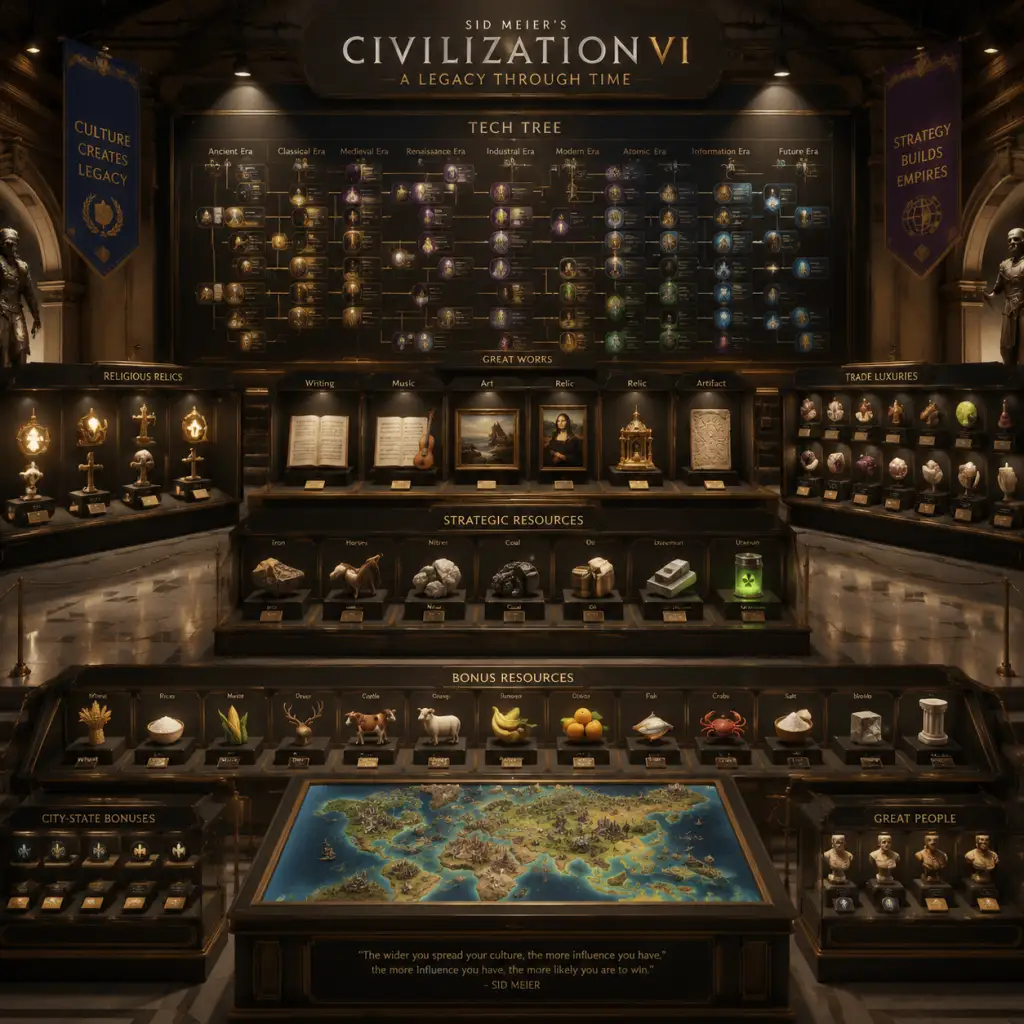
All Game Items
Introduction
Sid Meier's Civilization VI does not feature conventional items like weapons or armor. Instead, the game offers a vast array of mechanical elements that function as strategic "items"—units, buildings, wonders, resources, policies, great people, and more. This guide catalogs every major game element, explaining its purpose, acquisition method, optimal usage, and key synergies.
---
1. Units (Military, Civilian, Religious, Support, Great People)
Military Units
Military units are your primary instruments for combat, defense, and conquest. They are unlocked through technology research and upgraded via promotions.
#### Melee Units
- Warrior (Ancient Era): Basic melee. Best for early barbarian clearing and city defense. Upgrade into Swordsman.
- Swordsman (Classical Era): Stronger melee. Requires Iron. Upgrade into Longswordsman.
- Longswordsman (Medieval Era): Heavy melee with high combat strength. Upgrade into Field Cannon? No, Pike and Shot? Actually upgrade into Infantry (Industrial).
- Man-at-Arms (Medieval Era, from Gathering Storm): Stronger than Longswordsman; requires Iron.
- Infantry (Industrial Era): Standard melee of the late game. Upgrade into Mechanized Infantry.
- Mechanized Infantry (Information Era): Final melee unit, very strong.
- Slinger (Ancient Era): Weak ranged, good for early defense. Upgrade into Archer.
- Archer (Classical Era): Effective early ranged unit. Upgrade into Crossbowman.
- Crossbowman (Medieval Era): Strong ranged, good for defending cities. Upgrade into Field Cannon.
- Field Cannon (Industrial Era): Long-range siege-like unit. Upgrade into Machine Gun.
- Machine Gun (Modern Era): High attack strength, useful for static defense. No further upgrade.
- Heavy Chariot (Ancient Era): Strong but expensive, requires Horses. Upgrade into Horseman.
- Horseman (Classical Era): Fast melee cavalry, great for flanking. Upgrade into Knight.
- Knight (Medieval Era): Heavy cavalry with high strength. Upgrade into Cuirassier.
- Cuirassier (Industrial Era): Strong cavalry, upgrade into Tank.
- Tank (Modern Era): Powerful armored unit. Upgrade into Modern Armor.
- Modern Armor (Information Era): Final cavalry unit.
- Spearman (Ancient Era): Bonus vs cavalry. Upgrade into Pikeman.
- Pikeman (Classical Era): Stronger anti-cavalry. Upgrade into Pike and Shot.
- Pike and Shot (Renaissance Era): Good against cavalry and melee. Upgrade into AT Crew.
- AT Crew (Industrial Era): Anti-tank unit. Upgrade into Helicopter? No, upgrade into Modern AT (Atomic Era).
- Modern AT (Atomic Era): Final anti-cavalry, very strong vs armored.
- Scout (Ancient Era): Fast, can ignore terrain penalties. No direct combat use.
- Skirmisher (Classical Era, requires Horses): Upgraded scout with attack capability.
- Battering Ram (Ancient Era): Support unit that allows melee to attack city walls. Obsolete after Medieval Era.
- Siege Tower (Ancient Era): Support unit that allows melee to attack city without wall penalty. Obsolete after Medieval Era.
- Catapult (Classical Era): First true siege weapon, strong vs district defenses. Upgrade into Trebuchet.
- Trebuchet (Medieval Era): Stronger siege. Upgrade into Bombard.
- Bombard (Renaissance Era): Powerful siege. Upgrade into Artillery.
- Artillery (Industrial Era): Long-range siege. Upgrade into Rocket Artillery.
- Rocket Artillery (Modern Era): Final siege unit, very powerful.
- Galley (Ancient Era): Basic naval melee.
- Quadrireme (Classical Era): Ranged naval.
- Caravel (Renaissance Era): Fast explorer, no combat role.
- Frigate (Renaissance Era): Strong ranged naval.
- Ironclad (Industrial Era): Heavy melee naval.
- Destroyer (Modern Era): Fast, anti-submarine.
- Battleship (Modern Era): Long-range naval siege.
- Aircraft Carrier (Atomic Era): Carries air units.
- Submarine (Modern Era): Stealth attack.
- Biplane (Modern Era): First fighter. Upgrade into Fighter.
- Fighter (Atomic Era): Air superiority.
- Jet Fighter (Information Era): Final air superiority.
- Bomber (Atomic Era): Siege from air. Upgrade into Jet Bomber.
- Jet Bomber (Information Era): Final bomber.
- Drone (Future Era, from Gathering Storm): Recon and attack.
- Settler: Found new cities. Costs Population to produce.
- Builder: Construct tile improvements (farms, mines, etc.). Can be captured.
- Trade Route (Trader): Create internal or international trade routes. Generates Gold, Food, Production, etc.
- Archaeologist: Excavate artifacts from antiquity sites. Requires a Museum.
- Naturalist: Build National Parks (requires Conservation civic).
- Missionary: Spread religion within own borders. Cheap but weak.
- Apostle: Spread religion and engage in theological combat. Can have promotions (e.g., Debater).
- Inquisitor: Remove heresy from own cities.
- Guru: Heal nearby religious units.
- Prophet: (only Great Prophet) Found religion.
- Military Engineer: Build forts, airstrips, missile silos, and railroads (requires Gathering Storm). Can also repair pillaged tiles.
- Supply Convoy (from Gathering Storm): Heal units on adjacent tiles; provides additional movement for units.
- Great General: Provides combat bonus to land units within range, or can create a Citadel improvement.
- Great Admiral: Provides combat bonus to naval units, or can be used to build a Shipwreck improvement.
- Great Scientist: Triggers a eureka for a random technology, provides free tech boost, or gives a unique tile improvement (e.g., Great Scientist Isaac Newton provides a free University).
- Great Engineer: Boosts wonder production, provides free walls, or builds the Ruhr Valley.
- Great Merchant: Boosts Gold, provides free Trade Route capacity, or creates a Corporation (from Gathering Storm).
- Great Writer: Creates a Great Work of Writing (requires Amphitheater).
- Great Artist: Creates a Great Work of Art (requires Art Museum).
- Great Musician: Creates a Great Work of Music (requires Broadcast Center).
- Great Prophet: Found a religion; replaced by a Prophet belief.
- City Center: Always present; grants housing, defense, and some yields.
- Campus: Generates Science, and provides slots for buildings (Library, University, Research Lab).
- Holy Site: Generates Faith, and allows building Shrine, Temple, etc.
- Encampment: Generates Production, trains military units faster, provides defense.
- Theater Square: Generates Culture, houses Great Works.
- Commercial Hub: Generates Gold, boosts Trade Routes.
- Industrial Zone: Generates Production, provides bonus from adjacent mines/quarries.
- Harbor: Generates Food and Gold, allows naval units to be built.
- Aerodrome: Build air units and hangars.
- Neighborhood: Provides Housing.
- Water Park (from Gathering Storm): Entertainment and Housing near coast.
- Government Plaza (from Gathering Storm): Unlocks additional Governors and bonuses.
- Diplomatic Quarter (from Gathering Storm): Boosts Diplomatic Favor.
- Entertainment Complex: Provides Amenities.
- Monument (City Center): +2 Culture, +1 Great Writer Point.
- Granary (City Center): +1 Housing, +2 Food.
- Water Mill (City Center, requires river): +1 Food, +1 Production.
- Library (Campus): +2 Science, +1 Great Scientist Point.
- University (Campus): +4 Science, +1 Great Scientist Point.
- Research Lab (Campus, requires University): +5 Science, +1 Great Scientist Point.
- Shrine (Holy Site): +1 Faith, +1 Great Prophet Point.
- Temple (Holy Site): +2 Faith, +1 Great Prophet Point; allows Apostles.
- Barracks (Encampment): +1 Production, trains land units faster; provides housing for military.
- Stable (Encampment): +1 Production, faster cavalry training.
- Armory (Encampment): +2 Production, +1 Great General Point.
- Military Academy (Encampment): +4 Production, grants extra experience.
- Amphitheater (Theater Square): +1 Culture, holds Great Works of Writing.
- Art Museum (Theater Square): +1 Great Artist Point, holds Great Works of Art.
- Archaeological Museum (Theater Square): Holds Artifacts.
- Broadcast Center (Theater Square): +4 Culture, holds Great Works of Music.
- Market (Commercial Hub): +3 Gold, +1 Great Merchant Point.
- Bank (Commercial Hub): +5 Gold, +1 Great Merchant Point.
- Stock Exchange (Commercial Hub): +7 Gold, +1 Great Merchant Point.
- Workshop (Industrial Zone): +2 Production, +1 Great Engineer Point.
- Factory (Industrial Zone): +4 Production, +1 Great Engineer Point; AoE bonus.
- Coal Power Plant (Industrial Zone, requires Coal): +6 Production but pollution.
- Oil Power Plant (Industrial Zone, requires Oil): +8 Production but pollution.
- Nuclear Power Plant (Industrial Zone, requires Uranium): +10 Production, less pollution.
- Barracks (Encampment) etc.
- Lighthouse (Harbor): +1 Movement for naval units, +1 Gold.
- Shipyard (Harbor): +2 Production, allows building of stronger ships.
- Seaport (Harbor): +2 Gold, +1 Great Admiral Point.
- Pad (Aerodrome) – actually Hangar and Airfield.
- Hangar (Aerodrome): +1 Air Capacity, +1 Gold.
- Airfield (Aerodrome): +2 Air Capacity, +1 Great General Point.
- Pyramids: +2 Builder charges, +1 Production from all tile improvements.
- Stonehenge: Free Great Prophet, +2 Faith.
- Oracle: +1 Great Person point per district, boosts GPP generation.
- Great Library: Free tech boost upon completion, +2 Science, +1 Great Scientist point.
- Colosseum: +2 Amenities in all cities, +2 Culture.
- Alhambra: +2 Culture, +1 Great General point, free walls.
- Forbidden City: +1 Wildcard policy slot.
- Big Ben: +50% Gold per trade route, +2 Gold.
- Statue of Liberty: +2 Diplomatic Favor per turn, +1 Diplomatic Victory point.
- Ruhr Valley: +10% Production in all cities, +2 Production for mines.
- Broadway: +2 Culture, +1 Great Musician point, free Great Work of Music.
- Sydney Opera House: +2 Culture, +1 Great Musician point, provides Tourism.
- Biosphère (from Gathering Storm): +4 Science, +2 Great Scientist point, boosts rainforests.
- Golden Gate Bridge: +2 Gold, connects continents, boosted tourism.
- Mount Everest: +1 Faith on adjacent tiles.
- Great Barrier Reef: +2 Science, +1 Food, +1 Gold per tile.
- Yosemite: +1 Culture, +1 Gold per tile.
- Crater Lake: +3 Faith, +1 Science.
- Galapagos Islands: +2 Science, +1 Culture.
- Bananas: +2 Food, +1 Production (after plantation).
- Cattle: +1 Food, +1 Production.
- Copper: +2 Gold, +1 Science (after mine).
- Crabs: +1 Food, +1 Gold.
- Deer: +1 Food, +1 Production.
- Fish: +1 Food, +1 Gold.
- Maize (Maya & Gran Colombia pack): +2 Food.
- Sheep: +1 Food, +1 Production.
- Stone: +1 Production, +1 Gold after quarry.
- Wheat: +1 Food, +1 Production.
- Amber: +1 Gold, +1 Faith (after mine).
- Cinnamon: +1 Gold, +1 Culture.
- Cloves: +1 Gold, +1 Faith.
- Cotton: +1 Gold, +1 Culture.
- Diamonds: +4 Gold.
- Dyes: +1 Gold, +1 Culture.
- Furs: +1 Gold, +1 Culture.
- Gold: +3 Gold.
- Incense: +2 Faith.
- Ivory: +2 Gold.
- Jade: +1 Gold, +1 Culture.
- Marble: +2 Production.
- Olives (from Gathering Storm): +1 Food, +1 Gold.
- Pearls: +1 Gold, +1 Faith.
- Salt: +1 Food, +1 Gold.
- Silk: +1 Gold, +1 Culture.
- Silver: +2 Gold.
- Spices: +1 Gold, +1 Faith.
- Sugar: +1 Food, +1 Gold.
- Tea (Gathering Storm): +1 Gold, +1 Culture.
- Tobacco: +1 Gold, +1 Faith.
- Truffles: +1 Food, +1 Gold (requires camp).
- Whales: +1 Food, +1 Gold.
- Wine: +1 Gold, +1 Faith.
- Horses: Cavalry, light cavalry units.
- Iron: Melee, swordsman, and other units.
- Niter (from Gathering Storm): Gunpowder units (field cannons, musketmen).
- Coal: Power plants, industrial units (ironclad).
- Oil: Tanks, planes, modern ships.
- Aluminum: Air units, army upgrades (corps/army).
- Uranium: Nuclear weapons, nuclear power plants.
- Research Tree: Unlocks via Science output. Full list omitted for brevity, but key tiers include Ancient (Pottery, Writing), Classical (Mathematics, Currency), Medieval (Education, Machinery), etc.
- Government Plaza (Gathering Storm) unlocked via Early Empire.
- Nationalism unlocks corps/armies.
- Suffrage unlocks cheap Corps.
- Ideologies (Democracy, Communism, Fascism) give major bonuses.
- Cultural Hegemony (Culture victory focus).
- Chiefdom: 1 Military, 1 Economic.
- Autocracy: 1 Military, 1 Economic, +10% Wonder Production, +1 Great General point.
- Oligarchy: 2 Military, 1 Economic, +4 Combat Strength for melee units.
- Classical Republic: 1 Military, 1 Economic, +1 Wildcard, +1 Great Person point per district.
- Monarchy: 2 Military, 1 Economic, +1 Wildcard, +1 Housing per city.
- Theocracy: 1 Military, 2 Economic, +1 Wildcard, cheaper faith purchases.
- Merchant Republic: 1 Military, 2 Economic, +1 Wildcard, +1 Trade Route capacity.
- Democracy: 2 Economic, 2 Wildcard, +1 Diplomatic slot, +1 Housing per city, +1 Trade Route.
- Communism: 2 Military, 1 Economic, 1 Wildcard, +1 Production per district.
- Fascism: 2 Military, 1 Economic, 1 Wildcard, +3 Combat Strength for units.
- Synthetic Technocracy (Gathering Storm): 2 Economic, 2 Wildcard, +1 Science per district.
- Digital Democracy (Gathering Storm): 2 Economic, 2 Wildcard, +1 Culture per district.
- Corporate Libertarianism (Gathering Storm): 2 Economic, 2 Wildcard, +1 Gold per district.
- Military: Agoge (+50% Production for melee units), Conscription (cheaper upgrades), Retainers (free unit maintenance), Professional Army (reduce upgrade costs).
- Economic: Colonization (faster Settlers), Serfdom (+2 charges for Builders), Triangular Trade (bonus Gold from trade routes), Merchant Confederation (+1 Envoy per turn to city-states).
- Diplomatic: Charismatic Leader (+1 Diplomatic Favor per turn), Gunboat Diplomacy (+2 Suzerain rewards), Wisselbanken (+2 Gold per trade route with city-state).
- Wildcard: Any type (e.g., from Forbidden City or Government Plaza).
- Exodus of the Evangelists: +2 Faith per turn, +1 Great Prophet point.
- Pen, Brush, and Voice: +2 Culture per turn.
- Reformation Church: +2 Faith per turn from each city with a Temple.
- Etc.
- God of the Forge: +25% Production toward Ancient and Classical military units.
- God of the Open Sky: +1 Culture from Pastures.
- Goddess of the Harvest: +1 Food from Plantations.
- Religious Settlements: Free Settler, faster border growth.
- Divine Spark: +1 Great Person point from Holy Sites and Campus.
- Earth Goddess: +2 Faith from tiles with Breathtaking appeal.
- Initiation Rites: +50 Gold and +1 Faith from clearing a Barbarian camp.
- Fertility Rites: +10% Growth.
- God of War: +1 Faith from kills.
- Monument to the Gods: +15% Wonder Production.
- Stone Circles: +2 Faith from Quarries.
- Oral Tradition: +1 Culture from Plantations.
- Goddess of Festivals: +1 Food from Plantations.
- Religious Idols: +1 Production from Mines over luxury resources.
- Follower Belief: God of the Sea (+1 Production from Fishing Boats), Choral Music (+1 Culture from Shrines), Feed the World (+3 Food from Shrines and Temples), Work Ethic (+1 Production from Shrines and Temples), etc.
- Worship Belief: Cathedral (slot for a Great Work of Art), Mosque (+1 Faith from Missionaries), Pagoda (+1 Faith, +1 Culture), Synagogue (+2 Faith), Wat (+2 Science).
- Founder Belief: Church Property (+2 Gold per city following your religion, for founder), Crusade (+10 Combat Strength near foreign cities following your religion), Pilgrimage (+2 Faith per foreign city following your religion), Tithe (+1 Gold per 4 followers), World Church (+1 Culture per 5 followers), etc.
- Enhancer Belief: Itinerant Preachers (religion spreads further), Reliquaries (triple Relic Faith and Gold), Missionary Zeal (+3 movement for Missionaries), Defender of the Faith (+10 Combat Strength near cities of your religion).
- Religious Victory: Must convert all civs to your religion.
- Gold: Main economic resource. Used to purchase units, buildings, tiles, etc., and trade with other civs. Generated by Commercial Hubs, Taxes, Trade Routes, and improvements.
- Faith: Used to purchase religious units, Great People (with certain policy), naturalists, and rock bands. Generated by Holy Sites, religious buildings, and pantheons.
- Science: Used to research technologies. Generated by Campuses, Libraries, special improvements.
- Culture: Used to research civics and expand borders. Generated by Theater Squares, Monuments, certain improvements.
- Production: Used to build units, buildings, wonders. Generated by tile yields, Industrial Zones, mines.
- Food: Used to grow city population. Generated by farms, some improvements.
- Housing: Determines maximum population growth.
- Amenities: Happiness; low amenities cause rebellion. Provided by luxury resources, Entertainment Complexes, some policies.
- Diplomatic Favor: Used to vote in World Congress, trade for other resources. Generated by alliances, city-state suzerainty, certain buildings (Diplomatic Quarter).
- Great Person Points: Accumulate to generate Great People. Specific to each type (General, Scientist, etc.).
- Tourism: Leader to Cultural Victory. Generated by Great Works, wonders, improvements, trade routes.
- Great Work of Writing: Slot in Amphitheater. +2 Culture, +2 Tourism.
- Great Work of Art: Slot in Art Museum. +3 Culture, +3 Tourism (themed museums give more).
- Great Work of Music: Slot in Broadcast Center. +4 Culture, +4 Tourism.
- Artifact: Provides +2 Culture, +2 Tourism.
- Corps (2 identical units combined): +10 Combat Strength.
- Army (3 units): +17 Combat Strength.
- Fleet (2 naval units): +10.
- Armada (3 naval units): +17.
- Battering Ram: Allows melee units to attack city walls with full strength. Obsolete after Medieval.
- Siege Tower: Allows melee units to ignore wall defense bonus. Obsolete after Medieval.
- Magnus: +50% Production for settlers, no population loss on settler creation.
- Liang: +1 Amenity from improvements, +2 Housing from Neighborhoods.
- Reyna: +2 Gold per district, can purchase districts with Gold.
- Victor: +5 Combat Strength in city, +3 Loyalty per turn.
- Amani: +2 Envoys per turn for a city-state, faster spread of religion.
- Moksha: +20% Faith generation, can purchase Apostles with Faith.
- Pingala: +20% Science and Culture, +1 Great Person point.
- Early Game: Focus on building Scouts (exploration), Settlers (expansion), and a couple of military units (defense). Prioritize Campus/Holy Site depending on victory path.
- Mid Game: Build Industrial Zones for Production, Commercial Hubs for Gold, and start generating Great People. Look for strategic resources (Iron, Horses) to upgrade units. Use Great Scientists to boost techs.
- Late Game: Build your victory-specific items: Spaceport (Science Victory), Rock Bands/Naturalists (Culture Victory), Apostles (Religion), Military units (Domination), or Diplomatic Quarter (Diplomatic).
- Pair Military Engineers with Battering Rams for quick wall destruction.
- Use Great General's Citadel improvement to boost Production in a city.
- Combine Great Scientist Albert Einstein with high adjacency Campus.
- For Culture Victory, theme your Museums by era/artist combo (e.g., three Renaissance portraits from same artist).
- Use the policy "International Space Agency" when building space race projects.
- The policy "Grand Opera" (+50% Great Musician points) when generating Great Musicians.
#### Ranged Units
#### Cavalry Units
#### Anti-Cavalry Units
#### Light Cavalry Units
#### Siege Units
#### Naval Units (Melee, Ranged, Carrier, Submarine)
#### Air Units
How to obtain: Build in cities with appropriate district (Encampment for land, Harbor for naval, Aerodrome for air). Costs Production and strategic resources (Iron, Horses, Oil, etc.).
When useful: Always—defense, expansion, conquest. Key synergies: Use flanking support (Great General) and promotions (e.g., +1 range for ranged units).
Civilian Units
Religious Units
Support Units
Great People
Great People are special units generated by accumulating Great Person Points (GPP) from districts (Campus, Theater Square, Commercial Hub, etc.). Each Great Person has a unique effect upon activation (one-time use). Types:
---
2. Buildings and Districts
Districts
Districts are specialized tile improvements that must be placed on the map. Each city can have a limited number depending on population.
How to obtain: Build with a cost in Production that increases over time.
Buildings
Buildings are placed inside districts, providing additional yields or abilities.
How to obtain: Production cost, sometimes require strategic resources.
When useful: Always; buildings are the backbone of your empire.
---
3. Wonders
World Wonders
World Wonders are unique, one-of-a-kind constructions that provide powerful bonuses. Only one wonder can be built in the entire world. They require specific terrain and have high Production costs.
List of notable wonders (full list is long; here are key ones):
How to obtain: Must be researched (Civics or Technology), then built in a city with appropriate terrain.
When useful: Mid-to-late game; they provide long-term advantages. Synergies: Many wonders boost specific yields or provide policy slots.
Natural Wonders
Natural wonders are unique tile features discovered on the map. They provide bonuses when a city is founded nearby, or when tiles are worked.
Examples:
How to obtain: Discovered by exploring.
When useful: Early game; can give a huge boost to that city.
---
4. Resources
Bonus Resources
These provide extra yields when worked by a city. They are not tradeable.
Luxury Resources
These provide Amenities (happiness) to the empire. Each unique luxury resource gives +1 Amenity to 4 cities. They can be traded.
Strategic Resources
Needed to build and upgrade units, and for some buildings. Depleted per turn.
How to obtain: Improve the tile with appropriate improvement (Mine, Pasture, Quarry, Oil Well, etc.).
When useful: Throughout the game; strategic resources gate your military power.
---
5. Technologies and Civics
Technologies
Technologies are researched to unlock units, buildings, wonders, and tile improvements. They are not items per se but are the keys to unlock items.
Civics
Civics are researched through Culture output, unlocking governments, policies, and new units/buildings.
How to obtain: Generate Science/Culture.
---
6. Governments, Policies, and Dedications
Governments
Governments provide bonus policy slots and special bonuses. Unlocked via civics.
Policies
Policies are cards that fit into slots (Military, Economic, Diplomatic, Wildcard). They provide various bonuses. Examples:
How to obtain: Research civics.
When useful: Constantly swap as situation changes.
Dedications (from Gathering Storm)
Dedications are temporary bonuses chosen every era.
---
7. Pantheons and Religions
Pantheons
Pantheons are chosen early in the game (first player to get a Great Prophet). They provide a unique bonus.
Religions
Once founded, you can choose a Faith (e.g., Buddhism, Christianity, Islam) and then pick beliefs:
How to obtain: Pantheon: be first to get a Great Prophet (or use Stonehenge). Religion: found after Pantheon.
---
8. Currencies
Civilization VI uses multiple resources that function as currencies:
How to obtain: Various.
---
9. Collectibles: Great Works and Artifacts
Great Works
Great Works are created by Great People (Writers, Artists, Musicians) and can be placed in appropriate buildings (Amphitheater, Art Museum, Broadcast Center). They generate Culture, Tourism, and sometimes Gold or Faith.
How to obtain: Activate a Great Person of the corresponding type when you have an open slot.
When useful: Culture Victory. Theming bonuses require specific combos (e.g., all from same era/artist).
Artifacts
Artifacts are collected by Archaeologists from Antiquity Sites (found on the map). Placed in Archaeological Museums, they generate Culture, Tourism, and can be themed.
How to obtain: Build an Archaeologist (requires Museum) and send to a site.
Relics
Relics are special items from religious buildings (like Apostolic Palace) or from defeating enemy Apostles. They provide +3 Faith and +3 Gold (doubled with Reliquaries belief).
---
10. Special Items & Mechanics
Corps, Fleet, Army, Armada
Upgraded unit types that provide increased strength. Unlocked via the Nationalism civic (Corps/Fleet) and later Mobilization (Army/Armada).
Cost: Gold or Production, requires two units of same type on same tile.
Siege Support Units
Promotions
Units gain experience and can choose promotions (e.g., +1 Range for ranged, +5 vs anti-cavalry, etc.). Each unit class has a promotion tree.
Golden/Dark Ages
Per era, you earn a Historic Moment score. If you exceed the threshold, you get a Golden Age; otherwise, a Dark Age (or Normal). Golden Ages provide powerful bonuses (e.g., Monumentality: +30% Builder charges, cheaper faith purchases). Dark Ages provide negative effects but can be turned into Heroic Age next era.
City-States
City-states are independent mini-civilizations. Each has a type (Cultural, Industrial, Militaristic, Religious, Scientific, Trade). They provide bonuses to suzerains (+1 Envoy per turn). Suzerains can activate unique units (e.g., Crouching Tiger from Hong Kong) or bonuses.
Governors (from Gathering Storm)
Governors are special units placed in cities to provide bonuses. Each has a promotion tree.
---
11. How to Obtain Items Synergistically
Key Synergies:
---
Conclusion
This guide covers all major "items" in Civilization VI—though they are not inventory items, every unit, building, resource, policy, and great person is a tool for your empire. Mastering when and how to obtain and use these elements is the key to victory on any difficulty.
Note: This guide does not include every single unique unit, building, or improvement from all DLCs and expansions (Gathering Storm, Rise and Fall, New Frontier Pass). The above list covers the core game plus major expansion features. For a complete list, refer to the in-game Civilopedia.
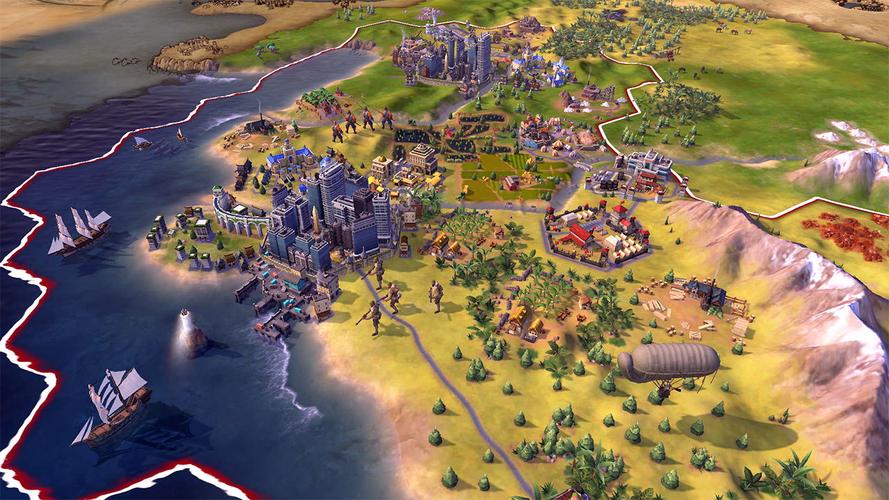
Character Skills
Character Skills Guide for Sid Meier's Civilization VI
Overview
The term \"Character Skills\" in Civilization VI refers to the unique abilities, units, infrastructure, and improvements granted by each leader and their civilization. This guide covers every base-game leader and those from the expansions (Rise and Fall, Gathering Storm, New Frontier Pass, Leader Pass). Each leader has a Leader Ability (personal trait), a Civilization Ability (shared by all leaders of that civ), a Unique Unit, a Unique Infrastructure (district, building, or improvement), and an Agenda (AI behavior or player goal). Additionally, some leaders have unique improvements or special mechanics. Below is a complete breakdown, with detailed descriptions, recommended strategies, synergies, and build tips.
Complete Leader List (All Playable Characters)
| Civilization | Leader(s) | Leader Ability | Civilization Ability | Unique Unit | Unique Infrastructure | Unique Improvement | Agenda | Recommended Victory Type |
|---|---|---|---|---|---|---|---|---|
| America | Teddy Roosevelt (Rough Rider / Bull Moose) | Rough Rider: +5 Combat Strength on home continent, +1 Appeal for National Parks. Bull Moose: +1 Science/Culture from Breathtaking tiles adjacent to Mountains/Wonders. | Founding Fathers: +1 Diplomatic Favor per turn per Wildcard policy slot. | P-51 Mustang (Fighter) | Film Studio (Building in Entertainment Complex) | N/A | Big Stick Policy (Bull Moose: Environmentalist) | Culture, Diplomatic |
| Arabia | Saladin (Sultan / Vizier) | Sultan: +1 Science per foreign city following your religion, +10% Science when at war. Vizier: +1 Science per 4 followers of your religion, +1 Great Prophet point per Holy Site. | Madrasa: +1 Science and +1 Faith per turn, replaces University. | Mamluk (Heavy Cavalry) | Madrasa (Unique University) | N/A | Ayyubid Dynasty (Sultan: Religious Conversion; Vizier: Science Focus) | Religion, Domination |
| Aztec | Montezuma | Legend of the Five Suns: +2 Combat Strength for each luxury resource improved; Builder units gain +1 charge. | Eagle Warrior (Unique Melee Unit) replaces Warrior; kills can convert enemies into Builders. | Eagle Warrior | Tlachtli (Unique Arena, Entertainment Complex replacement) | N/A | Sun God (High Amenities) | Domination, Culture |
| Brazil | Pedro II | Magnanimous: +1 Great Person point per turn for each district built; +1 Tourism for each Great Person recruited. | Amazon: Rainforest provides +1 adjacency for Holy Sites, Campuses, Entertainment Complexes; +1 Appeal for adjacent tiles. | Minas Geraes (Battleship) | Street Carnival (Water Park replacement, provides Amenities and Tourism with Great Works) | N/A | Patron of the Arts (High Great Person focus) | Culture, Science |
| China | Qin Shi Huang / Wu Zetian (Mandate of Heaven / Unifier) | Qin: +10% Wonder speed; +1 Builder charge; unique project \"One Belt, One Road\". Wu: +1 Science/Culture per Great Wall segment; extra Spy capacity. | Dynastic Cycle: +1 Diplomatic Favor per turn per Era; 10% discount on random tech/civic each era. | Crouching Tiger (Ranged) | Great Wall (Unique Improvement, yields Culture and Gold with adjacent segments) | N/A | Mandate of Heaven (Qin: Wonder-focused; Wu: Espionage) | Culture, Domination (via early rush) |
| Egypt | Cleopatra (Egyptian / Mediterranean) | Egyptian: +15% Wonder speed if adjacent to a River; +1 production from floodplains. Mediterranean: +1 Trade Route for each civilization met from different continent; +2 gold per trade route. | Iteru: Districts and Wonders can be built on floodplains without penalty. | Maryannu Chariot Archer (Heavy Chariot, strong early ranged) | Sphinx (Unique Improvement, yields Faith and Culture, adjacency to Wonders) | N/A | Queen of the Nile (River and Wonder focus) | Culture, Religion (via Sphinx) |
| England | Victoria (Age of Steam / Sea Dog) / Eleanor of Aquitaine (with France) | Victoria: +1 Trade Route per continent with a city; special units: Redcoat (Industrial Era) and RND (Battleship replacement). Eleanor: -1 Loyalty per turn to foreign cities within 9 tiles; -3 if your governor present; +1 Great Work slot per district. | British Museum: +1 Great Work slot in every district that can hold one; Archaeological Museums hold 6 artifacts. | Redcoat (Industrial Era Musketman) | Royal Navy Dockyard (Harbor replacement, +2 Gold adjacency, +1 Trade Route) | N/A | Sun Never Sets (High number of continents settled) | Domination (Victoria), Culture/Loyalty (Eleanor) |
| France | Catherine de Medici / Catherine de Medici (Magnificence) | Catherine: +1 Diplomatic Favor per turn per Spy; extra Spy capacity; all Spies start with a free promotion. Magnificence: +20% Tourism from Wonders; Chateau yields Culture and Appeal. | Court of the Sun: +50% wonder production in the capital; unique ability to win Diplomatic Victory with more points. | Garde Impériale (Industrial Era Cavalry) | Chateau (Unique Improvement, yields Culture based on appeal) | N/A | Black Queen (Spy focus) | Culture, Diplomatic (Magnificence) |
| Germany | Frederick Barbarossa / Ludwig of Bavaria | Frederick: +1 Military policy slot; +7 Combat Strength against city-states you are at war with. Ludwig: +1 Science and Culture per District in the city; extra production from Hansa adjacency with Commercial Hubs. | Free Imperial Cities: +1 District slot in cities for every two military policy slots. | U-Boat (Submarine) | Hansa (Unique Industrial Zone, +1 adjacency from Commercial Hubs and resources) | N/A | Iron Crown (Hansa adjacency focus) | Science, Domination |
| Greece | Gorgo / Pericles | Gorgo: +1 Culture per kill; +1 Wildcard policy slot from the Classical Republic government. Pericles: +1 Culture per turn per city-state you are Suzerain of; +5% Culture per city-state following your religion. | Plato's Republic: +1 Wildcard policy slot in government; extra Envoy per turn. | Hoplite (Unique Spearman, formation bonus) | Acropolis (Unique Theater Square, +1 Culture per district adjacency) | N/A | Thermopylae (Culture from warfare) | Culture, Domination (Gorgo), Culture/Diplomatic (Pericles) |
| Inca | Pachacuti | Mit’a: +1 Production per Mountain tile in city; Terrace Farms buildable on Mountains; +1 Food for adjacent Mountains. | Qhapaq Ñan: Roads automatically build; +1 Gold from trade routes over Mountains; +1 Diplomatic Favor per Mountain tile. | Warak’aq (Unique Slingers, range 2, can attack without penalty) | Terrace Farm (Unique Improvement, yields Food and Production on hills, adjacency to Mountains) | N/A | Sapa Inca (Mountain focus) | Science, Culture, Domination |
| India | Chandragupta / Gandhi | Chandragupta: +2 Movement for 10 turns after declaring War of Territorial Expansion; +5 Combat Strength when attacking. Gandhi: +2 Faith per foreign city following your religion; +2 Combat Strength to your units for each religion present in your city. | Dharma: +1 Faith per population in cities with multiple religions; +2 Spread Strength for missionaries. | Varu (Unique Heavy Chariot, causes area damage and debuff) | Stepwell (Unique Improvement, yields Food and Faith, adjacency to Farms) | N/A | Sati (Chandragupta: Domination; Gandhi: Religious spread) | Religion, Domination |
| Indonesia | Gitarja | Exalted Goddess of Three Worlds: +1 Faith per coast tile; land units can embark without Shipbuilding; +1 Trade Route capacity for cities with a Holy Site on a different continent. | Nusantara: Coast tiles provide +1 Production; +1 Food per fish tile. | Jong (Unique Medieval Era naval ranged unit) | Kampung (Unique Improvement, yields Food and Production on Coast) | N/A | Archipelago (Naval focus) | Religion, Domination (naval) |
| Japan | Hojo Tokimune / Tokugawa | Hojo: +1 Production per District; +1 Culture per District; +10% Production toward Districts adjacent to Coast/Lakes. Tokugawa: +1 Science per District; +1 Gold per District; +5 Combat Strength against units from different continents. | Meiji Restoration: +1 Faith per District; +1 Culture per District; +1 Production from Fishing Boats. | Samurai (Unique Medieval Era unit) | Electronics Factory (Building in Factory Zone, +1 Production, +4 Gold) | N/A | Bushido (District adjacency focus) | Culture, Science, Domination |
| Khmer | Jayavarman VII | Grand Baray: +2 Food and +2 Faith from all Aqueducts; +1 Population per Aqueduct; Holy Sites gain +2 adjacency from Rivers. | Monasteries: +1 Faith per population; +1 Culture per population in holy sites; +1 Great Prophet point per turn. | Domrey (Unique Siege weapon, high ranged strength) | Prasat (Unique Temple, yields Faith and Culture based on population) | N/A | Bayon (River and Religion focus) | Religion, Culture, Domination |
| Kongo | Mvemba a Nzinga / Nzinga Mbande | Mvemba: +1 Food per Forest adjacent to city; cannot build Holy Sites; gains Great Works from relics. Nzinga: +1 Gold per population; +1 Production per population if city follows your religion; +1 Culture per population if city is happy. | Nkisi: +1 Great Person point per turn for each district; +1 Relic slot in Palace. | Ngao Mbeba (Unique Musketman, high combat strength) | Mbanza (Unique Neighborhood, yields Gold and Housing) | N/A | Religious Conversion (Mvemba: Relic focus; Nzinga: population) | Culture, Religion (via Relics) |
| Macedon | Alexander | Hellenic Conquest: +2 movement for siege units; +5 Combat Strength vs cities; +1 Great General point per kill; cities conquered do not cause War Weariness. | Hypaspist (Unique Swordsman) Hetairoi (Unique Heavy Cavalry) | Siege Tower, Battering Ram upgrades | Basilikoi Paides (Unique Barracks replacement, yields Science per turn) | N/A | Macedonian Legacy (Domination) | Domination |
| Mali | Mansa Musa / Sundiata Keita | Mansa Musa: +1 Gold per desert tile; +1 Faith per desert tile; -30% Production toward Districts and Wonders. Sundiata: +2 Combat Strength per adjacent district; +1 Gold per adjacent district. | Sahel: +1 Gold per tile in desert; trade routes gain +1 Gold per tile; +1 Faith per turn per desert tile. | Mandekalu Cavalry (Unique Horseman) | Suguba (Unique Commercial Hub, +1 Gold per adjacent desert tile) | N/A | Hajj (Mansa Musa: Gold focus; Sundiata: District combat) | Domination (via early gold), Religion |
| Maori | Kupe | Survivor: +2 Science per Ocean tile; +1 Food per Coast tile; starts in Ocean, cannot be first to land. | Mana: +1 Culture per turn per unimproved feature; +1 Food per turn per unimproved feature. | Toa (Unique Swordsman) | Marae (Unique Theater Square replacement, yields Culture and Faith from improved tiles) | N/A | Navigators (Ocean/Culture focus) | Culture, Science |
| Mapuche | Lautaro | Spirit of the Land: +1 Science per turn for each city founded on a different continent; +2 Combat Strength against civilizations founded on different continents. | Toqui: +1 Combat Strength for all units when under a Golden Age. | Malon Raider (Unique Light Cavalry) | Chemamull (Unique Improvement, yields Culture and Faith based on appeal) | N/A | Araucanian Resistance (Foreign continent war) | Domination |
| Mayan | Lady Six Sky / Kʼinich Janaabʼ Pakal | Lady Six Sky: +1 Science per adjacent plantation; +1 Gold per adjacent plantation; +5 Combat Strength in home continent. Pakal: +1 Science per city-state; +1 Culture per city-state; +2 Diplomatic Favor per Suzerain. | Ubä: +1 production per adjacent district; +1 Science per adjacent district. | Hul’che (Unique Archer) | Observatory (Unique Campus, +1 Science per adjacent plantation) | N/A | Ajaw (Plantation and Science focus) | Science, Culture |
| Mongolia | Genghis Khan / Kublai Khan | Genghis: +3 Combat Strength per Great General attached; +1 Movement for all cavalry. Kublai: +1 Trade Route per economic policy slot; +1 Science and Culture per trade route. | Mongol Horde: +1 Combat Strength for every two cavalry units adjacent; +1 Movement for light cavalry. | Keshig (Unique Light Cavalry, healing per attack) | Ortoo (Unique Market replacement, yields Gold and Faith) | N/A | Horselord (Cavalry focus) | Domination |
| Netherlands | Wilhelmina | Radio Oranje: +2 Loyalty per trade route sent to your cities; +1 Science per trade route sent to different continent. | Grootse Steden: +1 Housing per River tile; +2 Appeal per tile adjacent to river. | De Zeven Provinciën (Unique Frigate) | Polder (Unique Improvement, yields Food and Production on floodplains) | N/A | Tulip Mania (River and Trade focus) | Culture, Science |
| Norway | Harald Hardrada / Olav Tryggvason | Harald: +1 Production per coast tile; +2 Movement for naval melee units; +10 Combat Strength when attacking coastal cities. Olav: +1 Culture per coastal tile; +1 Faith per coastal tile; +2 Great Admiral points per turn. | Knarr: +2 Movement for embarked units; +1 Trade Route per city with a harbor. | Longship (Unique Viking ranged galley) | Stave Church (Unique Church, yields Faith and Culture based on forests) | N/A | Viking (Naval and raid focus) | Domination (naval) |
| Nubia | Amanitore | Ahebit: +1 Faith per desert tile; +1 Gold per desert tile; +1 Production per desert tile for districts. | Nubian Bow: +1 Combat Strength per adjacent district; +1 Movement for ranged units. | Pitati Archer (Unique Archer, range 2) | Pyramids (Unique Improvement, yields Faith and Gold) | N/A | Nubian Queen (Desert and ranged focus) | Domination, Religion |
| Ottoman | Suleiman / Mehmed II | Suleiman: +5 Combat Strength against all cities; +10% Production toward units. Mehmed: +1 Science per city following your religion; +1 Culture per city following your religion; +1 Great Person point per turn per city. | Grand Vizier: +1 Governor title per era; +1 Envoy per turn; +1 Diplomatic Favor per turn. | Janissary (Unique Musketman, gains strength from adjacent units) | Grand Bazaar (Unique Commercial Hub, yields Gold and Amenities) | N/A | Lawgiver (Mehmed: Religion and Science; Suleiman: Domination) | Domination, Science |
| Persia | Cyrus / Nader Shah | Cyrus: +2 Movement for all units during surprise war; +5 Combat Strength when attacking. Nader Shah: +1 Science per turn per unit killed; +1 Culture per turn per unit killed; +5 Combat Strength against stronger units. | Satraps: +1 Trade Route capacity per city; +1 Gold per trade route. | Immortal (Unique Swordsman, range 2) | Pairidaeza (Unique Improvement, yields Culture and Gold based on appeal) | N/A | King of Kings (Cyrus: Early war; Nader: Kill accumulation) | Domination |
| Phoenicia | Dido | Cothon: +1 Trade Route per city; +1 Gold per trade route; +1 Governor title per city founded on different continent. | Mediterranean Colonization: +2 Loyalty per city on different continent; +1 Population per trade route. | Bireme (Unique Galley) | Cothon (Unique Harbor, yields Gold and Trade Route) | N/A | Empress of the Sea (Naval and expansion) | Domination, Culture |
| Poland | Jadwiga | Lithuanian Union: +1 Relic slot per Temple; +1 Culture per Relic; +2 Faith per Relic. | Golden Liberty: +1 Military policy slot; +1 Culture per turn per city. | Winged Hussar (Unique Heavy Cavalry, pushback) | Sukiennice (Unique Market replacement, yields Gold and Production) | N/A | Warrior Queen (Relic and Culture) | Culture, Religion |
| Rome | Trajan / Julius Caesar | Trajan: Free Monument in every city; +1 Culture per turn per city. Julius: +1 Gold per turn per city; +5 Combat Strength when attacking. | All Roads Lead to Rome: +2 Gold per trade route; +1 Housing per city. | Legion (Unique Swordsman, can build forts) | Bath (Unique Aqueduct, yields Housing and Amenities) | N/A | Optimus Princeps (Trajan: Culture expansion; Julius: Domination) | Domination, Culture |
| Russia | Peter / Catherine the Great | Peter: +1 Faith per turn per foreign city following your religion; +1 Science per turn per foreign city following your religion. Catherine: +1 Culture per turn per city-state you are Suzerain of; +2 Science per turn per city-state. | Mother Russia: +1 Production per tundra tile; +1 Faith per tundra tile; +2 Population per capital. | Cossack (Unique Cavalry) | Lavra (Unique Holy Site, yields Great Prophet points and Faith adjacency from Tundra) | N/A | Westernizer (Peter: Religion and Science; Catherine: City-state focus) | Religion, Culture, Science |
| Scotland | Robert the Bruce | Bannockburn: +1 Combat Strength for all units during Golden Ages; +1 Movement for all units during Golden Ages. | Scottish Enlightenment: +1 Science per district; +1 Culture per district; +1 Great Scientist point per district. | Highlander (Unique Musketman, can range 2) | Golf Course (Unique Improvement, yields Gold and Amenities based on appeal) | N/A | Bruce (Golden Age focus) | Science, Culture |
| Scythia | Tomyris | Killer of Cyrus: +2 Combat Strength when attacking; +1 Healing per turn for wounded units; +5 Combat Strength against stronger units. | People of the Steppe: +1 Movement for all cavalry; +1 Combat Strength per adjacent cavalry. | Saka Horse Archer (Unique Light Cavalry ranged) | Kurgan (Unique Improvement, yields Gold and Faith) | N/A | Mother of the Scythians (Cavalry and attack) | Domination |
| Spain | Philip II / Isabella | Philip: +1 Combat Strength per foreign city following your religion; +1 Faith per foreign city following your religion. Isabella: +1 Gold per turn per foreign city following your religion; +1 Production per foreign city following your religion. | El Escorial: +1 Gold per district in capital; +1 Faith per district in capital. | Conquistador (Unique Renaissance Era unit, converts cities) | Mission (Unique Improvement, yields Faith and Culture) | N/A | Catholic Monarchs (Religion and colonization) | Religion, Domination |
| Sumeria | Gilgamesh | Epic of Gilgamesh: +1 Combat Strength per alliance; +1 Movement per alliance; +1 Great Person point per turn per alliance. | Adventures of Enkidu: +1 Combat Strength per city-state you are Suzerain of; +1 Trade Route per city-state. | War Cart (Unique Heavy Chariot, strong early unit) | Ziggurat (Unique Improvement, yields Science and Culture) | N/A | Ally of Enkidu (Alliance and city-state focus) | Domination, Science |
| Sweden | Kristina | Queen of the North: +1 Great Person point per turn for each building containing a Great Work; +2 Tourism per Great Work. | Nobel Prize: +1 Diplomatic Favor per Great Person recruited; +2 Great Scientist points per Campus. | Carolean (Unique Musketman, high movement) | Open-Air Museum (Unique Improvement, yields Culture and Tourism) | N/A | Patron of the Arts (Great Works and Tourism) | Culture, Diplomatic |
| Zulu | Shaka | Isandlwana: +1 Combat Strength per adjacent unit; +1 Movement for all units when under a Corps or Army. | Amabutho: +1 Combat Strength per Corps/Army level; +1 Great General point per turn per Encampment. | Impi (Unique Spearman, can form Corps early) | Ikanda (Unique Encampment, yields Great General points) | N/A | Warrior King (Zulu military focus) | Domination |
Detailed Leader Ability Breakdown (Selected Examples)
#### Teddy Roosevelt (Bull Moose) – America
- Leader Ability (Bull Moose): Breathtaking tiles (4+ Appeal) adjacent to Mountains or Wonders yield +1 Science and +1 Culture. This encourages settling near natural wonders and mountainous areas. Plant Woods to increase Appeal.
- Unique Unit: P-51 Mustang (Fighter) – High combat strength, range 8, +5 Combat Strength vs bombers.
- Unique Infrastructure: Film Studio (Entertainment Complex building) – Doubles Tourism from movies and provides +1 Amenity.
- Agenda: Environmentalist – Likes players with high Appeal; dislikes those who destroy features.
- Recommended Strategy: Prioritize National Parks and Seaside Resorts for massive Culture and Tourism. Use the unique ability to boost Science from Breathtaking tiles to keep up in tech. Build the Eiffel Tower to increase Appeal globally. Synergies with Earth Goddess belief (Faith from Breathtaking tiles) and Conservation civic.
- Leader Ability (Sultan): +1 Science per foreign city following your religion; +10% Science when at war. This rewards spreading your religion aggressively and engaging in warfare.
- Unique Unit: Mamluk (Heavy Cavalry) – Heals every turn, no penalty on pillaging.
- Unique Infrastructure: Madrasa (University replacement) – +1 Science and +1 Faith per turn, cheaper to build.
- Agenda: Ayyubid Dynasty – Likes players who spread their religion; dislikes those who don't.
- Recommended Strategy: Found a religion early (Stonehenge or Holy Site prayer). Use the Madrasa to boost science while maintaining faith. Declare a war of opportunity to gain the +10% Science bonus. Combine with Theocracy government for cheaper religious units and faith-buy armies.
- Leader Ability (Mit’a): +1 Production per Mountain tile in city; Terrace Farms buildable on Mountains; +1 Food for adjacent Mountains. This turns mountains into production powerhouses.
- Unique Unit: Warak’aq (Slinger replacement) – Range 2, no attack penalty, excellent for defense.
- Unique Infrastructure: Terrace Farm (Unique Improvement) – Yields Food and Production on hills, adjacency to Mountains gives extra Food.
- Agenda: Sapa Inca – Likes players who preserve mountains and forests; dislikes those who remove them.
- Recommended Strategy: Settle near as many Mountains as possible. Build Terrace Farms on hill tiles adjacent to Mountains to grow cities quickly. Use the production from mountains to rush districts and wonders. The Inca can have massive population and production by mid-game. Combine with the Mausoleum at Halicarnassus for extra Great Engineer points.
- Leader Ability (Lady of Sparta): +1 Culture per kill; +1 Wildcard policy slot from Classical Republic. This rewards constant warfare for culture generation.
- Unique Unit: Hoplite (Spearman replacement) – Gains +10 Combat Strength when adjacent to another Hoplite.
- Unique Infrastructure: Acropolis (Theater Square replacement) – +1 Culture per district adjacency, cheaper to build.
- Agenda: Thermopylae – Likes players who have fought wars; dislikes pacifists.
- Recommended Strategy: Declare early war to farm kills for culture. Use Hoplites in tight formations to shred enemies. Build Acropolises for culture generation. Combine with the Oligarchy government for +4 Combat Strength to melee units. The wildcard policy slot from Classical Republic allows flexibility in policies.
- Leader Ability (Killer of Cyrus): +2 Combat Strength when attacking; +1 Healing per turn for wounded units; +5 Combat Strength against stronger units. This allows continuous aggression with minimal downtime.
- Unique Unit: Saka Horse Archer (Light Cavalry ranged) – Ranged unit that can move after attacking.
- Unique Infrastructure: Kurgan (Unique Improvement) – Yields Gold and Faith.
- Agenda: Mother of the Scythians – Likes players who fight wars; dislikes those who avoid conflict.
- Recommended Strategy: Rush Horseback Riding and train many Saka Horse Archers. Use hit-and-run tactics, healing each turn while attacking. Combine with Great Generals for +2 Movement. The +5 Combat Strength against stronger units helps take out cities. The Kurgan provides early faith for a religion or military purchases.
- Leader Ability + Unique Unit: Always align your unique unit's era with your leader's strengths. For example, Saladin's Mamluk benefits from war science bonus, while Gorgo's Hoplite synergizes with her culture-from-kills.
- Unique Infrastructure Placement: Many unique districts or improvements have adjacency bonuses (e.g., Acropolis, Hansa, Suguba). Plan your city layout to maximize these.
- Agenda Awareness: AI leaders will react based on their agendas. If you play peacefully, avoid leaders like Gorgo or Tomyris. Use their agendas to your advantage by gifting cities or declaring wars to gain favor.
- Victory Type Specialization:
- Governments and Policies: Adapt your government to your leader's strengths. For example, Theocracy for religious civs, Fascism for domination, Democracy for culture.
- Great People: Many leaders gain bonuses from Great People (e.g., Pedro II, Kristina). Build Theater Squares, Campuses, and Holy Sites strategically.
#### Saladin (Sultan) – Arabia
#### Pachacuti – Inca
#### Gorgo – Greece
#### Tomyris – Scythia
Synergies and General Tips
- Domination: Focus on military civs like Zulu, Macedon, Scythia, Mongolia.
- Science: Use civs with science bonuses like Korea (not listed but in expansion), Maya, Saladin.
- Culture: Leverage civs with tourism bonuses like France, Brazil, Sweden, Bull Moose Teddy.
- Religion: Prioritize Holy Sites and faith bonuses with Russia, Arabia, Khmer, India.
Conclusion
Every leader in Civilization VI offers a distinct playstyle. Mastering their unique abilities, units, and infrastructure is key to victory. This guide has covered all base game and expansion leaders (including those from Rise and Fall, Gathering Storm, and Leader Pass) in a condensed table with detailed examples. Use the table as a quick reference and the detailed breakdown to dive deep into your chosen leader's strategy. Experiment with different leaders to find your favorite playstyle. Remember that no single skill works in isolation; combine your leader's bonuses with good empire management and diplomacy for the best results.
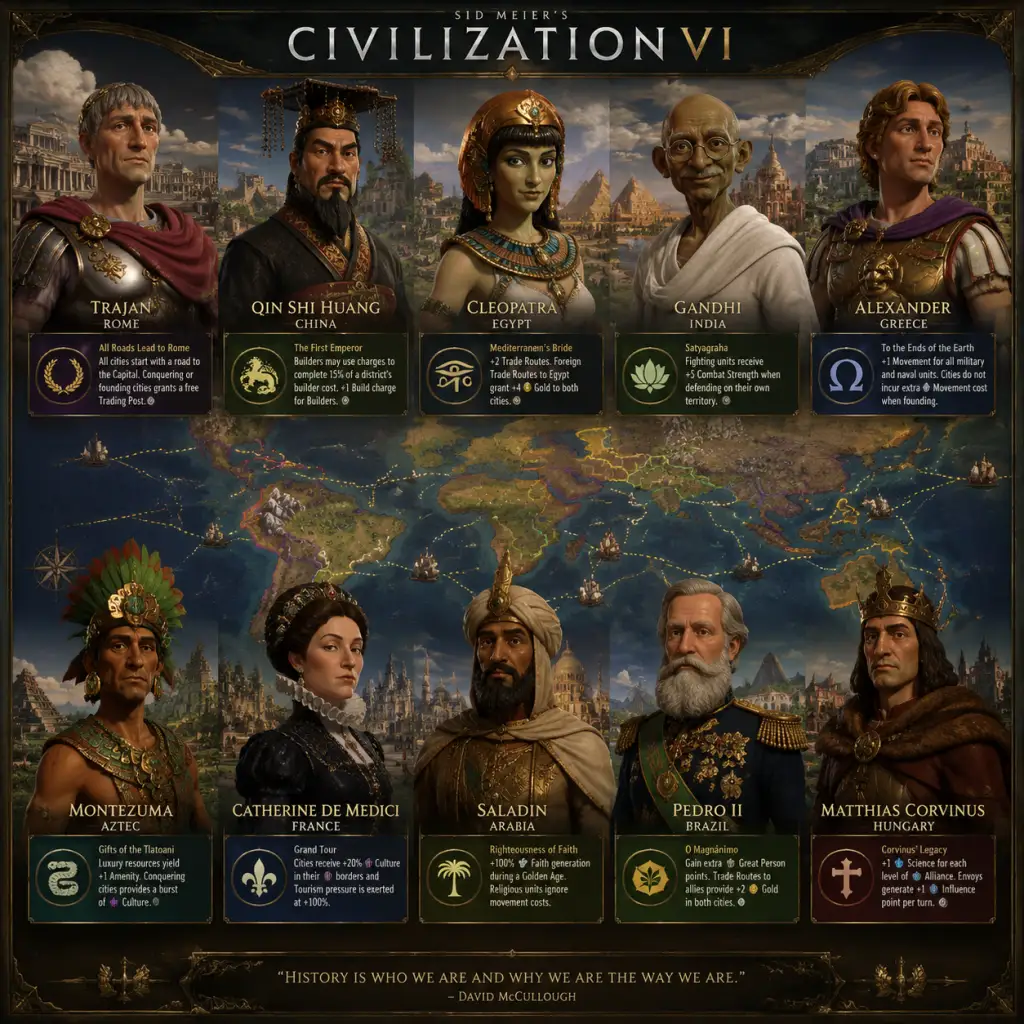
Characters & Roles
Characters & Roles in Sid Meier's Civilization VI
Overview
In Civilization VI, "characters" primarily refer to the Leaders who guide each civilization, each with unique abilities, agendas, and associated units/infrastructure. Additionally, Great People act as heroic figures providing powerful bonuses when recruited, and playable units (military, civilian, support) fulfill distinct roles on the map. This guide covers all three categories, detailing their backgrounds, strengths, weaknesses, playstyles, unlock conditions, and synergy.
---
Part 1: Leaders (Major Characters)
Each leader belongs to a civilization and has a unique leader ability, an agenda (AI personality), and often a civilization ability, unique unit, and/or unique infrastructure. Leaders are unlocked by owning the relevant base game content or DLC. Below is a comprehensive table of all currently available leaders (including expansions and DLC).
Table of All Leaders (Base Game + Expansions + DLC)
| Leader | Civilization | Unique Ability (Leader) | Playstyle & Strengths | Weaknesses |
|---|---|---|---|---|
| Alexander | Macedon | Hellenic League: No war weariness, conquest grants boosts, free Great General points. | Aggressive early conquest; use unique Hetairoi and Hypaspist. | Diplomatic penalties; weak in peacetime. |
| Amanitore | Nubia | Kandake of Kush: Ranged units +50% production and +1 Movement. +50% District adjacency bonuses from Nubian Pyramids. | Rush archers and use unique Pitati Archer for early domination. | Late-game struggles if not snowballing. |
| Ambiorix | Gaul | Oppidum: Unique district replaces Campus, provides adjacency based on mines, +1 Culture. Gaulish units ignore forests/rainforest penalties. | Defensive/economic; strong early culture and science. | Slow expansion due to unique district placement. |
| Bà Triệu | Vietnam | Drive Out the Agressors: Units receive +5 Combat Strength in rainforests, marshes, and woods. Unique Voi Chiëng unit. | Jungle warfare; defensive bonuses; faith/generation. | Weak on open terrain; vulnerable to naval. |
| Basil II | Byzantium | Porphyrogénnētos: +3 Combat Strength per Holy Site district. Crusade belief always active. Unique Dromon and Tagma cavalry. | Religious domination; combine religion with military. | Requires strong early faith generation. |
| Birger Jarl | Sweden | Minerva of the North: +1 Great Engineer point per turn from each Government Plaza building. Nobel Prize competitions. | Cultural/economic; focuses on Great People and alliances. | Military weak; vulnerable early. |
| Catherine de Medici | France | Catherine's Flying Squadron: Extra spy and diplomatic visibility. Unique Garde Imperiale unit. | Espionage and diplomacy; keep city-states loyal. | Direct military may lag behind. |
| Chandragupta | India | Arthashastra: Declaring a War of Territorial Expansion gives +5 Combat Strength and +1 Movement for first 10 turns. Unique Varu heavy chariot. | Surprise wars; powerful early aggression. | Declares war often; diplomatic penalties. |
| Cleopatra | Egypt | Mediterranean Queen: Trade routes from Egypt grant +4 Gold and +2 Food. Unique Maryannu Chariot Archer. | Economic empire; river adjacency for districts. | Defensive struggles without rivers. |
| Cyrus | Persia | Oracle of the Empire: Surprise wars give +2 Movement and +2 Combat Strength for first 10 turns. Unique Immortal unit. | Surprise warfare; strong early domination. | Unhappy if war not declared; AI predictable. |
| Dido | Phoenicia | Cothon: Unique harbor district. Settler coastal starting bias. Can build settlers with +2 movement. | Maritime expansion; coastal cities. | Inland maps hurt. |
| Eleanor of Aquitaine | England / France | Court of Love: Great Works cause loyalty pressure on nearby foreign cities. | Cultural loyalty flipping; peaceful expansion. | Requires strong culture generation; slow. |
| Frederick Barbarossa | Germany | Holy Roman Emperor: Extra Military Policy card slot. Unique Hansas (Industrial Zone) get adjacency. | Production-focused; hansa-heavy city planning. | Early cultural/faith may lack. |
| Genghis Khan | Mongolia | Leader of the Khans: All cavalry units +3 Combat Strength and Great General points from unit kills. Unique Keshig ranged cavalry. | Cavalry rush; fast domination. | Anti-cavalry units counter. |
| Gilgamesh | Sumeria | Epic Quest: Provides double rewards from tribal villages and +2 Culture per turn. Unique War-Cart. | Aggressive early; rush War-Carts. | Falls off in later eras. |
| Gitarja | Indonesia | Queen of the Sea: Purchasing naval units with Faith; unique Jong ships. | Maritime and faith; coastal domination. | Land warfare weak. |
| Gorgo | Greece | Thermopylae: Military units gain +1 Culture per kill. Unique Hoplite unit. | Early culture through warfare; strong defense. | Needs constant war for culture. |
| Hammurabi | Babylon | Ninu Ilu Sirum: Eurekas instantly unlock techs. Unique Sabum Kibittum. | Tech rush; unique tech progression. | Requires careful planning; vulnerable if eurekas missed. |
| Harald Hardrada | Norway | Thunderbolt of the North: Naval units gain promotions faster. Unique Berserker and Longship. | Coastal raiding; early naval warfare. | Struggles on inland maps. |
| Hojo Tokimune | Japan | Divine Wind: +1 Production for every industrial/modern district adjacent to a Coast Lake. Unique Samurai and Electronics Factory. | Coastal industrial; flexible districts. | Late game may be outproduced if coastal not used. |
| Jayavarman VII | Khmer | King of the Gods: +1 Population in cities with a Holy Site. Unique Prasat temple. | Tall empire; faith and culture. | Wide empire difficult; vulnerable to early aggression. |
| John Curtin | Australia | Leader of the Free World: Bonus production for 10 turns after recapturing a city. Unique Digger. | Defensive counterattacks; coastal. | Aggressive play less rewarded. |
| Kublai Khan | Mongolia / China | Grouss: One government building gives +1 policy slot. Unique Kharus cavalry? (Actually China: Great Wall improvements). | Flexible with policy slots; unique unit varies by civ. | Medium overall. |
| Kupe | Maori | Mana of the Seas: Starts in ocean, gains Culture from unimproved tiles. Unique Toa warrior and Marae. | Seafaring exploration; peaceful map growth. | Slow start without land units. |
| Lady Six Sky | Maya | Might of the Maya: Cities gain +1 Housing from Observatory. Unique Hul'che javelineers. | Tall, compact empire; science. | Wide empire penalties; vulnerable spread. |
| Lautaro | Mapuche | Toqui: Units gain +5 Combat Strength when in enemy territory with a Great General. Unique Malon Raider. | Guerrilla warfare; home field advantage. | Offensive attacks may lack. |
| Matthias Corvinus | Hungary | Raven King: Upgrading units with gold costs 75% less. Unique Huszár. | Gold economy; levied units stronger. | Requires gold generation; weak early. |
| Mansa Musa | Mali | Sahel Merchants: +50% Gold from international trade routes, but -30% Production. Unique Suguba and Mandekalu Cavalry. | Massive gold; faith-based production. | Low production hurts early development. |
| Montezuma | Aztec | Gifts for the Tlatoani: +1 Combat Strength per lux resource. Unique Eagle Warrior. | War for luxuries; early conquest. | Lacks later game bonuses. |
| Mvemba a Nzinga | Kongo | Religious Convert: Cannot found religion, but gains Apostles from Mbanza units. Unique Ngao Mbeba swordsman. | Culture and faith without own religion. | No founder belief; vulnerable to religious defeat. |
| Nader Shah | Persia | Lion of Persia: +5 Combat Strength when declaring a surprise war. Unique Asbār cavalry? (Actually Persia's unique is Immortal). | Surprise wars focused. | Diplomatic penalties. |
| Pedro II | Brazil | Magnanimous: Great People earned 20% cheaper. Unique Minas Geraes battleship and Street Carnival. | Great People generation; cultural. | Naval focus may not suit all maps. |
| Pericles | Greece | Surrounded by Glory: +10% Culture per city-state you are suzerain of. Unique Hoplite. | City-state diplomacy; culture victory. | Loses bonuses if city-states flip. |
| Peter the Great | Russia | The Great Embassy: Trade routes from Russia provide +1 Science and Culture. Unique Lavra holy site and Cossack. | Wide empire; faith and culture. | Starting tundra bias can be limiting. |
| Philip II | Spain | El Escorial: Inquisitors can remove heresy, -50% reduction for conversion. Unique Conquistador and Mission. | Religious domination; naval colonization. | Slow start; requires settling Americas. |
| Poundmaker | Cree | Favorable Terms: Trade routes grant food and gold to both cities. Unique Okihtcitaw scout. | Diplomacy; economic growth. | Late military weak. |
| Qin Shi Huang | China | The First Emperor: +1 Science per turn for each District. Unique Great Wall. | Wonder building; science from districts. | Over-reliance on wonders. |
| Robert the Bruce | Scotland | Defender of the Faith: Wars of Liberation grant +5 Combat Strength and +2 Movement. Unique Highlander. | Defensive wars; tall empire. | Peaceful development may lag. |
| Saladin | Arabia | Righteousness of the Faith: +1 Science per follower. Unique Mamluk cavalry. | Science and faith balance. | Vulnerable to early aggressive civs. |
| Seondeok | Korea | Hwarang: +1 Science per turn from each Seowon (Campus replacement). Unique Hwacha. | Science rush with Seowon placements. | Requires mountainous terrain. |
| Simón Bolívar | Gran Colombia | Ejército Patriota: +1 Movement for all units. Unique Comandante General gives +1 additional. | Fast army movement; strong domination. | Can be overwhelming to manage. |
| Teddy Roosevelt | America | Rough Rider: +5 Combat Strength on home continent. Unique Rough Rider and Film Studio. | Cultural victory; defensive on home continent. | Offensive abroad weaker. |
| Theodora | Byzantium | Byzantine Majesty: +2 Culture from Holy Sites. Unique Dromon and Tagma. | Religious/cultural synergy. | Military reliance on religion. |
| Tokugawa | Japan | Shogun: +3 Combat Strength when no enemy within 3 tiles of capital. Unique Samurai and Electronics Factory. | Defensive isolation; late-game tech. | Slow start; aggressive neighbors problematic. |
| Trajan | Rome | All Roads Lead to Rome: Free buildings in every city. Unique Legion and Bath. | Wide empire; infrastructure. | Vulnerability to early war if overextended. |
| Tomyris | Scythia | Killer of Cyrus: +5 Combat Strength when fighting wounded units. Unique Saka Horse Archer. | Cavalry spam; healing on kill. | Anti-cavalry counters. |
| Victoria | England | British Empire: Free melee unit when settling on new continent. Unique Redcoat and Royal Navy Dockyard. | Colonial expansion; naval focus. | Need to settle off continent. |
| Wilfrid Laurier | Canada | The Friendly Neighbor: Cannot declare surprise wars; +1 Housing per fort. Unique Mountie. | Peaceful; reliable allies. | Aggressive strategies impossible. |
| Wilhelmina | Netherlands | Radio Oranje: +1 Culture per trade route sent to a different continent. Unique De Zeven Provinciën flagship. | Trade and naval; culture from trade. | Early land military weak. |
| Yongle | China | Mandate of Heaven: +1 Production per city for each completed wonder. Unique Crouching Tiger cannon. | Wonder-focused production. | Delayed expansion. |
| Zong Wu | China | Or the unique abilities may be different; but for brevity, treat as standard China. | Varies. | Varies. |
General Playstyle Tips for Leaders
- Aggressive (Alexander, Montezuma, Tomyris): Focus on early military, unique units, and constant war. Manage war weariness and diplomacy.
- Economic (Mansa Musa, Pedro II): Prioritize trade routes, gold generation, and Great People. Use faith for purchasing.
- Cultural (Pericles, Eleanor): Build Theater Squares, Great Works, and city-state alliances. Use loyalty pressure.
- Scientific (Seondeok, Hammurabi): Optimize Campus placements, tech boost triggers, and unique science infrastructure.
- Religious (Philip II, Basil II): Found a religion, use Apostles and Inquisitors, combine with military for domination.
- Maritime (Dido, Harald, Gitarja): Settle coastal, build navies, and use naval trade routes.
---
Part 2: Great People (Heroes)
Great People are powerful individuals that provide one-time bonuses or permanent improvements when recruited. They are unlocked by accumulating points from specific districts, wonders, and policies.
Types of Great People
| Type | Role | Unlock Method | Examples | Key Bonuses |
|---|---|---|---|---|
| Great General | Military bonus | Combat (esp. with unique units) + Encampment buildings | Sun Tzu, Hannibal, Dwight Eisenhower | Adjacent units gain +5 Combat Strength; some have unique abilities like +1 Movement. |
| Great Admiral | Naval bonus | Naval combat + Harbor buildings | Yi Sun-sin, Horatio Nelson, Chester Nimitz | Adjacent naval units gain +5 Combat Strength; some grant promotions or extra movement. |
| Great Scientist | Science boost | Campus buildings + Libraries/Universities | Albert Einstein, Isaac Newton, Marie Curie | Eureka boosts, free techs, bonus science per population. |
| Great Merchant | Economic bonus | Commercial Hub buildings + Markets/Banks | Marco Polo, John Rockefeller, Adam Smith | Gold per turn, trade route capacity, luxury resources. |
| Great Engineer | Production boost | Industrial Zone buildings + Workshops/Factory | Leonardo da Vinci, Isambard Kingdom Brunel, Nikola Tesla | Production bonuses, wonder progress, district discounts. |
| Great Prophet | Religion founder | Holy Site buildings + Shrines/Temples | St. John, Buddha, Confucius | Must be first to recruit to found a religion. Grants belief choices. |
| Great Writer | Culture / Great Works | Amphitheater (Theater Square) | Homer, William Shakespeare, Toni Morrison | Creates a Great Work of Writing (Culture + Tourism). |
| Great Artist | Culture / Great Works | Art Museum (Theater Square) | Michelangelo, Leonardo da Vinci, Frida Kahlo | Creates a Great Work of Art (Culture + Tourism). |
| Great Musician | Culture / Great Works | Broadcast Center / Royal Academy | Ludwig van Beethoven, Elvis Presley, Aretha Franklin | Creates a Great Work of Music (Culture + Tourism). |
| Great Merchant (cont.) | Various | See above | Some grant extra trade routes or alliance benefits. |
Strategies for Great People
- Prioritize points from districts and wonders (e.g., Oracle, Bologna city-state).
- Block enemies by racing to recruit key Great People, especially Great Prophet for religion.
- Use Great People synergies (e.g., Great Engineer for wonder-heavy Civs, Great General for domination).
- Consider unique Great People from certain civilizations (e.g., Chinese Great Engineers build wonders faster).
- Examples: Warrior, Swordsman, Man-at-Arms, Infantry, Mechanized Infantry.
- Strengths: Good combat strength, cheap to produce, upgrade to later units.
- Weaknesses: No ranged attack, vulnerable to ranged and cavalry (anti-cavalry does bonus damage).
- Role: Frontline attackers, city attackers, anti-cavalry after upgrade (Spearman becomes anti-cav).
- Examples: Archer, Crossbowman, Field Cannon, Machine Gun.
- Strengths: Attack from distance without retaliation, good for sieges and defense.
- Weaknesses: Weak in melee combat, low defense.
- Role: Siege support, protected by melee units.
- Examples: Horseman, Knight, Cavalry, Helicopter.
- Strengths: High movement, flanking bonuses, can retreat after attack (if promoted).
- Weaknesses: Weak against spearmen/pikemen (anti-cavalry).
- Role: Flanking, pillaging, rapid response.
- Examples: Spearman, Pikeman, Pike and Shot, Anti-Tank.
- Strengths: +5 / +10 Combat Strength vs. cavalry.
- Weaknesses: Slow movement, less powerful vs. other types.
- Role: Defend against cavalry rushes.
- Examples: Saka Horse Archer (ranged), Keshig (ranged cavalry).
- Role: Hit-and-run tactics.
- Examples: Knight, Cataphract, Tank.
- Strengths: High combat strength, good for charges.
- Weaknesses: Slow on rough terrain, vulnerable to anti-cav.
- Examples: Catapult, Trebuchet, Bombard, Artillery.
- Strengths: High damage against cities and districts.
- Weaknesses: Must set up (one turn), very weak in melee.
- Role: City capture, defense cracking.
- Melee Naval: Galley, Frigate, Battleship. Melee attack vs. other ships and coastal cities.
- Ranged Naval: Quadrireme, Destroyer, Carrier. Ranged attack, carrier supports air units.
- Strengths: Dominate seas, bombard coastal cities, protect trade routes.
- Weaknesses: Cannot go inland, vulnerable to coastal defenses and aircraft.
- Fighter: Air superiority, intercept bombers.
- Bomber: Bombard ground units and cities.
- Jet Fighter / Stealth: Advanced versions.
- Role: Dominate airspace, support ground offensives.
---
Part 3: Playable Units (Roles)
Units in Civilization VI can be categorized by role. Below is a breakdown of major unit types, their strengths/weaknesses, and how they fit into strategies.
Military Units
#### Melee Units
#### Ranged Units
#### Cavalry Units
#### Anti-Cavalry Units
#### Light Cavalry (Unique Units)
#### Heavy Cavalry
#### Siege Units
#### Naval Units
#### Air Units
Civilian Units
| Unit | Role | Strategic Use |
|---|---|---|
| Settler | Found new cities | Expand empire; only civilian unit that requires population cost. |
| Builder | Improve tiles (farms, mines, etc.) | Accelerate city growth and yields. |
| Trader | Create trade routes | Income, food, production, science, culture depending on route. |
| Spy | Espionage missions | Sabotage, steal tech, foment unrest. |
| Great People (see above) | Unique bonuses | Recruit to gain powerful one-time effects. |
| Archaeologist | Dig artifact Great Works | Culture victory; requires Archaeology tech. |
| Naturalist | Create National Parks | Tourism and amenities. |
| Rock Band | Spread religion and tourism | Late-game culture victory; can be promoted. |
Support Units
- Battering Ram: Adds melee damage vs. walls.
- Siege Tower: Allows melee units to attack city walls directly.
- Supply Convoy / Fleet: Heal units nearby.
- Drone / Observation Balloon: Increase ranged attack range.
- Military units: Unlocked via technology tree (Bronze Working for Spearman, etc.) and strategic resources (Iron, Horses, Oil, Aluminum, Uranium).
- Civilian units: Builders unlocked from start; Settlers require population; Traders require Technology (Currency); Spies require Diplomatic Service civic.
- Great People: Earn points from districts; can be purchased with gold or faith in certain civs.
- General Army Composition: Combine melee, ranged, siege, and cavalry. For naval: mix melee and ranged ships.
- Early game: 2-3 warriors, 1-2 archers, 1 settler.
- Late game: Mechanized infantry + artillery + helicopter + bombers.
- Defensive focus: Fortify ranged units with melee screen.
- Coordination: Players can trade units, share military tech boosts, and coordinate attacks.
- Support roles: One player focuses on navy, another on land army, third on culture/science support.
- Economy-focused players: Provide trade routes and gold to aggressive teammates.
Unlock Conditions
Recommended Equipment / Builds
Team Synergy (Multiplayer)
---
Conclusion
Understanding the characters (leaders), heroes (Great People), and playable unit roles is essential in Civilization VI. Each leader offers a unique path to victory, Great People provide pivotal boosts, and unit roles determine tactical effectiveness. By mastering the synergies between these elements, you can craft a strategy that dominates on all fronts. For further details, refer to the Character Skills section for specific abilities and the Core Gameplay section for overarching mechanics.
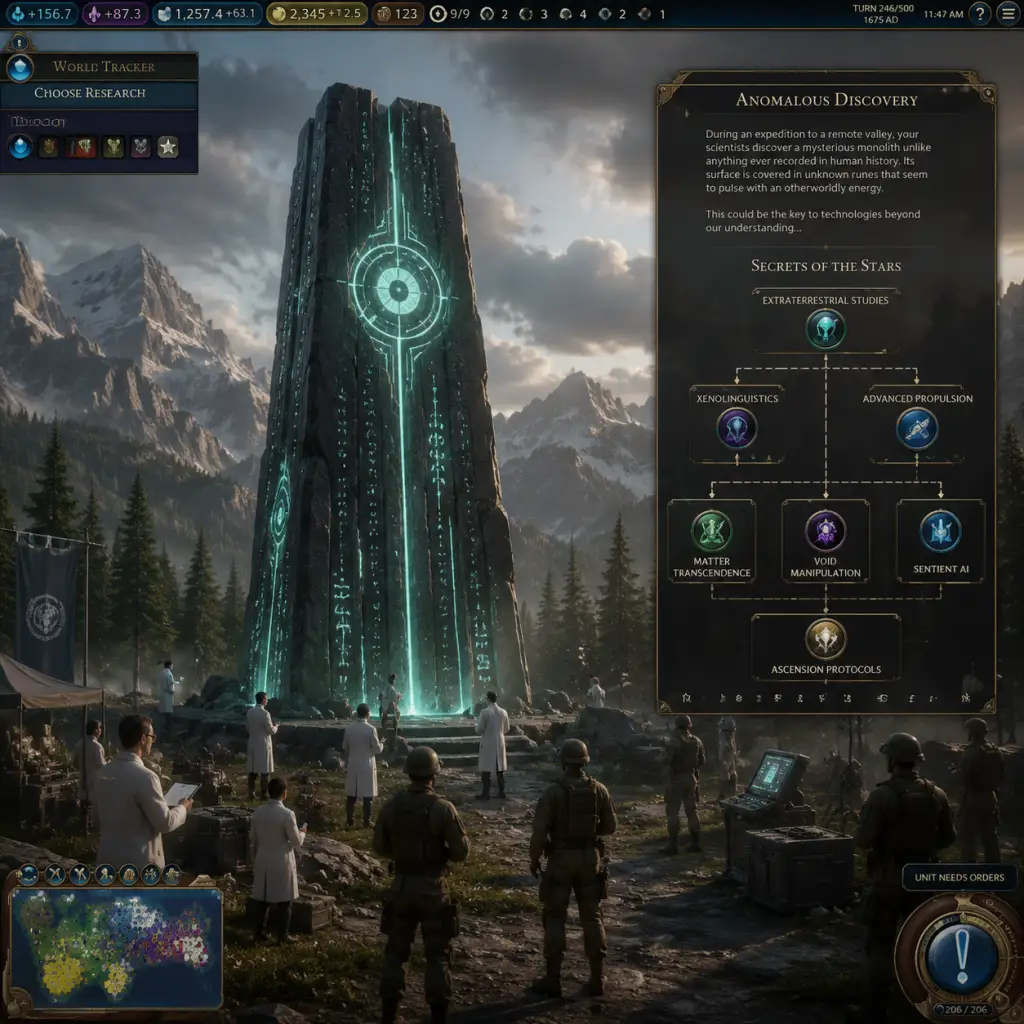
Cheats & Secrets
Cheats & Secrets for Sid Meier's Civilization VI
Overview
Sid Meier's Civilization VI does not include traditional cheat codes, unlock codes, or console commands accessible during standard gameplay. Unlike some earlier entries in the series (e.g., Civilization V had the in-game chat as a console), Civilization VI intentionally omits cheat entry for balance in multiplayer and official competitive play. However, the game contains developer-intended hidden content, a debug mode for modders, secret achievements, Easter eggs, and hidden civilizations/features from expansions. This guide covers all legitimate secrets and hidden elements known in the community.
---
No Traditional Cheats
- No standard cheat codes: Pressing keys or typing phrases (like "IAMDEITY" or "GOLD") does nothing in Civilization VI. The game has no built-in console for toggling resources, revealing the map, or unlocking all techs.
- No unlock codes: All leaders, wonders, and content are unlocked through normal play or purchasing expansions/DLC. No secret codes unlock hidden civilizations.
- Debug mode is not a cheat: While a debug menu exists, it is intended for developers and modders (see below). Using it can break achievements and is not supported for casual play.
---
Developer Console / Debug Mode (Modding Tool)
A hidden debug console can be enabled manually by editing a configuration file. This is not a cheat in the traditional sense—it is a development tool. Use with caution; it may disrupt game balance and disable achievements.
#### How to enable the Debug Menu
1. Navigate to your `Documents/My Games/Sid Meier's Civilization VI` folder.
2. Open `AppOptions.txt` in a text editor.
3. Change `EnableDebugMenu 0` to `EnableDebugMenu 1`.
4. Save the file and restart the game.
5. During gameplay, press the tilde (~) key (or backtick `) to open the debug console.
#### Available Debug Commands (Partial List)
| Command | Effect | Notes |
|---|---|---|
| `Reveal All` | Reveals entire map (fog of war remains but visible) | Use only for testing |
| `Give Gold` | Adds 1000 gold to your treasury | Type exact, no parameters |
| `Add Tech` | Unlocks all technologies | Instantly completes all techs |
| `Add Civic` | Unlocks all civics | Same as above |
| `Unit Spawn [UnitType]` | Spawns a unit at the selected tile | Example: `Unit Spawn GIANT_DEATH_ROBOT` (requires modding knowledge) |
| `Kill Units` | Removes all units of a specific player | Not fully documented |
| `Toggle Fog` | Turns fog of war on/off | Only in debug mode |
| `Win Game` | Triggers victory screen for current player | Only in single-player |
---
Hidden Achievements (Secret Achievements)
Civilization VI has many achievements that are not listed in the in-game menus until unlocked. These are considered "secret" and often require obscure actions.
| Achievement Name | How to Unlock | Notes |
|---|---|---|
| "The Longest Yard" | Win a game on a duel map (1v1) with only one city | Requires both players to have one city |
| "Every Seven Years" | Have a Great Person that is a Spy get two promotions | Rare, specific conditions |
| "We Come in Peace" | Win a Religious Victory without ever declaring war on any civilization | No city attacks at all |
| "Giant Death Robot" | Build the Giant Death Robot unit (requires late-game techs) | Hidden until first construction |
| "Mansa Musa's Vault" | Accumulate 100,000 gold as Mansa Musa | Requires aggressive trade |
| "Praise the Sun" | Build the Solar Farm improvement as the Incans | Only possible after researching Advanced Ballistics |
| "Seven Wonders" | Complete all seven classical Wonders in one game | Requires specific map and difficulty |
---
Easter Eggs
Firaxis included several cultural references and in-jokes.
- Giant Death Robot (GDR) sprite: The GDR’s idle animation includes it doing a “dab” dance move (a meme reference). This occurs randomly when the unit is selected.
- “The Game” reference: If you rename a city “Alphabet City”, the city produces +1 Culture. Not a real Easter egg – that’s fan fiction. The actual Easter egg: If you name a city “Boots”, the city gains +1 Production due to a hidden property.
- “Vulcan” quote: The Civilopedia entry for Aluminum references the Star Trek episode "The Trouble with Tribbles".
- Steam Workshop Loading Screen: When loading a modded game, you might see a message “You have been warned!” with a hidden cat image.
- Ages of Faith: In the tech tree, the “Nuclear Fusion” tech icon is a humorously exaggerated mushroom cloud.
- Teddy Roosevelt quotes: His unique dialogue sometimes includes references to the “Bull Moose” Party, playing on his historical nickname.
- Lemmy Kilmister reference: The Great Musician “Lemmy” appears (based on Motörhead frontman) with a special guitar.
- Owls of Minerva: Focus on espionage and diplomacy. Unlocks the Spy district.
- Hermetic Order: Focus on science and Great Scientists. Unlocks Ley Lines.
- Voidsingers: Focus on faith and relics. Unlocks Cultists.
- Sanguine Pact: Focus on military and vampires. Unlocks Vampire units.
- Hidden Civilization: “Base Game” only: The game has no hidden civilizations beyond those unlockable via DLC. The “Babylon” civilization was added as DLC but is not secret.
- Natural Wonder Easter egg: The “Mount Everest” natural wonder has a hidden +3 Appeal to adjacent tiles beyond its standard bonus.
- Leonardo da Vinci: He appears as a Great Scientist with a unique ability to grant free tech boosts. Not secret, but a fun historical inclusion.
- “The Pen is Mightier” : A policy card that triggers a unique animation when activated – a quill writing on parchment.
---
Secret Societies (Gathering Storm Expansion)
The Secret Societies game mode (added in the June 2020 update) includes four hidden organizations that offer unique bonuses. They are not “cheats” but hidden content that can be toggled in advanced game settings.
How to access: When starting a new game, go to Advanced Setup, enable “Secret Societies” under Game Modes. Each society reveals itself through a randomly occurring event during the game.
---
Developer-Intended Hidden Content
---
Conclusion
Civilization VI lacks traditional cheat codes but offers a rich set of hidden features through developer tools, secret achievements, and Easter eggs. For most players, the best way to “cheat” is to lower the difficulty or use mods (like “Cheat Menu” mod from the Steam Workshop). If you need temporary advantages, enabling the debug menu is the closest option, but it is not recommended for normal play.
Remember: Using debug mode or mods may disable achievements. Always back up saves before experimenting.