Important Notes
Warnings and Pitfalls
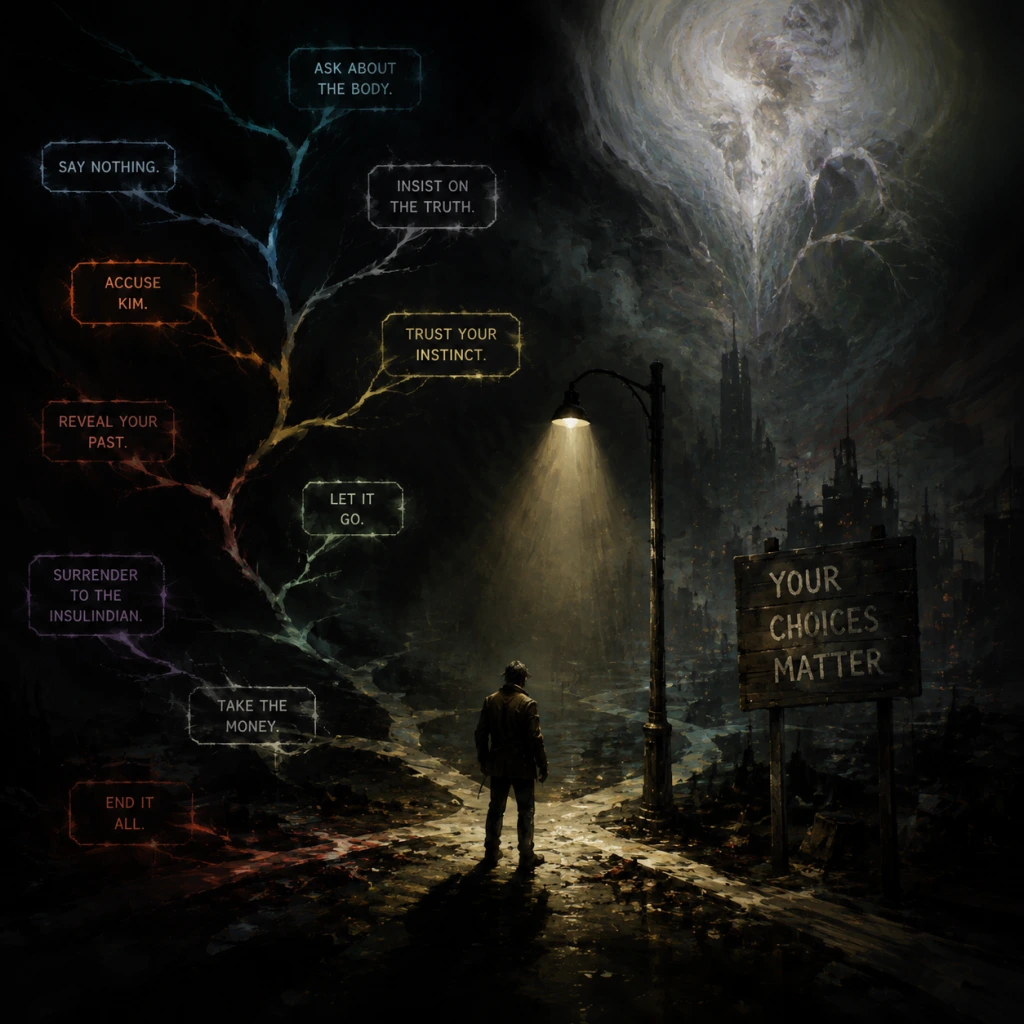
- Disco Elysium is a heavy narrative-driven RPG with no combat. Your choices, especially in dialogue, carry profound and often unforeseeable consequences.
- The game tackles mature themes including addiction, depression, existential crises, political extremism, and historical trauma. Player discretion is strongly advised; take breaks if needed.
- There is no traditional "game over" from death or combat failure. However, you can lock yourself out of content, fail key quests, or trigger an early, unsatisfactory ending by making certain irreversible decisions.
- Time only advances when you converse with NPCs or perform scripted actions. You cannot grind time by waiting or doing nothing. Be mindful of time-sensitive events—some quests have deadlines measured in days.
- Completing a thought (internalization) is permanent. Once you internalize a thought, you cannot undo it. Choose wisely which thoughts to pursue.
- Faction siding: Deciding to align with the union, the corporation, the working class, or other groups can lock you out of alternate endings and significant content. A neutral stance is possible but difficult.
- Final arrest decision: The person you choose to arrest (or not) at the end is irreversible and determines the game's ending. Save before this point to see other outcomes.
- Certain dialogue choices can permanently close off quests or character interactions. For example, insulting a key NPC may make them refuse to speak to you ever again.
- Skill checks: Many red checks (white checks with a red background) are one-time only. If you fail them, you cannot retry later by any means.
- Time of day matters: Some NPCs and events only appear or are available during specific times (morning, afternoon, evening, night). Explore thoroughly at different hours.
- Day 1 is critical: Many conversations and clues about the hanging and the initial investigation can be missed if you rush. Talk to everyone, examine everything.
- The murder investigation: You must solve the central case by the end of Day 4 (or a certain number of in-game days), otherwise you will get a bad ending where the culprit remains unknown.
- Side quests: The Anodic Dance Club, the old church, the dicemaker, and the new century merchant quests are all missable if you don't explore every location and talk to every character.
- Achievements: Many achievements are locked behind specific ideological choices or dialogue paths. If you commit to one political alignment early, you may miss others.
- Volition breakdowns: If your morale (Volition) completely depletes, you may get a game-over event that ends the story prematurely. This is rare but can happen if you ignore mental health.
- First few hours: The game intentionally confuses you with a hangover state, low skills, and minimal direction. Expect to fail many checks and feel lost; this is normal.
- Mid-game skills: Once you invest skill points and internalize a few thoughts, the game becomes significantly easier. Early failure is part of the experience.
- The Tribunal (final confrontation): This is a major spike where numerous skill checks combine with the consequences of your previous decisions. If your build is weak in Empathy, Logic, or Physical Instrument, this sequence can be brutal.
- High-value skill checks: Some checks require 12+ points in a skill. If you didn't specialize, you may need to rely on drugs, clothing, or items to boost temporarily.
- No traditional grinding: XP comes solely from completing tasks, internalizing thoughts, and solving puzzles. Talking to the same NPC repeatedly yields no extra XP.
- Wasting skill points: Putting points into a high-level skill early may lock you out of other useful skills. Balance your build—don't hyper-specialize unless you have a plan.
- Inefficient thought internalization: Some thoughts take very long to internalize (e.g., 60 minutes real-time) and may not be worth the time if you have limited active slots (maximum 4). Prioritize thoughts that match your playstyle.
- Misleading skill synergy: Not all skills are equally useful. For example, Electrochemistry can lead to addiction trouble, while Volition is almost always beneficial. Learn which skills matter for your approach.
- Disco Elysium is a purely single-player, offline game. There are no online features, multiplayer modes, or anti-cheat software. No etiquette or anti-cheat concerns apply.
- However, be cautious when reading fan forums or comment sections—the game is story-heavy, and spoilers are common. Consider finishing a playthrough before engaging with community discussions.
- Manual saves are your best friend: The autosave is infrequent. Save manually before major dialogues, skill checks, or when entering new areas. You may want to reload.
- Keep multiple save slots: Use different slots to mark critical points (e.g., "Before Day 1 end", "Before Tribunal", "Pre-final choice"). This allows you to revisit without replaying the entire game.
- Use descriptive names: Name your saves meaningfully, because the game's save list can become confusing. Example: "Day 2 - explored dock area - high morale".
- Hardcore mode: There is a 'Hardcore Mode' option that disables manual saving entirely (only autosave at specific checkpoints). If you choose this, be absolutely sure, because you cannot revert mistakes.
- Save scumming: Normal mode allows you to reload and retry any skill check. This is especially useful for white checks that you can retry after leveling up. Use it to avoid permanent lockouts.
- You can pass failing checks with drugs/alcohol: Consuming substances temporarily boosts specific skills (e.g., FALN drugs, Spirits, etc.). But beware: addiction can cause permanent problems. Use as a last resort.
- White checks can be retried after skill increases: If you fail a white check (not red), you can try again later after leveling the relevant skill or using items that boost it. Red checks are never retryable.
- Internalization takes real-world time: Thoughts slowly unlock while you play—usually 10–60 minutes. You can have up to 4 thoughts internalizing at once. Plan which to start early in the day.
- You can change your signature skill at character creation: That skill gains 1 extra point and has unique dialogue options. Choose one that fits your intended playstyle (e.g., Drama for a flamboyant detective, Rhetoric for a political debater).
- Save-scumming is allowed: The game does not punish reloading. If you want to see all outcomes, save before major decisions and reload.
- Volition is the most important skill: High Volition prevents morale breakdowns and keeps you in the game. If your Volition drops to zero, you get a bad ending. Invest points here early.
- Clothing and items matter: Equipping certain clothes can boost skills (e.g., a necktie increases Electrochemistry). Change outfits to match the situation—especially before a difficult skill check.
- The comprehensive tool (eye icon) reveals secrets: While exploring, use the eye icon on objects and people to see invisible details, thought prompts, and hidden dialogue options.
- Cuno is not just a bratty kid: He has crucial information about the case if you treat him with respect or bypass his defenses. Don't write him off.
- Saying nothing is a valid choice: In many dialogues, you can remain silent. This can sometimes unlock special options or avoid committing to risky statements.