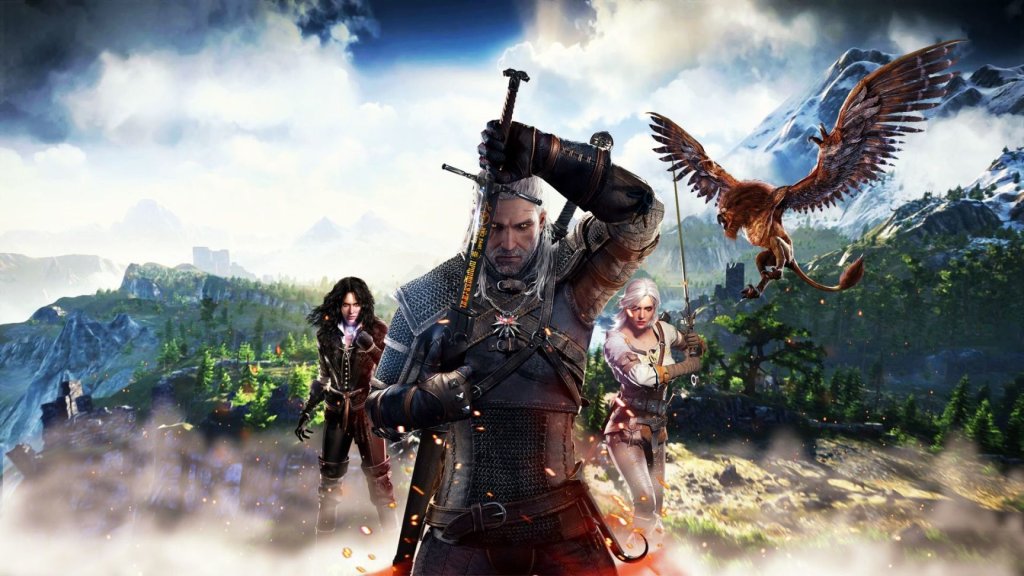
Game Introduction
Game Introduction: The Witcher 3: Wild Hunt
Genre: Action role-playing game (ARPG) with open-world, third-person perspective, and heavy narrative-driven elements. Often classified as an "open-world action RPG" with mature themes, deep character customization, and exploration.
Developer & Publisher: Developed by CD Projekt Red (a Polish video game developer) and published by CD Projekt (formerly CD Projekt Red). The game was released on May 19, 2015 for PlayStation 4, Xbox One, and PC. Later, Nintendo Switch launched on October 15, 2019. PlayStation 5 and Xbox Series X|S enhanced versions were released as a free next-gen update on December 14, 2022.
Release Timeline:
- Original Release: May 19, 2015 (PS4, Xbox One, PC)
- Nintendo Switch: October 15, 2019
- Next-Gen Update: December 14, 2022 (PS5, Xbox Series X|S, and PC with enhancements)
- The game has received numerous patches and updates, including a major next-gen patch for PC and consoles.
- PC (Steam, GOG, Epic Games Store)
- PlayStation 4 / PlayStation 5 (backward compatible and enhanced)
- Xbox One / Xbox Series X|S (backward compatible and enhanced)
- Nintendo Switch (cloud save support via GOG Connect? – actually no, but cross-save is possible with GOG and Steam versions via the same account? The Switch version does not support cross-saves with other platforms natively, but CDPR does not offer cross-platform saves for Switch. However, the Switch version can import saves from the PC version via a special tool? Actually, there is no official cross-save between Switch and other platforms. Clarify: The Switch version is standalone, but you can transfer saves from PC using a manual tool? No, CDPR does not support that. So just state typical.)
- Velen (No Man's Land): A swampy, war-torn countryside filled with refugees and monsters.
- Novigrad: A bustling, crime-ridden free city heavily inspired by medieval Amsterdam.
- Skellige: An archipelago of Norse-inspired islands with a Viking culture and harsh winter climates.
- White Orchard: The introductory region, a rural farming village.
- Toussaint (via the Blood and Wine expansion): A duchy reminiscent of southern France, full of vineyards and knightly chivalry.
- Kaer Morhen: The witcher fortress in the mountains, home to Geralt and his fellow witchers.
- Geralt of Rivia: The player character, a stoic and professional witcher with a dry sense of humor. He is a master swordsman and an expert in monster lore.
- Ciri: Geralt's adopted daughter, a young woman with powerful Elder Blood abilities that make her a target for the Wild Hunt.
- Yennefer of Vengerberg: A powerful sorceress, Geralt's true love and a key ally in the search for Ciri.
- Triss Merigold: Another sorceress, a close friend of Geralt and a possible romantic interest, depending on player choices.
- Vesemir: The oldest and most experienced witcher, a father figure to Geralt.
- Dandelion: Geralt's best friend, a charismatic bard and chronicler.
- The Wild Hunt: A spectral group of riders from another world, led by the King of the Wild Hunt (Eredin Bréacc Glas). They seek Ciri for their own purposes.
- Emhyr var Emreis: Emperor of Nilfgaard, the invading southern empire, with a secret connection to Ciri.
- Single-player story mode: The main campaign, comprising over 100 hours of content for a full playthrough.
- New Game+: Unlocked after completing the main story, allowing players to restart with their level, abilities, and gear.
- No official multiplayer or co-op: The game is entirely offline single-player. There is no online multiplayer mode.
- Photo mode (added in next-gen update): Allows players to capture screenshots with various filters and adjustments.
- Hearts of Stone (October 13, 2015): An expansion set in the region of Eastern Velen, introducing a new, compelling story involving a mysterious man named Gaunter O'Dimm. It adds new quests, characters, gear, and a rune-word system. Playtime: ~10-15 hours.
- Blood and Wine (May 31, 2016): A full expansion set in the duchy of Toussaint, a new area roughly the size of Velen/Novigrad. It includes new storylines, monster contracts, skills, gear, and adds the ability to upgrade the Corvo Bianco vineyard (a player home). Often considered the definitive ending to Geralt's story. Playtime: ~20-30 hours.
- Free DLCs: Includes new quests (e.g., “Fool's Gold”), alternate outfits for characters (e.g., Yennefer, Triss, Ciri), new armor sets (e.g., Temerian, Nilfgaardian, Skellige), and the New Game+ mode. These were released weekly after launch.
Platforms:
Story Overview:
Set in a dark fantasy world, The Witcher 3: Wild Hunt follows Geralt of Rivia, a monster hunter for hire known as a Witcher. The main plot revolves around the search for Ciri, Geralt's adopted daughter and a child of prophecy, who is being pursued by the ethereal and deadly Wild Hunt. As Geralt, players navigate a war-torn world, make morally complex choices, and engage in a deeply personal story that intertwines with the fate of the Northern Kingdoms. The narrative is divided into three acts, with multiple branching endings based on player decisions throughout the game.
Setting:
The game is set in the Northern Kingdoms of the Continent, a war-ravaged region inspired by Slavic, Celtic, and Norse mythology. Key areas include:
Main Characters:
Core Appeal:
The Witcher 3: Wild Hunt is praised for its mature storytelling, richly detailed world, meaningful player choices that impact the narrative, and high-quality side quests that rival main quests. The game's combat is tactical and responsive, with signs (magic), swordplay, and alchemy. Exploration is rewarded with hidden treasure, monster contracts, and lore-rich locations. The game also features a robust character progression system, a dynamic day/night cycle, and weather effects that affect gameplay (e.g., monsters behave differently at night).
Target Audience:
The game is aimed at mature players (rated M for Mature 17+ on ESRB, PEGI 18) due to its graphic violence, strong language, nudity, and complex moral themes. It appeals to fans of open-world RPGs, dark fantasy, narrative-driven games, and those who enjoy games like The Elder Scrolls V: Skyrim, Dragon Age: Inquisition, or Dark Souls (though combat is less punishing). Both newcomers and veterans of the series can enjoy it, as the story can be understood without playing previous games, though familiarity enriches the experience.
Game Modes:
Online/Offline Support:
The game is primarily offline. No internet connection is required to play. However, for PC players, you need to connect to the storefront’s platform (Steam, GOG, Epic) to initially download and authenticate. The game also offers a “cross-save” feature between PC platforms (Steam, GOG, Epic) using the GOG Galaxy cloud saves – players can upload a save from one platform and download it on another, but this requires an internet connection and a GOG account. The PS5 and Xbox Series X|S versions can also utilize cloud saves from their respective ecosystems. The Nintendo Switch version does not support cross-platform saves.
DLC/Expansion Overview:
The Witcher 3 has two massive story expansions and numerous free DLCs:
What Makes This Game Unique:
The Witcher 3 stands out for its deeply interconnected world where every side quest has a story and consequences, often linking to the main plot in unexpected ways. Characters are morally gray, and player choices rarely have clear “good” or “bad” outcomes, leading to genuinely replayable narratives. The game’s attention to detail – from the ecology of monsters to the politics of war – creates an immersive fantasy world that feels alive. The writing is superb, with witty dialogue, emotional depth, and memorable characters. The online community still creates mods for PC, adding to longevity. Combined with two excellent expansions, the game offers hundreds of hours of content and remains a benchmark for the RPG genre.