Game Introduction
Game Introduction: Valorant
Overview
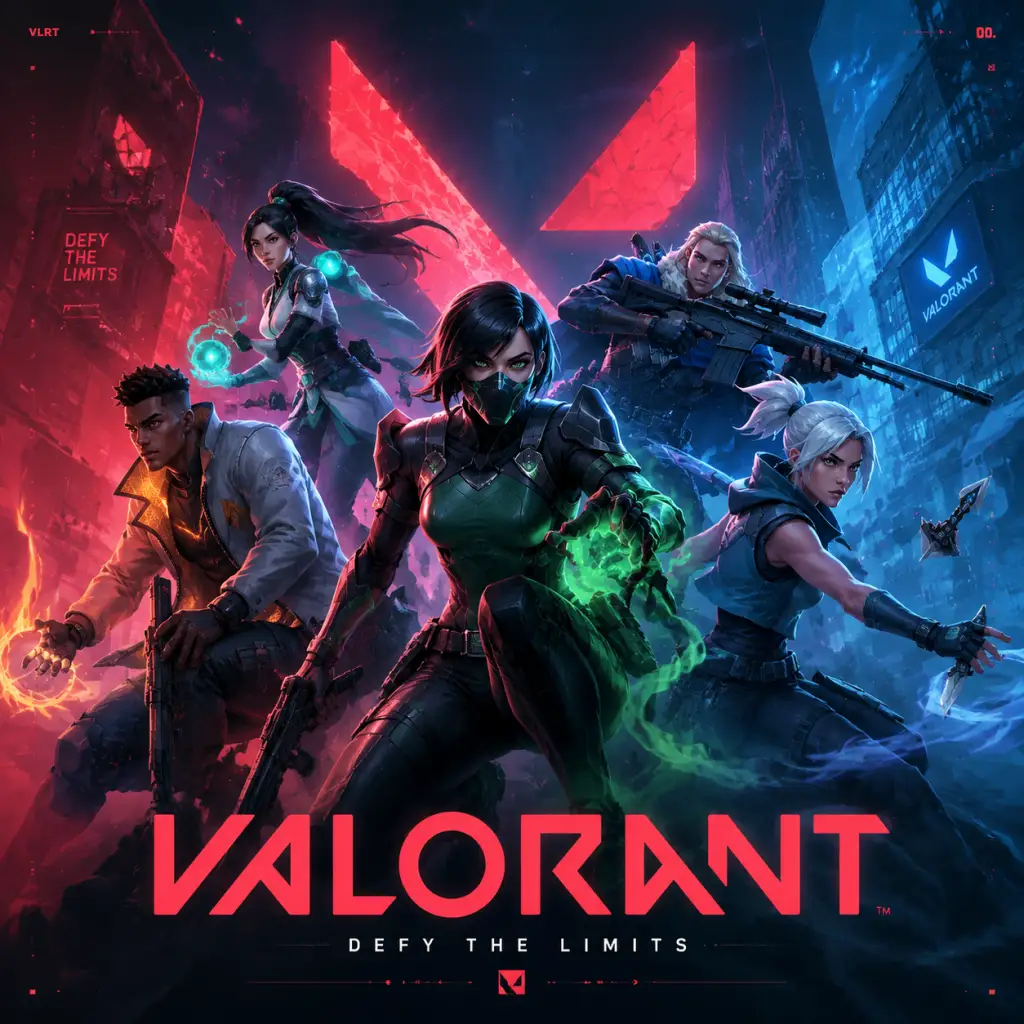
Valorant is a free-to-play, 5v5 character-based tactical shooter developed and published by Riot Games. Released on June 2, 2020, the game combines precise gunplay from classic shooters like Counter-Strike with unique agent abilities reminiscent of hero shooters like Overwatch. Valorant is available exclusively on PC (Windows) and is a purely online multiplayer title with no offline modes. It has no paid expansions or DLC; instead, monetization comes from optional cosmetic purchases, a Battle Pass system, and the in-game Valorant Points (VP) currency.
Developer & Publisher
- Developer: Riot Games
- Publisher: Riot Games
- Platform: PC (Windows only)
- Release Date: June 2, 2020 (global launch; beta began April 7, 2020)
- Duelists – Entry fraggers (e.g., Phoenix, Jett, Reyna)
- Controllers – Area denial and smoke (e.g., Brimstone, Viper, Omen)
- Initiators – Information gatherers (e.g., Sova, Skye, KAY/O)
- Sentinels – Defensive specialists (e.g., Sage, Cypher, Killjoy)
- Competitive FPS veterans seeking a new challenge
- Players transitioning from Counter-Strike or Overwatch
- Esports enthusiasts (Valorant has a thriving competitive scene with VCT – Valorant Champions Tour)
- Fans of hero shooters who want more precision-based gunplay
- Unrated – Standard mode: best-of-24 rounds, teams swap sides after 12 rounds, first to 13 wins
- Competitive – Ranked mode with a rating system (Iron to Radiant); same rules as Unrated but stricter matchmaking and rank adjustments
- Swiftplay – Condensed version with first to 5 wins, shorter matches (~15 minutes)
- Spike Rush – Fast-paced mode with random loadouts, a single spike, and small map pool (~8 minutes)
- Escalation – Arcade mode where teams progress through weapon/ability tiers; first to finish wins
- Deathmatch – Free-for-all, 10 players, first to 40 kills (warmup/practice mode)
- Custom Games – Create private lobbies for practice, tournaments, or fun
- Battle Pass (seasonal, ~$10) – grants skins, player cards, sprays
- Skin Bundles (individual or pack, via VP)
- Agent Contracts – free progression rewards (unlock new agents, skins, titles)
- Radiant Points – earnable via gameplay for some cosmetics
- One-tap headshot potential with a slower time-to-kill than Overwatch but faster than many hero shooters
- Agent abilities that are utility-based, not damage-focused (smokes, flashes, walls, info, healing) – no ultimate abilities that one-shot
- Weapon economy system (buy guns and shields each round) inspired by CS:GO
- Anti-cheat system (Vanguard) – kernel-level driver that runs at boot, praised for strict enforcement
- Competitive integrity – tight matchmaking, visible ranks, premier tournaments fully integrated into the client
- Accessible performance – optimized for low-end PCs, high framerates, and refresh rates up to 240Hz+ with reduced input lag
- Free-to-play with no pay-to-win – all gameplay-affecting content (agents, maps) is obtainable through gameplay
Story Overview & Setting
Valorant takes place in a near-future Earth where a mysterious energy source called Radiante has transformed certain individuals, granting them supernatural abilities. These individuals, known as Radiants, are the foundation of a clandestine organization called the Valorant Protocol. The Protocol is a shadowy task force assembled from agents around the world to prevent global catastrophes caused by Radiante instabilities, rival factions, and threats from alternate dimensions. The core narrative is revealed through episodic cinematics, agent lore cards, and seasonal events, though the main gameplay focuses on tactical combat rather than plot progression.
Main Characters (Agents)
Valorant features a roster of Agents, each with unique abilities and backstories. Agents are categorized by their role:
As of 2025, there are over 20 agents, each with distinct personalities tied to real-world regions, such as Brimstone (USA), Phoenix (UK), and Yoru (Japan). New agents are added every few months via free updates.
Core Appeal & Target Audience
Valorant appeals to players who enjoy high-skill, tactical, team-based shooters with a modern twist. Its core audience includes:
The game emphasizes teamwork, communication, strategic ability usage, and mechanical aim. It is designed to be easy to pick up but difficult to master, with a steep learning curve that rewards practice and game sense.
Game Modes
Valorant offers several modes, all with a 5v5 format:
Online / Offline Support
Valorant is online-only. It requires a persistent internet connection and a Riot Games account. There is no offline mode for single-player, practice range, or training. The training mode (Practice Range) and custom games with bots still require a server connection, though you can queue solo.
DLC / Expansion Overview
Valorant has no paid expansions or traditional DLC. All gameplay content—new agents, maps, weapons, and game modes—is delivered through free updates. Monetization is purely cosmetic:
New content typically arrives with each Act (every ~2 months) and includes a new agent, a new map (occasionally), Battle Pass refresh, and balance changes.
What Makes Valorant Unique?
Valorant stands out by marrying precise, counter-strike-style gunplay with tactical ability usage. Key differentiators:
Valorant has become a staple of the tactical shooter genre and a dominant force in esports, with a committed community and ongoing support from Riot Games.