Core Gameplay
Overview
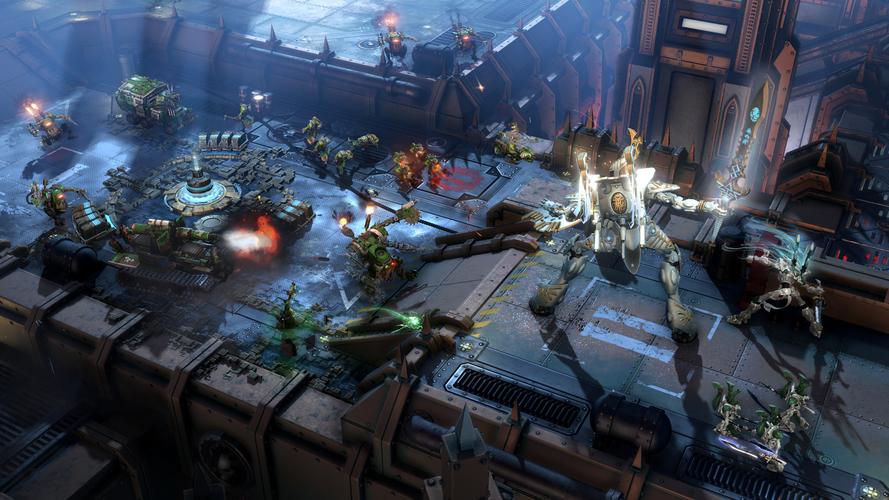
Warhammer 40,000: Dawn of War II (DOW2) blends real-time strategy with tactical squad combat and RPG progression. Unlike traditional base-building RTS games, you control small, named squads (each led by a Hero) that level up, acquire new abilities, and equip wargear dropped by enemies or found in the environment. The core gameplay loop revolves around selecting missions on the strategic map, deploying a strike force of up to four squads, completing objectives with cover-based combat and special abilities, then returning to the Space Marine battle barge to upgrade your heroes and unlock new missions.
This guide breaks down the game’s mechanics into clear progression tiers, covering everything from your first steps to the late-game challenges and endgame modes.
Main Gameplay Loop
1. Strategic Phase: On the battle barge, you view the planet sub-sector map. You can select a mission node (story or optional), read its briefing, and choose which heroes to deploy. You also manage your squad between missions, spending Requisition (the campaign currency) to purchase wargear from the Armoury.
2. Mission Phase: You load into a map with a squad of 1–4 heroes (each leading a squad of marines). The mission objective appears (e.g., kill all enemies, capture points, retrieve relics, defend position). You move your squads using RTS controls (right-click move, attack-move, etc.).
3. Combat Encounters: Enemies appear in waves or patrols. You must utilize the cover system: units take reduced damage when behind low cover (crates, walls) and take heavy damage when suppressed by heavy weapons. Abilities like grenades, jump packs, and teleportation break stalemates. Morale management is critical – low morale reduces accuracy and damage; retreating (using the retreat button) repositions a squad to a rally point but costs time.
4. Loot & Progression: After combat, enemy squads may drop wargear (weapons, armor, accessories) and experience orbs. You can pick up wargear automatically or click to collect. Experience fuels hero level-ups, which unlock skill tree choices at every level. Wargear is equippable from the mission loadout screen or the Armoury.
5. Mission End: Completing the mission grants Requisition, experience, and often story progression. You return to the battle barge and repeat the loop.
Combat & Interaction Systems
- Cover System: Units in green cover (low walls, barricades) take 50% less damage from ranged attacks. Red cover (sandbags, rocks) is tougher but may not fully protect flanks. Units can vault over low obstacles. Heavy weapons (e.g., missile launchers, heavy bolters) can suppress targets behind cover, reducing their accuracy and stopping their advance.
- Suppression & Morale: Each squad has a morale bar. Sustained fire from heavy weapons, flamers, or psychic attacks depletes morale. At zero morale, the squad suffers a 50% damage penalty and may panic. You can restore morale by retreating briefly or using certain abilities (e.g., Sergeant’s “Take Cover” command).
- Melee vs Ranged: Melee attacks deal heavy damage but require closing distance. Most squads have a default ranged weapon and a melee attack. Heroes can specialize in either – e.g., Assault Marine with Thunder Hammer is melee-focused, while Devastator Marine with Lascannon is ranged.
- Special Abilities: Each hero has unique active abilities (e.g., Frag Grenade, Melta Bomb, Teleport, Healing Aura). These are unlocked and upgraded via the skill tree and wargear. Abilities use no mana; they have cooldowns. Some abilities are passive (e.g., +health, +accuracy).
- Retreat: Press the retreat button (default R) for a squad to run back to a designated rally point (usually near your deployment zone). They move faster and ignore suppression but cannot attack. Useful after taking heavy losses or when morale is broken.
- Grenades & Ordnance: Grenades (frag, krak, smoke) are consumable abilities with a cooldown. Frag grenades deal AoE damage and knock down infantry. Krak grenades are anti-vehicle/anti-heavy armor. Melta Bombs are powerful single-target damage for Terminators or vehicles.
- Line of Sight & Elevation: Units on higher ground get accuracy and damage bonuses. Buildings can be occupied for garrison bonuses (increased damage, protection). Use the camera to scout ahead.
- Story Missions: Marked with a golden icon. These advance the plot, introduce new enemies (Orks, Eldar, Tyranids, Chaos Space Marines), and often feature boss fights. Completing them is required to progress.
- Side Missions: Silver or bronze icons. Optional battles that offer extra Requisition, experience, and unique wargear. They also provide additional lore. Some side missions unlock new wargear recipes or access to later optional bosses.
- Exterminate: Kill all enemy units on the map.
- Capture Points: Secure key areas and hold them against waves.
- Defend: Protect an allied unit (e.g., a Basilisk artillery piece) for a timer.
- Retrieve: Collect relics or data slates scattered across the map.
- Escort: Keep a vulnerable unit alive as it moves to extraction.
- Boss Fight: Defeat a powerful named enemy (e.g., Warlord, Hive Tyrant, Chaos Lord).
- Weapons: Bolters, plasma guns, flamethrowers, missile launchers, chainswords, power fists, etc. Each hero has weapon class restrictions (e.g., only Tactical can equip standard Bolters; Devastator uses heavy weapons).
- Armor: Power armor variants (e.g., Mark VII, Terminator armor for specific heroes) that provide health and damage resistance.
- Accessories: Relic icons, combat stims, targeting arrays that grant passive buffs or active abilities.
- Tactical Marine (Tarkus): Can focus on ranged combat (Bolter Mastery, Frag Grenades), melee (Power Sword, Melta Bombs), or support (Healing Aura, Take Cover).
- Devastator Marine (Avitus): Heavy weapons specialist – choose between anti-infantry (Heavy Bolter, Suppression), anti-vehicle (Lascannon, Missile Launcher), or hybrid. Skill tree enhances heavy weapon damage, rate of fire, or adding explosive rounds.
- Assault Marine (Thaddeus): Mobile melee/jump pack hero. Options include Thunder Hammer (slow, heavy), Lightning Claws (fast, anti-infantry), or Power Fist (balanced). Abilities like Jump Pack smash or Aura of Fury.
- Scout Marine (Cyrus): Stealth/sniper/melee hybrid. Can cloak, lay mines, snipe with Camo Cloak, or use Combat Knife for backstab damage.
- Force Commander (unlocked late): A versatile leader with broad wargear options (Terminator armor, power weapons) and abilities like Orbital Bombardment or Rally Point.
- Aurelian Crusade (New Game+): Restart the campaign on a higher difficulty (Hard or Impossible) while keeping all hero levels and wargear. Enemies are tougher, drop better loot, and new wargear only available on this mode. Ideal for max-level builds.
- The Last Stand: A separate game mode (also available from the main menu) where you control a single hero against waves of enemies. You earn experience and wargear specific to this mode. It’s a pure survival horde mode with leaderboards.
- Multiplayer: Skirmish against AI or other players in 1v1, 2v2, or 3v3 matches. Army building is faction-based (Space Marines vs Orks, Eldar, Tyranids) with no campaign progression. The core tactical combat systems apply, but economy is based on req and power generators, not loot.
- Main enemies: Orks – slow, melee-focused, with scattered Shoota Boyz and Stikkbombz. Learn cover basics (green/red) and the threat of suppression.
- Mission types: Mostly exterminate and capture points. First map: “The Relic” – simple line battle. Second map: “Ambush!” introduces Ork Deff Dreads (light vehicles) - use krak grenades.
- Abilities: Frag Grenade (Tarkus), Heavy Bolter (Avitus), Jump Pack (Thaddeus). You have limited wargear slots; focus on equipping a decent weapon and armor for each.
- Progression: Completing early missions grants first skill points. For Tarkus, consider taking Frag Grenade (great vs infantry clumps) and Bolter Mastery. For Avitus, choose +Heavy Weapon Damage or Suppression duration.
- Economy: Very tight – only enough Requisition for one or two good weapons. Buy a Bolter upgrade for Tarkus (e.g., Godwyn Pattern Bolter) and maybe a Power Sword for Thaddeus.
- Tips: Use Avitus’s heavy bolter to suppress groups, then let Tarkus and Thaddeus flank. Retreat if morale drops below 50%.
- New enemy races: Tyranids (swarmers, broods, Hive Tyrant) and Chaos Space Marines (tough, with psychic powers). Tyranids close rapidly - area denial (mines, flamers) is essential. Chaos Marines use cover and have powerful ranged attacks.
- Mission types: Defense missions (hold a position against timed waves), retrieval (collect relics while fighting), and first boss fights (e.g., the Tyranid Hive Tyrant on Calderis).
- Abilities: More advanced skills become available at level 10, e.g., Teleport (for Thaddeus), Melta Bombs (Cyrus), Orbital Bombardment (Force Commander). Skill trees expand with third-tier passives.
- Progression: All heroes should be level 8+; many have their key abilities unlocked. Start specializing: e.g., make Avitus an anti-vehicle specialist with Lascannon + +Vehicle Damage skills, or make Cyrus a stealth sniper with camo cloak and sniper rifle.
- Economy: You earn more Requisition per mission (200–500). Start investing in rare blue/purple wargear. Consider buying a Plasma Gun for Tarkus (pierces cover). Terminator armor for heavy infantry roles.
- Tips: Mix squads for synergy – a suppressing Devastator behind a squad of Tactical Marines, with Assault Marines diving on suppressed targets. Use Scout mines to block Tyranid approaches. Always explore for Servo Skulls – they may reveal valuable caches.
- Enemies: Mixed forces of Chaos, Orks, Tyranids, and perhaps Eldar (if side missions are done). High-tier units: Chaos Terminators, Tyranid Warriors, Ork Nobz and vehicles, Eldar Wraithguard.
- Mission types: Long multi-stage missions (e.g., “The Hive” in the Tyranid home world). Defend multiple locations, escort a slow-moving tank, and massive boss fights.
- Abilities: Final skill tree choices unlock ultimate abilities (e.g., Avitus can get a super-suppression or increased fire rate; Thaddeus can get a massive Jump Pack strike). Wargear now includes legendary items like the “Blade of the Avatar” or “Astartes Pattern Missile Launcher.”
- Progression: Max level is 20. You should have all four heroes fully built with complementary abilities. Force Commander can be level 15+ with heavy wargear.
- Economy: You may have accumulated thousands of Requisition. Prioritize buying gold-tier wargear (best stats, unique abilities). For instance, a Reaper Autocannon for Avitus, Terminator Armor for Tarkus or Force Commander.
- Tips: The final missions require careful positioning. Use cover heavily. Save scrolls or abilities with instant kill potential (e.g., Melta Bomb on a pack of Terminators). Have at least one squad designated for anti-vehicle (Lascannon, Melta Bombs). For the final boss, bring a balanced loadout: anti-infantry for adds, heavy damage for the boss. Keep all squads alive – if a hero dies, they are unavailable for the rest of the mission, and you cannot reinforce mid-mission.
- Unlocked as a separate option on the main menu start.
- You replay the entire campaign on Hard or Impossible difficulty, retaining all hero levels and wargear from your first playthrough.
- Enemies are more numerous, hit harder, and have better AI (more flanking, use suppression).
- Loot quality improves: you can find unique wargear only available in this mode (e.g., “Godwyn Pattern Bolter Mk V”).
- Ideal for achieving max-level builds with legendary gear.
- Accessed from the main menu regardless of campaign progress.
- You choose one hero (from a selection – includes Space Marine heroes + some unlockable ones like the Apothecary, Techmarine, etc.) and fight waves of enemies on a single map with increasing difficulty.
- Battle phases: waves spawn with escalating threats (wave 1: basic infantry, wave 5: vehicles, wave 10: boss).
- Earn experience and wargear specific to this mode (separate from campaign).
- Leaderboards track highest wave achieved. High-level play focuses on synergies between abilities and optimal positioning.
- Tips: Specialize your Last Stand hero with high-damage, AoE abilities. Use the environment to funnel enemies. Coordinate with teammates if playing co-op.
- While not a progression mode per se, multiplayer uses the same core combat systems without the RPG elements. Worth exploring after mastering campaign tactics.
- Focus on map control, economy management (capture strategic points for requisition and power), and countering enemy tech trees.
- Learn faction strengths: Space Marines are versatile; Orks have brutal melee; Eldar are fast and fragile; Tyranids swarm.
Progression
The campaign tracks experience and level for each of the five heroes (Tarkus – Tactical Marine; Avitus – Devastator Marine; Thaddeus – Assault Marine; Cyrus – Scout Marine; and later the Force Commander). Each hero earns experience from kills, mission completion, and special actions. Leveling up grants a skill point that can be spent in a branching tree with three paths per level (e.g., Focus, Power, Mastery for Tactical Marine). Typical upgrades include new abilities, stat boosts, or improved command options.
Additionally, you unlock wargear slots as heroes level up: weapon slot (always available), armor slot (unlocked at level 2), accessory slot (level 3). Wargear is obtained from loot drops, mission rewards, or purchased from the Armoury using Requisition.
Exploration
Each mission map contains optional areas, side paths, and hidden caches. Look for Servo Skulls (glowing data skulls) that reveal map portions and often lead to bonus wargear. Wargear crates are scattered – walk over them to collect loot. Some missions have optional secondary objectives (e.g., “Capture the Signal Tower” or “Destroy X enemy structures”) that reward bonus Requisition or wargear. Exploration is encouraged but not mandatory; the main path is usually clearly marked by objective markers.
Quests & Missions
The campaign is linear in broad strokes but offers branching mission nodes on the strategic map. There are two types:
Common mission objectives:
Economy
The primary campaign currency is Requisition, earned from missions, secondary objectives, and loot caches. Requisition is spent at the Armoury on the battle barge between missions. You can purchase:
Requisition is finite – you cannot grind endlessly. Manage wisely, especially early when you need to equip all four squads. Higher rarity wargear (blue, purple, gold) costs more but provides superior stats.
Character & Build Growth
Each hero can be built in multiple ways due to the skill tree and wargear options. For example:
Synergies matter: pair a suppressing Devastator with a flanking Assault Marine, or use Scout mines to control chokepoints. Experiment with different loadouts per mission.
Endgame Structure
After completing the main campaign (planet Meridian), you unlock:
Player Progression Tiers
Early Game (Missions 1–4, Hero Levels 1–6)
At the start, you control only Tarkus (Tactical Marine). After the tutorial, you gain access to Avitus (Devastator) and Thaddeus (Assault Marine), forming your first full squad of three heroes. Cyrus (Scout) joins later around mission 4–5.
What to expect:
Mid Game (Missions 5–10, Hero Levels 7–12)
At this stage, you have all four originally available heroes (Tarkus, Avitus, Thaddeus, Cyrus). You also gain access to new wargear types like plasma guns, missile launchers, and terminator armor (for specific missions). The Force Commander (a fifth hero) becomes available around mission 8–9.
What to expect:
Late Game (Missions 11–15, Hero Levels 13–20)
The final act of the campaign takes place on the jungle world of Typhon Primaris and the Planet Meridian (last mission). You face all three enemy races in increasing difficulty, culminating in a final boss: the Chaos Lord Nemeroth (or a Tyranid Hive Tyrant depending on choices).
What to expect:
Endgame (Post-Campaign and The Last Stand)
After finishing the campaign, you have two primary endgame activities:
1. Aurelian Crusade (New Game+):
2. The Last Stand:
3. Multiplayer Skirmish:
Summary
Dawn of War II’s core gameplay combines the tactical depth of a squad-based RTS with RPG progression systems. Master cover, suppression, and hero abilities to overcome increasingly tough enemies. Progression tier by tier: Early Game teaches basics vs Orks; Mid Game introduces Tyranids and Chaos, demanding specialization; Late Game tests your optimized builds against mixed and elite enemies; Endgame offers New Game+ for harder challenges and The Last Stand for pure survival. Adaptation and synergy between your hero squads are the keys to victory.