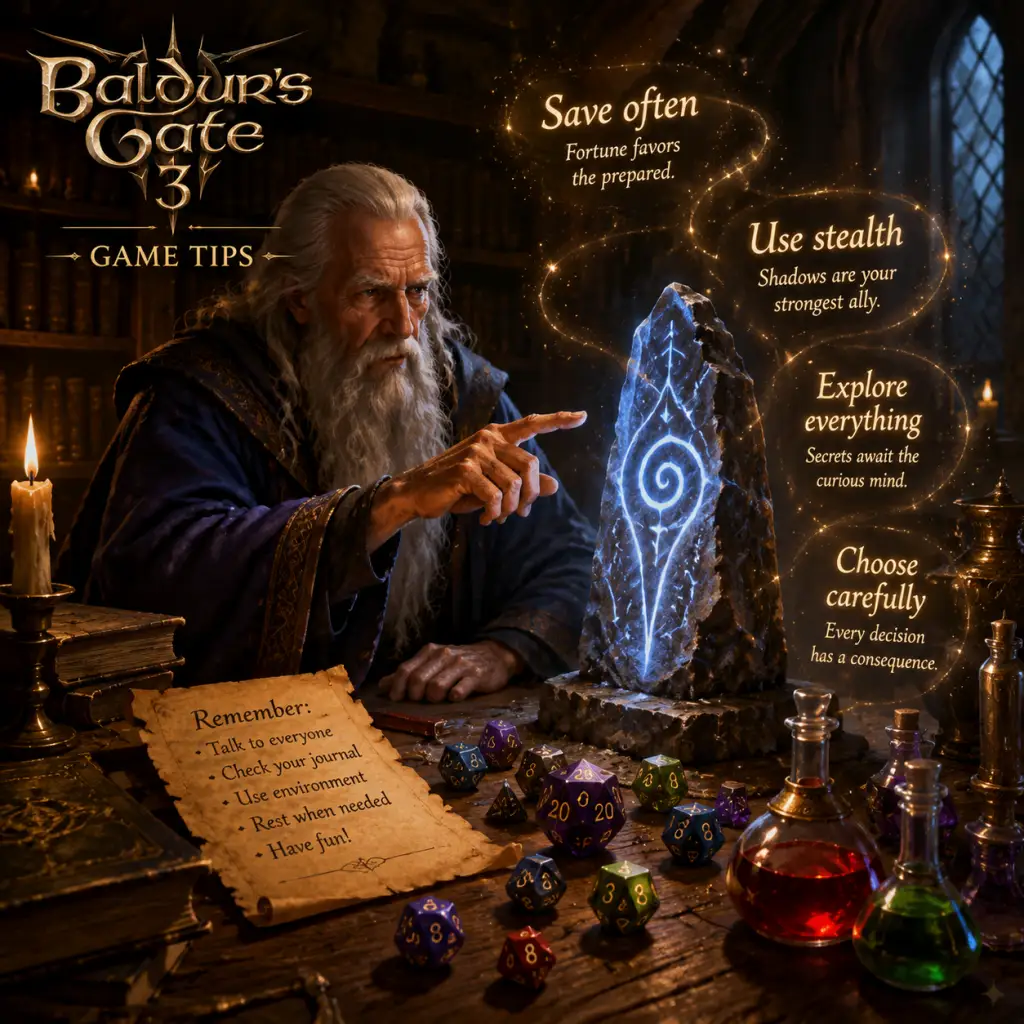
Game Tips
Overview
This guide provides a comprehensive collection of tips for Baldur's Gate 3 (BG3), covering everything from basic survival advice to high-level tactical optimizations. Tips are grouped by category so you can quickly find what you need.
---
Combat
Beginner Tips
- Use Height Advantage: Standing on high ground gives you a +2 bonus to attack rolls and adds your Dexterity modifier to damage (if applicable). Always scout for elevated positions before combat. For example, in the Druid Grove, attacking goblins from the top of the stone arch gives you a significant edge.
- End Your Turn Wisely: Use bonus actions first (e.g., drink a potion, jump, hide) before your main action. If you have nothing else to do, consider using "Ready Action" to prepare an attack for when an enemy moves into range.
- Leverage Sneak Attack: Rogues can get Sneak Attack damage once per turn if they have advantage or an ally within 1.5m of the target. Use stealth or spells like Faerie Fire to grant advantage easily.
- Action Economy is King: The biggest advantage comes from getting more actions than the enemy. Use abilities like Haste (spell or potion) or the Action Surge (Fighter) to gain an extra action. Controlling the battlefield with Hold Person or Web denies enemies actions.
- Elemental Interactions: Combos are powerful. Throw a water bottle to make enemies wet (doubles lightning and cold damage), then cast Call Lightning or Ray of Frost. Similarly, poison and fire can be combined for explosive results (e.g., Cloud of Daggers + Fire Bolt).
- Shove and Positioning: Shove is a bonus action (if your Athletics/Acrobatics is high enough). Push enemies off cliffs, into hazards (like Spike Growth), or away from downed allies. The classic is shoving a goblin into the chasm in the goblin camp.
- Pre-Buff Before Hard Fights: Use spells like Mage Armor, Longstrider, Bless, and Mirror Image before initiating combat (you can cast outside of turn-based mode). Duration is typically 10 turns—ample for most fights. Also, cast Darkness on an arrow and fire it into a group to blind enemies.
- Use Terrain and Objects: Exploit explosive barrels, chandeliers (shoot them to drop on enemies), and weak floors. In the Grymforge, lure Earth Elementals near lava vents, then trigger the vents.
- Legendary Actions and Resistances: In Tactician or Honour Mode, bosses have Legendary Actions. Learn their patterns. For example, the Act 2 boss has a reaction that triggers when you attack—spread damage across multiple characters or use Counterspell.
- Press the "T" Key (or Highlight): On PC, hold Left Alt to see all interactable objects in range. On controller, use the highlight button. This reveals hidden loot, levers, and traps. Always scan every room.
- Rest Often: Let the party take a Long Rest after a few fights. It restores HP and spell slots. You also get camp events (narrative scenes) that can unlock companion quests or story beats. Don't hoard supplies—use them.
- Try Jumping Everywhere: Many vertical routes are hidden. Jump gaps, climb vines, and check rooftops. In the Blighted Village, you can jump onto a broken tower to find a hidden ogre.
- Use Non-Lethal Attacks: Turn on Non-Lethal (passive toggle) to knock out enemies instead of killing them. This can give alternative dialogue options or spare useful NPCs. Example: knocking out the tiefling Sazza in the grove prevents trigger-happy guards.
- Speak with Animals and Dead: The Speak with Animals spell (available to Druids, Rangers, and from potions) unlocks many quests and secrets. Speak with Dead (Clerics, Paladins, Wizards) allows you to interrogate corpses for clues. Use them liberally.
- Use the Environment for Puzzles: Many puzzles require reading notes or noticing patterns. The Defiled Temple puzzle in Act 1: the moon phases painted on the wall correspond to the floor plates. A strong Perception check will highlight them.
- Fast Travel and Waypoints: Activate every waypoint you find. You can fast travel from almost anywhere via the map. Use this to return to camp or merchants quickly. For example, after a fight, fast travel to a vendor to sell loot and restock potions.
- Stack Multiple Passives: Equip items that grant See Invisibility (e.g., the Sentinel Shield from the creche). Combine with Daylight spell to counter shadow curses in Act 2. Also, use Feather Fall from scrolls or items to survive long falls and access hidden areas.
- Scout with Invisibility/Familiar: Summon a familiar (find familiar spell) or cast Invisibility on a rogue to scout ahead. You can see enemy positions, traps, and patrol routes. This allows you to plan your engagement before pulling. Useful in the House of Grief (Act 3).
- Loot Everything: Pick up weapons, armor, books, plates, etc. Sell them for gold. Even rotten food can be combined with a camp supply pack. Use the "Send to Camp" feature (right-click > Send to Camp) to offload heavy items.
- Manage Camp Supplies: You need 40 camp supplies for a long rest (80 on Tactician). Always collect food from crates and barrels. Buy cheap supplies from vendors if needed. Avoid long resting just for a few HP—use Short Rests instead.
- Craft Potions from Alchemy: Combine two or three ingredients to create potions (e.g., Antidote: Suspension of Brimstone + Mugwort). The Alchemy panel shows recipes you've learned. Collect plants, organs, and minerals.
- Re-Spec for Free at Withers: In the Dank Crypt (Act 1), you find Withers. Once recruited (cost 200 gold), you can re-spec any companion or your avatar for 100 gold. This is unlimited. Use this to fix suboptimal builds or respec for different encounters.
- Identify Items Cheaply: Instead of paying for Identify (spell or vendors), use a character with high Perception or a Scroll of Identify. Better yet, sell unidentified items—vendors identify them for free? Actually no—better to identify at camp via Gale or a hireling with the spell. Saves gold.
- Use the Camp Chest as Infinite Storage: Send everything you don't need to the camp chest. It's bottomless. You can retrieve items from any camp location. This prevents inventory clutter.
- Gather All Skill Checks: Before opening a locked chest or door, have the party spread out—you can use multiple characters to make ability checks (e.g., one for lockpicking, another for strength if it's jammed). Also, use consumables like Enhance Ability (Owl's Wisdom for Investigation).
- Duplicate Items with Cheat? No - legitimate: There's a known exploit: drop an item from inventory, then have another character pick it up while the first character uses a reaction? Actually, just follow legitimate duplication via multiplayer? Not recommended. Instead, use the Conjure Food spell to create camp supplies from a wizard/sorcerer.
- Restock Merchants: Vendors refresh their inventory and gold after a long rest or level up. Buy rare scrolls, potions, or gear. Some merchants like the quartermaster in Last Light Inn have excellent stock.
- Choose a Balanced Party: At minimum, have one front-liner (Fighter, Paladin, Barbarian), one healer/support (Cleric, Druid, Bard), one ranged damage dealer (Ranger, Sorcerer, Wizard), and one skill-monkey (Rogue, Bard). This covers combat roles and skill checks.
- Focus Your Ability Scores: Don't spread points. Prioritize your main stat (Strength for melee, Dexterity for ranged/finesse, Intelligence for Wizards, Charisma for Paladins/Sorcerers) to 16-17 at level 1. Then Constitution for HP.
- Pick Feats That Synergize: At level 4, 8, 12 choose feats wisely. For casters, War Caster (advantage on concentration saves) is near mandatory. For martials, Great Weapon Master or Sharpshooter (+10 damage at -5 to hit) are incredibly strong with advantage.
- Multiclass for Power Spikes: Multiclassing can break the game. A popular combo: 5 levels in Gloom Stalker Ranger + 3 in Assassin Rogue + 4 in Battle Master Fighter gives you a devastating first turn (extra attack, action surge, bonus action stealth attacks). Aim for level 5 in a primary class first to get extra attack.
- Use Equipment to Fill Gaps: Gear can provide spells or abilities. For example, the Helmet of Arcane Acuity (Act 2) gives spell attack bonus when you deal weapon damage. Or Necklace of Elemental Augmentation adds your spellcasting mod to cantrip damage. Check vendor inventories.
- Build Around a Theme: Poisoner? Use Ray of Sickness, Poison Spray, and the Sporekeeper armor. Fire Mage? Scorching Ray, Fireball, and items that add fire damage. Thematic builds are often powerful because gear supports them.
- Abuse Tavern Brawler: This feat adds your Strength modifier twice to unarmed attacks and thrown weapons. Combine with a Monk (for multiple unarmed strikes) or a Barbarian throwing javelins. With Hill Giant Elixir (+5 Str), you get +10 to hit and damage. Ridiculously strong early game.
- Lich King Sorlock: 2 levels in Paladin (for Smite) + 5 levels in Warlock (for Short Rest slots and deep pool) + 5 levels in Sorcerer (for Meta Magic and more slots). This build can smite multiple times per turn using warlock slots. Requires careful stat allocation.
- Use Haste Wisely: Haste gives an extra action, but when it ends, the target loses one turn. Use Haste on a high-damage martial, but ensure you won't lose concentration (War Caster feat, high Con save). Alternatively, use the Haste spell from a Paladin's oath or a Potion of Speed to avoid concentration risk.
- Buy Low, Sell High: Prices depend on Charisma and vendor attitude. Use a high-Cha character (16+ Charisma) for buying/selling. Cast Friends cantrip for advantage on persuasion checks (but beware it may turn hostile after).
- Sell Everything but Potions/Scrolls: Armor, weapons, books, loot—sell them. Keep potions (healing, speed, invisibility) and spell scrolls (for learning or emergency casting).
- Don't Buy Common Gear: Basic weapons and armor can be found or crafted. Only buy unique items (e.g., swords with special effects, rings). Vendors in the Druid Grove have some early game gems like The Whispering Promise ring.
- Steal from Merchants: Use a Rogue or Bard with high Sleight of Hand. Cast Invisibility or Minor Illusion to distract. You can steal items, but be prepared for consequences. However, you can bribe or run away. The merchant in the Goblin Camp has a valuable Ring of Protection - steal it early.
- Invest in Lockpicking: Many locked chests contain rare loot. The Knave's Eye ring (Act 1) gives +1 Sleight of Hand. Keep good thieves' tools (Dex + Sleight of Hand bonuses).
- Use the Owlbear Cub and Other Pets: You can get a pet (like the Owlbear cub) from the goblin camp via persuasion. It stays in camp and doesn't cost gold, but you can trade with it? No—pets provide no economic benefit but are cute.
- Scam Vendor Reputation: You can use Disguise Self (or a magical hat that changes appearance) to interact with a vendor after stealing from them. The vendor's hostility resets, allowing you to trade again. Combine with high Charisma for best prices.
- Farm Gold with Alchemy: Some potions are profitable to craft. Check vendor buy prices vs ingredient costs. For example, Potion of Speed (ingredients: Asmonate, Crimson Hilberry) sells for ~400 gold, but ingredients are cheap. Craft and sell for steady income.
- Use the Astral Plane's Infinite Merchant: In Act 3, you can access the House of Hope. The merchant there sells powerful items, but you can also steal everything and then kill him without consequence (he's a devil). This yields massive gold and gear.
- Save Often: Use quick saves (F5) before any dialogue, lockpicking attempt, or boss fight. The game saves automatically but not always at optimal points.
- Read Tooltips: Hover over abilities, statuses, and items. BG3 is deep, and tooltips explain interactions (e.g., "advantage" or "restrained").
- Use Environmental Objects: Throw a healing potion at an ally to heal them from range (minor heal). Throw a water bottle to extinguish flames.
- Companion Approval: Each companion has approval/disapproval based on your choices. Check the character sheet to see their personality. Shadowheart likes pragmatic choices, Gale prefers knowledge, Astarion enjoys chaos. High approval unlocks personal quests and even romance.
- Use the Environment for Stealth: Hide in darkness, behind boxes, or use Fog Cloud to break line of sight. Sneak attacks from hidden are automatic crits if hitting a surprised enemy.
- Spells with No Concentration: Some spells like Armor of Agathys (temp HP and damage attackers) don't need concentration—they stack with concentration buffs. Use them freely.
- Bypass Fights with Dialogue: Often, you can resolve conflicts with persuasion, intimidation, or deception. For example, you can convince the goblin priestess to leave without fighting. Check your party's best talker.
- Abuse Barrelmancy: Carry explosive barrels (like Smokepowder) in inventory. Place them near enemies in stealth, then blow them up with a fire spell. This can one-shot bosses if you arrange a large pile.
- Use the 'Feign Death' Spell: Feign Death (level 3) can trick enemies into ignoring a party member. It also can be used to skip certain encounters by pretending to be dead.
Intermediate Strategies
Advanced Optimizations
---
Exploration
Beginner Tips
Intermediate Strategies
Advanced Optimizations
---
Resources
Beginner Tips
Intermediate Strategies
Advanced Optimizations
---
Builds
Beginner Tips
Intermediate Strategies
Advanced Optimizations
---
Economy
Beginner Tips
Intermediate Strategies
Advanced Optimizations
---
General Tips
Beginner
Intermediate
Advanced
---
Conclusion
Baldur's Gate 3 rewards creativity, planning, and experimentation. Start with basic tactics, then incorporate interactions between spells, environment, and items. As you progress, optimize your builds and resource management. Remember: there is no single correct way to play—every party composition can win with smart strategy. Happy adventuring!