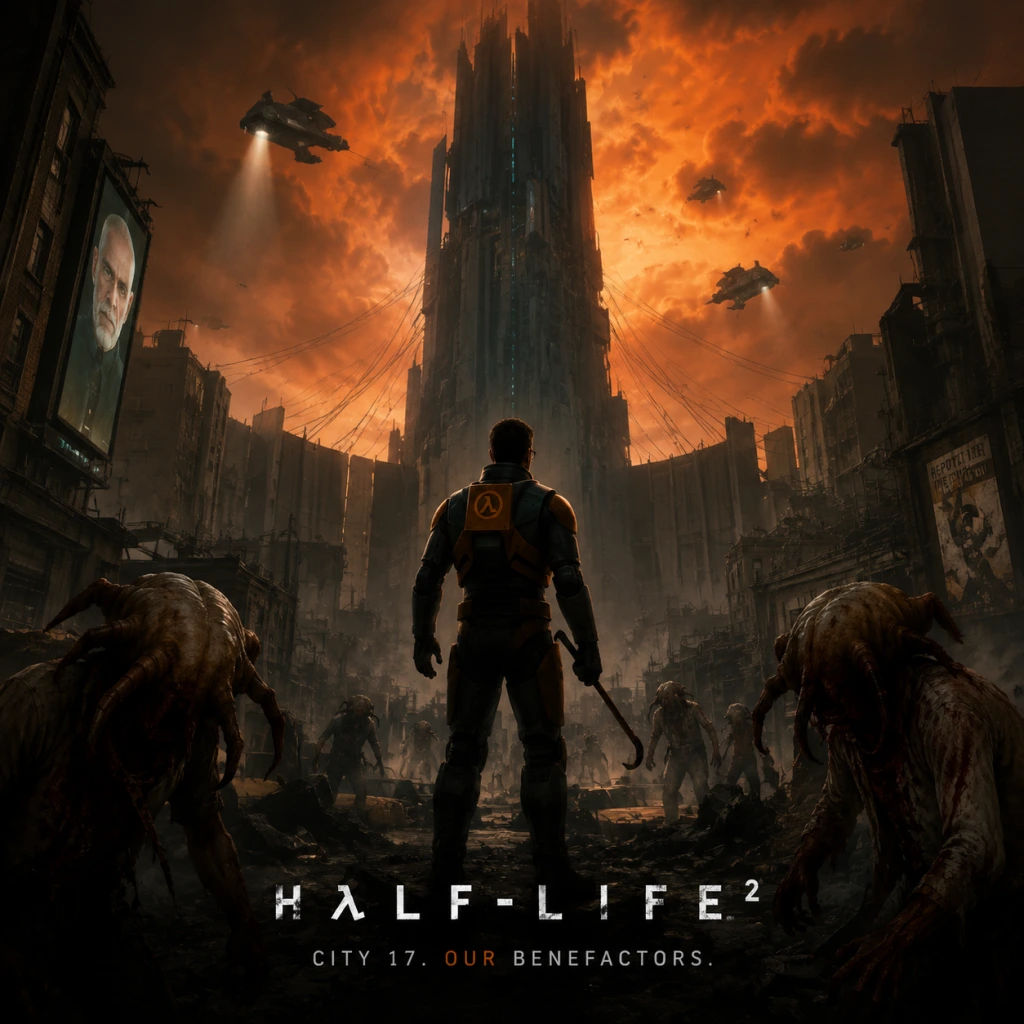
Game Introduction
Half-Life 2: Game Introduction
Genre
First-person shooter (FPS) with puzzle and narrative-driven elements, often credited with revolutionizing the storytelling and physics-based gameplay in the genre.
Developer & Publisher
Developed by Valve Corporation, an American game developer and digital distribution company. Published by Valve on PC and by Electronic Arts for retail console releases. The game utilizes Valve’s proprietary Source engine.
Release Timeline
- Windows: November 16, 2004
- Xbox: November 15, 2005 (as part of Half-Life 2 and later The Orange Box)
- Xbox 360 / PlayStation 3: October 10, 2007 (via The Orange Box)
- Mac OS X: May 12, 2010 (via Steam)
- Linux: July 25, 2013 (via Steam)
- Android (Nvidia Shield): May 12, 2014
- Steam Deck: February 25, 2022 (verified playable)
- PC: Windows, Mac OS X, Linux (via Steam)
- Consoles: Xbox, Xbox 360, PlayStation 3 (retail or digital), and backward compatibility on Xbox One / Xbox Series X|S
- Mobile: Nvidia Shield (Android)
- VR: Mod support with various VR mods (e.g., Half-Life 2: VR Mod)
- City 17: A bleak, Eastern European-style city under Combine control, featuring towering citadels, brutalist architecture, and pervasive surveillance.
- The Canals & Water Hazard: A network of polluted waterways and industrial ruins.
- Ravenholm: A haunted, zombie-infested town overtaken by the Combine’s headcrab creatures.
- Nova Prospekt: A remote prison facility and Combine research base.
- The Coast & Highway 17: A scenic but dangerous coastal highway leading to Combine strongholds.
- Gordon Freeman: The silent protagonist; a physicist turned freedom fighter, wielding the iconic crowbar, gravity gun, and various firearms.
- G-Man: A mysterious, ever-present figure who manipulates events from the shadows.
- Eli Vance: A brilliant scientist and resistance leader; father of Alyx.
- Alyx Vance: Eli’s daughter and a skilled fighter/hacker; becomes Gordon’s closest ally.
- Isaac Kleiner: Another Black Mesa scientist who aids the resistance.
- Judith Mossman: A scientist with ambiguous loyalties.
- Wallace Breen: The former Black Mesa administrator turned human collaborator and Combine representative.
- Barney Calhoun: A former Black Mesa security guard now working undercover for the resistance.
- Dog: Alyx’s pet robot; a massive, friendly machine used for combat and puzzle solving.
- Physics-based gameplay: The Source engine’s physics allow realistic object interactions, especially with the Gravity Gun, which lets players manipulate objects for combat and puzzles.
- Narrative immersion: The story unfolds without cutscenes or HUD text; players experience events through Gordon’s eyes in real time.
- Setpiece design: Memorable sequences like escaping a crumbling building, fighting a helicopter on a bridge, and navigating Ravenholm.
- Pacing: Perfectly balanced action, exploration, puzzle-solving, and scripted events.
- Atmosphere: Outstanding sound design, environmental storytelling, and a haunting soundtrack by Kelly Bailey.
- FPS enthusiasts looking for a groundbreaking single-player campaign.
- Fans of story-driven games with minimal hand-holding.
- Players interested in physics-based puzzles and emergent gameplay.
- Those who appreciate dark sci-fi dystopian settings.
- Ages: Mature (rated M for blood, violence, and language).
- Single-player: The main campaign, approximately 12–15 hours on a first playthrough.
- Commentary Mode: Unlockable developer commentary tracks throughout the game.
- Multiplayer: No official multiplayer in the base game, but Half-Life 2: Deathmatch (a standalone mode) was included in the Orange Box and is available via Steam. Additionally, Counter-Strike: Source and Day of Defeat: Source share the same engine.
- Offline: The single-player campaign can be played fully offline after the initial Steam installation.
- Online: Steam required for initial download and activation. Online features include achievements (on Steam and console versions), cloud saves, and community content via Steam Workshop.
- Half-Life 2: Lost Coast (2005): A free, standalone tech demo showing HDR lighting and a coastal monastery level. Not part of the main story.
- Half-Life 2: Episode One (2006): Direct sequel to the base game; continues the story immediately after the ending. Length: ~4 hours.
- Half-Life 2: Episode Two (2007): Further continuation, ending on a major cliffhanger. Length: ~5 hours.
- The Orange Box (2007): Bundle including Half-Life 2, Episode One, Episode Two, Portal, and Team Fortress 2. This is the most common way to experience the entire Half-Life 2 saga on modern platforms.
- No paid DLC exists beyond the episodes; the game relies on mods for extended content.
Platforms
Story Overview
Set in a dystopian future approximately 20 years after the Black Mesa Incident, the game follows Gordon Freeman—a theoretical physicist and reluctant hero—who is awakened from stasis by the mysterious G-Man. Gordon finds Earth under the oppressive rule of the Combine, a multidimensional alien empire that has taken over the planet, draining its resources and subjugating humanity. He joins a scrappy resistance movement led by former Black Mesa colleagues and new allies, fighting to liberate humanity. The narrative unfolds through immersive in-game sequences with minimal cutscenes, pushing the player forward with urgency and dramatic set pieces.
Setting
The game world spans several varied environments on Earth’s Eastern European coast and cityscapes:
The atmosphere is oppressive, with constant rain, decay, and authoritarian control, contrasted with moments of hope from the resistance.
Main Characters
Core Appeal
Half-Life 2 is praised for:
Target Audience
Game Modes
Online / Offline Support
DLC / Expansions
What Makes This Game Unique?
Half-Life 2 stands out for its seamless integration of physics and storytelling. The Gravity Gun isn’t just a weapon—it’s a tool for creative problem-solving and improvisational combat. The game introduces the “scripted sequence” as a storytelling device that never takes control away from the player. It also set a benchmark for AI (enemies use cover, flank, and coordinate) and environmental interaction. The absence of cutscenes forces the player to stay engaged in the world. Even two decades later, its level design, pacing, and physics remain influential. The game also spawned a vast modding community, including famous mods like Garry’s Mod and Counter-Strike: Source.
Conclusion
Half-Life 2 is not just a game; it’s a milestone in interactive entertainment. Combining gripping storytelling, revolutionary physics, and unforgettable set pieces, it remains essential playing for any fan of the first-person shooter genre. Whether you’re experiencing it for the first time or revisiting it, the journey through City 17 and beyond is as powerful today as it was in 2004.
---
This guide section is part of a larger project. For details on acquiring and installing the game, refer to the Download & Installation guide.