Game Introduction
Game Introduction
Middle-earth: Shadow of Mordor is an open-world action-adventure game set in J.R.R. Tolkien's legendary fantasy universe. Developed by Monolith Productions and published by Warner Bros. Interactive Entertainment, the game was released on September 30, 2014 for PlayStation 4, Xbox One, and PC (Windows, via Steam and later Epic Games Store), followed by PlayStation 3 and Xbox 360 versions on November 18, 2014. The game also became available on macOS and Linux in July 2015.
Genre
The primary genre is open-world action-adventure with strong stealth, combat, and RPG elements. It incorporates a unique Nemesis System that dynamically shapes player encounters with enemy Uruks (orcs). The game blends fluid third-person melee combat inspired by the Batman: Arkham series with freeform exploration and player-driven narrative.
Story Overview
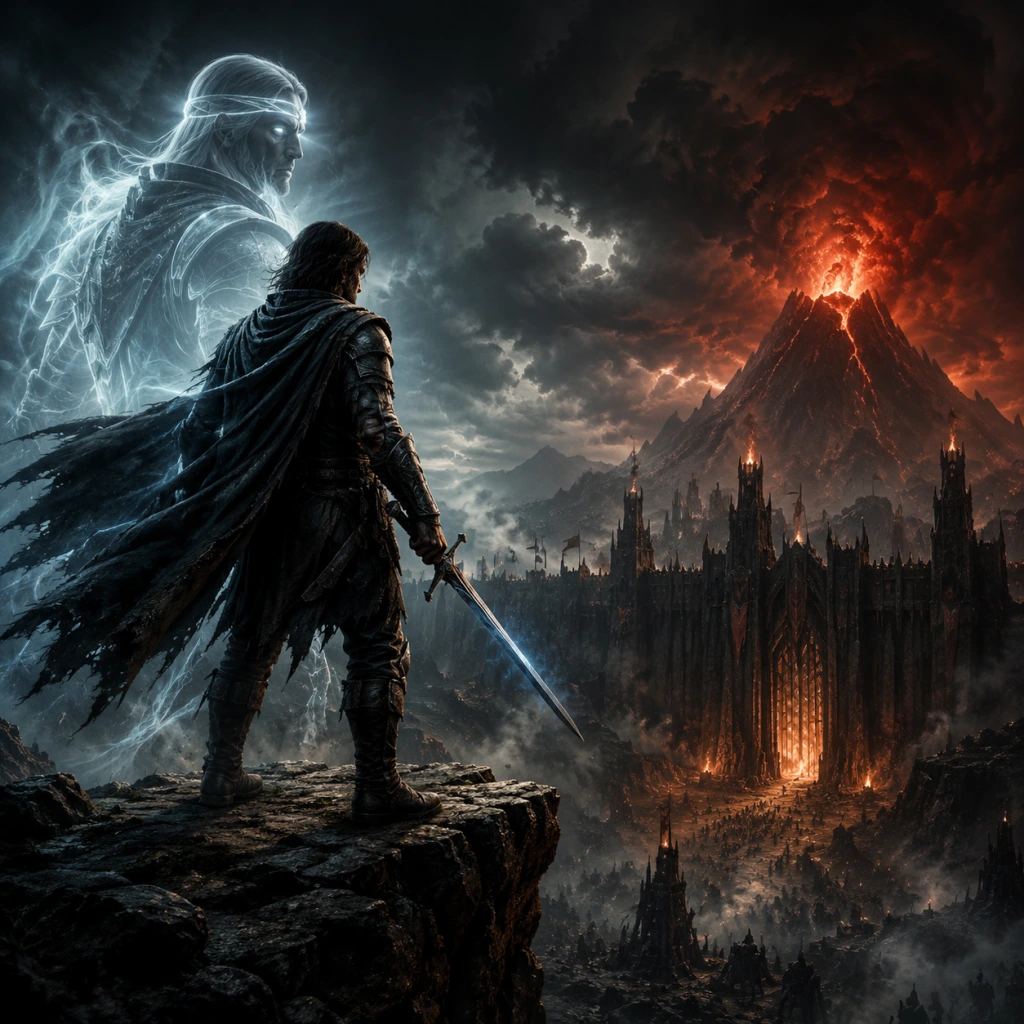
The story bridges the 60-year gap between The Hobbit and The Lord of the Rings. Players control Talion, a Ranger of the Black Gate who is killed alongside his family during Sauron's resurgence. Instead of dying, Talion is resurrected by the wraith Celebrimbor—the legendary elven-smith who forged the Rings of Power. Bound together, the two seek revenge against the Dark Lord Sauron and the Black Hand of Sauron, while uncovering a deeper conspiracy involving the creation of a new Ring of Power. The narrative explores themes of vengeance, corruption, and the struggle for freedom.
Setting
The game is set primarily in the region of Mordor, specifically in two open-world zones: the black volcanic plains of Udûn and the mangrove-like Sea of Núrnen. Both areas are under the control of Sauron's forces and are populated by warring Uruk tribes. The environment ranges from ash-strewn wastelands to ruined fortresses and dark, cursed groves. Players can traverse the world on foot or by riding Caragors (wolf-like beasts) and Graugs (giant trolls). The dynamic day-night cycle and weather effects influence enemy behavior and visibility.
Main Characters
- Talion: A Gondorian Ranger of the Black Gate, driven by grief and vengeance. His combat skills are augmented by his bond with Celebrimbor.
- Celebrimbor: The ancient elven wraith who shares Talion's body. He possesses wraith powers such as teleportation, mind control, and the ability to see ghostly traces of the past.
- The Black Hand of Sauron: The primary antagonist trio—the Tower, the Hammer, and the Hand—who serve Sauron directly and orchestrated Talion's death.
- Ratbag the Coward: A comical, self-serving Uruk who occasionally aids Talion against his rivals.
- Gollum: The iconic corrupted hobbit-creature appears as a conflicted ally and enemy, guiding Talion and pursuing his "Precious."
- Sauron: The Dark Lord is a looming, unseen presence whose influence drives the conflict.
- Story Mode (Campaign): A linear narrative with 20 main missions, interspersed with side quests, collectibles, and Nemesis interactions.
- Test of Endurance (Challenge Mode): Unlocked after completing the campaign, this wave-based survival mode pits Talion against increasingly difficult Uruk hordes. It was added via a free update.
- No in-game multiplayer or co-op modes exist; the game is entirely single-player.
- Offline: The full single-player campaign, side quests, and Nemesis System work entirely offline. No internet connection is required to enjoy the core experience.
- Online: An optional online feature called "Vendetta Missions" allows players to hunt the Uruk that killed their friends (imported from their friend list's game state). This is a small, asynchronous multiplayer element. Also, leaderboards for Test of Endurance are online.
- DRM: The PC version on Steam uses Steamworks; no additional online-only DRM beyond an account is required for offline single-player.
- Lords of the Hunt (released December 2014): A campaign where Talion hunts eight legendary beast-masters to earn the trust of an exiled Uruk tribe. It introduces new weapons, abilities, and the "Test of the Wild" hunting challenges.
- The Bright Lord (released February 2015): A prequel chapter (set before the main story) where players control Celebrimbor in his own wraith form during the Second Age, fighting Sauron's forces in Mordor. It adds new wraith powers and a final boss battle against Sauron.
- Test of Endurance wave-based mode.
- The Dark Ranger skin (for those who pre-ordered or purchased the GOTY edition).
- Captain of the Watch skin and an Elven sword.
- Nemesis System: This proprietary technology procedurally generates thousands of distinct Uruk enemies with personal histories that persist across playthroughs. No other game has replicated its depth of emergent storytelling where failures are memorable and successes feel earned.
- Wraith Powers: The ability to dominate Uruks mid-combat, turning enemies into spies, assassins, or bodyguards, allows players to orchestrate betrayals and rebellions within enemy ranks.
- Freeform Assassination: Unlike linear stealth games, Shadow of Mordor encourages players to methodically dismantle the Uruk hierarchy by exploiting weaknesses, manipulating succession, and creating chaos.
- Canon-compliant Prequel Narrative: The story fills a previously unexplored gap in Tolkien's timeline, introducing new characters and events that align with the lore without altering it.
- Fluid Combat System: Building on the rock-paper-scissors mechanics of Arkham, the game adds a wraith-stun, lethal executions, and a "last chance" desperation move that feels cinematic.
Core Appeal
Shadow of Mordor excels in its innovative Nemesis System, which generates unique Uruk enemies with individual names, ranks, strengths, weaknesses, and rivalries. Enemies remember previous encounters—they become scarred, gain promotions, taunt the player, and even betray their leaders. This system creates emergent stories that feel personal and unscripted. The satisfying combat, designed by the team behind Batman: Arkham Asylum, provides fluid attack chains, brutal finishers, and ranged stealth kills. The ability to dominate and command Uruks through Celebrimbor's powers adds strategic depth.
Target Audience
The game appeals to fans of action-adventure games like the Batman: Arkham series, Assassin's Creed, and open-world RPGs. It is also a prime choice for Tolkien enthusiasts who want an alternative, darker perspective on Middle-earth that expands on lore without contradicting the canon (the story is considered a "legend" by Tolkien scholars). The skill-based combat and stealth challenges attract players who enjoy tactical combat and emergent gameplay over linear narratives. ESRB rating: M for Mature (blood and gore, intense violence).
Game Modes
Online/Offline Support
DLC and Expansions
Shadow of Mordor received two major story expansions through the Season Pass:
Additional free DLC included:
The Game of the Year Edition (released 2015) bundles all DLC and updates.
What Makes This Game Unique
Middle-earth: Shadow of Mordor stands as a landmark title for its technical innovation and immersive world. Its blend of brutal combat, deep customization, and player-driven storytelling set a new benchmark for action games in a licenced universe. Whether you seek vengeance, power, or a dynamic adventure, this game delivers a uniquely personal journey through Mordor.