Game Introduction
Game Introduction
Genre, Developer & Publisher
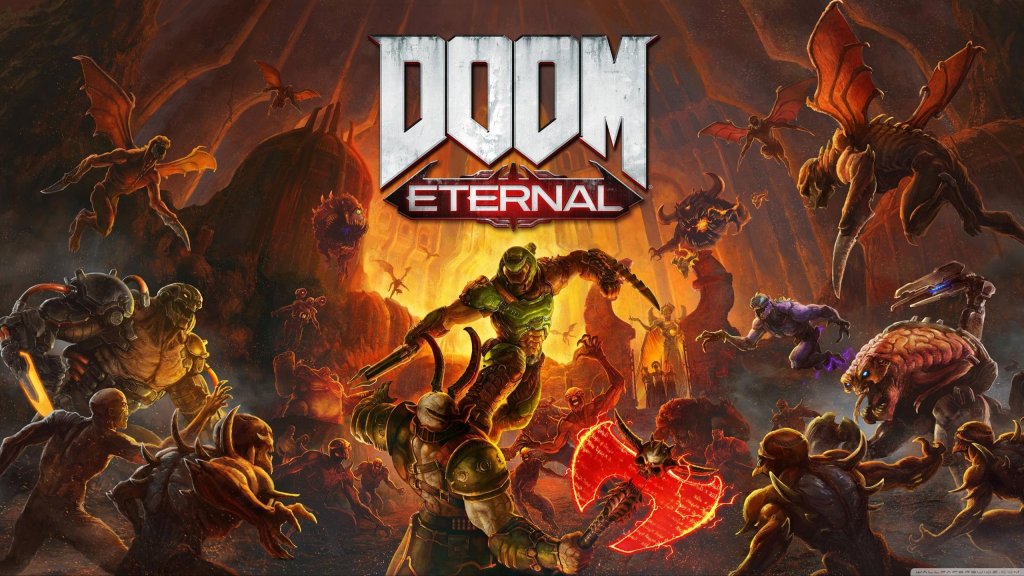
Doom Eternal is a first-person shooter (FPS) with heavy action, horror, and sci-fi elements. It was developed by id Software (the legendary creators of the original Doom, Quake, and Wolfenstein series) and published by Bethesda Softworks.
Release Timeline & Platforms
Doom Eternal was released on March 20, 2020 for:
- PC (Windows)
- PlayStation 4
- Xbox One
- Google Stadia
- Post-Apocalyptic Earth: Urban ruins, flooded cities, and corrupted landscapes.
- Hell: Classic fiery pits, blood-red skies, and fortress structures.
- Urdak: A pristine, angelic dimension that hides a dark secret.
- Argent D'Nur and Sentinel Prime: Ancient homeland of the Night Sentinels, blending medieval fantasy with advanced tech.
- Immora: The final city of Hell introduced in the The Ancient Gods DLC.
- The Doom Slayer (protagonist) – A silent, unstoppable warrior wielding the Praetor Suit, the Super Shotgun, the Crucible Blade, and supernatural strength.
- King Novik – Ruler of the Night Sentinels, guides the Slayer.
- The Khan Maykr – Primary antagonist, leader of the Maykrs, who seeks to sacrifice Earth.
- Deag Grav, Deag Ranak, Deag Nilox – The Hell Priests who open the gates to Earth.
- Samuel Hayden – An AI/cyborg character from the previous game who reappears with unclear motives.
- The Dark Lord (in DLC) – The ultimate evil, final boss of The Ancient Gods.
- Fans of fast-paced shooters
- Veterans of the Doom franchise
- Players who enjoy challenging single-player campaigns with difficulty options (including "Ultra-Nightmare" permadeath)
- Competitive multiplayer enthusiasts (though the multiplayer is smaller in scope)
- Players looking for a polished, high-fidelity action experience
- Campaign: A lengthy single-player story mode with 13 main missions plus optional encounters and secrets.
- Battlemode: A 2-versus-1 asymmetric multiplayer mode where two demons (controlled by players) face off against the Doom Slayer (another player). The Slayer uses campaign weapons and abilities; demons have their own unique powers.
- Extra Life Mode (added later): A campaign modifier where collecting extra lives gives a unique challenge.
- Master Levels: Remixed, harder versions of campaign levels with new enemy placements.
- Offline: The full campaign can be played offline after installation. Battlemode requires an internet connection.
- Online: Battlemode multiplayer and the Photo Mode (for screenshots) require online access. The Horde Mode (DLC) can be played solo or co-op online.
- Part One (October 20, 2020): Continues the story after the base game. The Slayer must face the consequences of his victory and confront the Dark Lord's rising threat.
- Part Two (March 18, 2021): Concludes the saga, featuring the final showdown in Immora and the fate of the Doom Slayer.
- Push-Forward Combat: Unlike most shooters, players are encouraged to stay mobile and aggressive to survive. Health drops from glory kills, ammo from chainsawing, armor from flame belch – all require close proximity.
- Platforming & Exploration: The game includes platforming sections (wall climbing, swing bars, dash pads) that break up combat and reward exploration with secrets and upgrades.
- Deep Weapon Complexity: Each weapon has multiple firing modes and mods (e.g., the Super Shotgun's grappling hook, the Ballista's arbalest). Combining them in quick-switch combos is essential for high-level play.
- Demonic Variety: Over 30 enemy types with unique behaviors – from imps and zombies to Marauders, Arch-viles, and Tyrants. Players must learn each foe's weakness and prioritize threats.
- Free Next-Gen Upgrade: Owners of the previous console versions could upgrade to ray-tracing and 120fps support at no extra cost.
- Iconic Soundtrack: Mick Gordon's industrial metal score is integral to the experience, dynamically intensifying during combat.
It later arrived on Nintendo Switch (December 8, 2020), PlayStation 5 and Xbox Series X|S (June 29, 2021). The game received a free next-gen upgrade for owners of the previous console versions.
Story Overview
The narrative picks up shortly after the events of Doom (2016). The Doom Slayer returns to Earth only to find it overrun by demonic forces unleashed by the Hell Priest – the Deag. The Khan Maykr, ruler of the angelic Urdak, has manipulated humanity's energy dependency to sacrifice Earth for the sake of her own realm. The Slayer must fight through Earth, Hell, the Sentinel homeworld of Argent D'Nur, and eventually Urdak itself to stop the Maykr's plans and prevent the complete annihilation of the human race.
Setting
The game spans several distinct realms:
Main Characters
Core Appeal
Doom Eternal is known for its relentless, high-speed combat emphasizing player movement, resource management, and aggressive play. Players must constantly shoot, dash, jump, and use a variety of weapons to chainsaw, glory kill, and flame belch enemies to regain health, ammo, and armor. This "push-forward combat" system rewards constant action over cover-based tactics.
Target Audience
The game is designed for:
Game Modes
Online/Offline Support
DLC / Expansion Overview
Doom Eternal has two major single-player expansions bundled as The Ancient Gods:
The expansions introduce new enemies (e.g., the Spirits, Blood Maykrs, Carcasses), new weapons (the Sentinel Hammer), and new environments. They are significantly harder than the base campaign.
Additionally, there is a Horde Mode (free update) where players fight waves of increasingly difficult enemies with a scoring system.
What Makes Doom Eternal Unique
Doom Eternal is widely considered one of the best first-person shooters of its generation, praised for its fluid movement, unrelenting action, and satisfying power fantasy.