Core Gameplay
Core Gameplay Overview
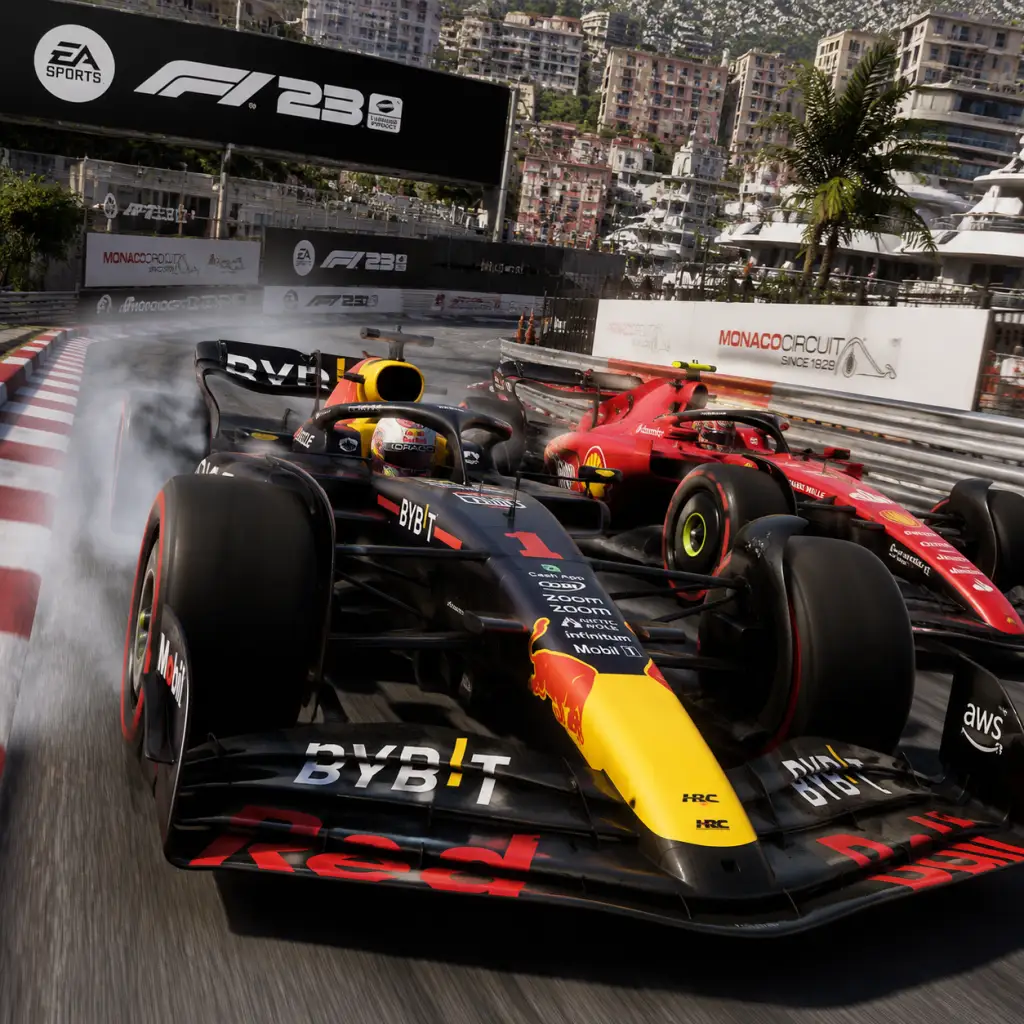
F1 23 offers a rich blend of authentic Formula 1 simulation, narrative driver career, and expansive online progression. The core gameplay loop revolves around preparing for and competing in Grand Prix weekends across multiple modes. Your primary interaction systems include steering, braking, accelerating, gear shifting, DRS activation, and ERS management, all of which demand precise timing and adaptability. Progression is measured through driver level, team development, currency accumulation, and unlockable content. The game supports exploration of tracks via practice sessions and time trials, while quests and missions take the form of race events, championship campaigns, and F1 World challenges. Economy management involves PitCoin (premium currency) and in-game cash earned from racing. Build growth applies to your driver’s skill tree (in My Team / Braking Point) and car upgrades. Endgame focuses on competitive online leagues, F1 World mastery, and achieving 100% completion.
---
Player Progression Tiers
Early Game (0–10 hours)
The early game serves as your entry point into F1 23’s systems. You’ll learn the basics of driving, race weekend structure, and the main progression paths.
- Main Gameplay Loop: Complete the Braking Point 2 story or start a My Team career. Each session involves practice (track acclimatisation, tyre management, fuel saving), qualifying (setting fast laps), and the race (managing tyres, ERS, and overtaking). Early races are shorter (25% distance) to reduce complexity.
- Combat/Interaction Systems: Beginner assists (automatic gearbox, ABS, traction control) are recommended. Combat centers on wheel-to-wheel racing—using DRS when within 1 second of the car ahead, managing tyre temperatures for grip, and avoiding collisions that cause damage. Use ERS deployment (overtake mode) strategically on straights.
- Progression: Increase driver level by earning XP from races and challenges. Level 1–5 unlocks basic cosmetic items, early car upgrades in My Team, and access to F1 World events. Complete Braking Point 2 chapters to unlock story progression and a unique car livery.
- Exploration: Learn each track’s braking points, corner apexes, and track limits via practice programmes (track acclimatisation, tyre management, qualifying pace). Use the radar and racing line (if enabled) to understand optimal paths.
- Quests/Missions: Braking Point 2 provides a cinematic campaign with 19 missions across 5 chapters. In My Team, you face contract negotiation missions, research and development milestones, and sponsor objectives (e.g., “Finish in the top 10 at Monaco”).
- Economy: Starting capital in My Team is given. Earn PitCoin (real‑money currency) or in‑game cash from race results and sponsor bonuses. Early purchases: engine upgrades, chassis parts, and driver facility improvements. Save PitCoin for premium liveries or overtake tokens in F1 World.
- Character/Build Growth: In Braking Point, your driver (Aiden or Devon) gains trait points from passing challenges—invest in consistency, racecraft, or wet weather skills. In My Team, your character’s level unlocks new contracts and team member perks. Car upgrades follow a linear tree: first focus on reliability (to avoid DNFs) then performance (engine, aero, chassis).
- Endgame Structure: Not yet relevant—you’re still building fundamentals. However, completing the early game unlocks F1 World events and online multiplayer.
- Main Gameplay Loop: Full race weekends (50–100% distance). You now manage fuel consumption, tyre degradation, and dynamic weather conditions carefully. Use MFD (Multi-Function Display) to monitor ERS levels, fuel mix, and differential settings mid‑race. Pit strategy becomes pivotal—deciding between undercut, overcut, or one‑stop vs. two‑stop strategies.
- Combat/Interaction Systems: Disable assists progressively (no ABS, manual gears). Master overtaking techniques: slipstream, late braking, and switchback moves. ERS manual overtake button is essential for passing on straights. Damage modelling requires caution—front wing damage costs downforce; punctures force unscheduled pits.
- Progression: Driver level 6–20 unlocks advanced car upgrades, exclusive liveries, and high‑level sponsors. Complete F1 World objectives (e.g., “Earn 3 podium finishes with Ferrari”) to earn PitCoin and cosmetic rewards. My Team reaches season 2 or 3, where you can move up the constructors’ standings or switch to a top team.
- Exploration: Mastery of all tracks—knowing exact braking points, kerb usage, and ideal racing lines. Use time trial mode to compare laps with ghosts of top players. Explore different car setups (aerodynamics, suspension, gear ratios) via telemetry feedback.
- Quests/Missions: F1 World features daily, weekly, and seasonal challenges (e.g., “Win a race at Silverstone with tyre wear set to simulation”). Multi‑player leagues begin—complete online placement races to rank in Bronze/Silver tiers. My Team offers story events (rivalry press conferences, driver market changes).
- Economy: Earn significant in‑game cash from high race placements. PitCoin becomes more valuable—spend on “Pit Passes” to unlock premium seasonal rewards in F1 World (tracks, exclusive cars, driver items). Invest in R&D to speed up car upgrades. Watch for sponsor contracts that pay extra for meeting specific objectives (e.g., “Lead 10 laps in a race”).
- Character/Build Growth: Max out core driver skills (starting at level 20). In My Team, hire better staff (chief engineer, strategist, mechanic) to improve pit stops, car development speed, and stewarding leniency. Car upgrade tree should be fully unlocked for your team—focus on best engine, gearbox, and aero packages for your track rotation.
- Endgame Structure: You’ll start competing in F1 World events that are high‑stakes (rewarding rare items). Ranked multiplayer becomes accessible—aim for Gold+ tier. Braking Point 2 is likely complete; now you play for leaderboard times and club championships.
- Main Gameplay Loop: 100% race distances with full simulation settings (no assists, manual ERS management, dynamic track rubbering). Each lap demands near‑flawless execution; a single mistake can lose positions. Pit windows are calculated down to the lap—monitoring tyre life, fuel consumption, and rival gaps.
- Combat/Interaction Systems: Advanced techniques: trail braking (maximising rotation), lift‑and‑coast for fuel saving, managing battery charge for hot laps, and using ERS depletion in qualify vs. race. Defensive driving—changing line to break DRS detection, blocking without weaving (illegal), and using under‑fuelling strategy with safety car periods.
- Progression: Driver levels 21–50 unlock endgame cosmetics, special medals for achievements (e.g., “Triple Crown” in F1 World). My Team constructors championship wins. F1 World season pass completion (if active event). All car upgrades maxed.
- Exploration: Circuit mastery—knowing every surface variation (e.g., Mexico’s thin air, Bahrain’s windy sections). Experiment with extreme setups: low‑downforce for Monza, high‑downforce for Monaco. Telemetry analysis helps perfect each sector.
- Quests/Missions: Elite F1 World challenges (e.g., “Win a Grand Prix without using DRS”). Online league promotions—compete for promotion to Diamond or Champion division. My Team “glory days” scenarios—re‑create historic races with specific regulations.
- Economy: Cash is nearly unlimited; PitCoin is still required for limited‑time cosmetics and VIP pit passes. Spend on player card decorations, victory animations, and custom race suits. No further performance upgrades to buy—only aesthetic.
- Character/Build Growth: Every driver skill maxed. Staff fully upgraded (5 stars). Car development reaches maximum potential—fine‑tuned setups for each track. Some players create multiple builds: high‑downforce specialist, wet weather expert, etc., by maintaining spare parts for different race weekends.
- Endgame Structure: Compete in official EA Sports F1 Esports qualifiers (requires late‑game skill level). Climb global leaderboards in Time Trial and Ranked. Join a competitive league (e.g., F1 23 subreddit leagues) for structured seasons with live stewards.
- Main Gameplay Loop: Season‑long F1 World comps or custom championships (e.g., 23‑race calendar with full weekends). Every race is a mental and physical marathon—maintaining concentration for 60+ laps. Online ranked matches with strict penalty systems and real‑time strategy adjustments.
- Combat/Interaction Systems: Wheel‑to‑wheel battles lasting multiple corners—mastered switchbacks, mind‑gaming opponents, and safety car restarts. Use of radio commands (calling out pit windows, driver status) in team modes. No assists means perfect throttle modulation and heel‑toe downshifts for some players.
- Progression: Achieve 100% completion—all F1 World challenges, all Braking Point achievements, all My Team milestones. Driver level 50 cap reached. All cars unlocked (vintage classics from F1 World). No further horizontal progression; only vertical improvement via leaderboard time reductions.
- Exploration: Experiment with alternate strategies: no‑stop races (if possible under tyre rules), extreme fuel‑saving approaches, or aggressive ERS usage. Learn every track’s alternate layouts (e.g., Bahrain endurance layout).
- Quests/Missions: Create your own narratives—replicate 2023 championship battles or historical seasons. Community events (weekly time trials set by Codemasters). No new official content unless the game receives post‑launch updates (e.g., future F1 World events).
- Economy: You likely have all items. PitCoin only useful for future seasonal passes if developers add new content. Otherwise, it’s a vanity currency.
- Character/Build Growth: All driver skills, staff, and car upgrades are fully maximised. Build growth shifts to mastery—optimising your own performance consistency over multiple races, reducing lap time variance, and improving pit entry/exit precision.
- Endgame Structure: Esports season begins—aim for top‑100 globally in Ranked. Offline—try to beat AI on hardest difficulty (Unbeatable) with all assists off. Create a league with friends using custom rules (e.g., equal performance cars, reverse grids). Compare telemetry with world’s best on specialty websites (e.g., time trial leaderboards via the game’s API).
Mid Game (10–40 hours)
The mid game sees you refining skills, customising your career, and delving into F1 World’s live service content.
Late Game (40–80 hours)
The late game is about mastery, optimisation, and high‑level competition.
Endgame (80+ hours)
The endgame focuses on perfecting every aspect and engaging with the community at the highest level.