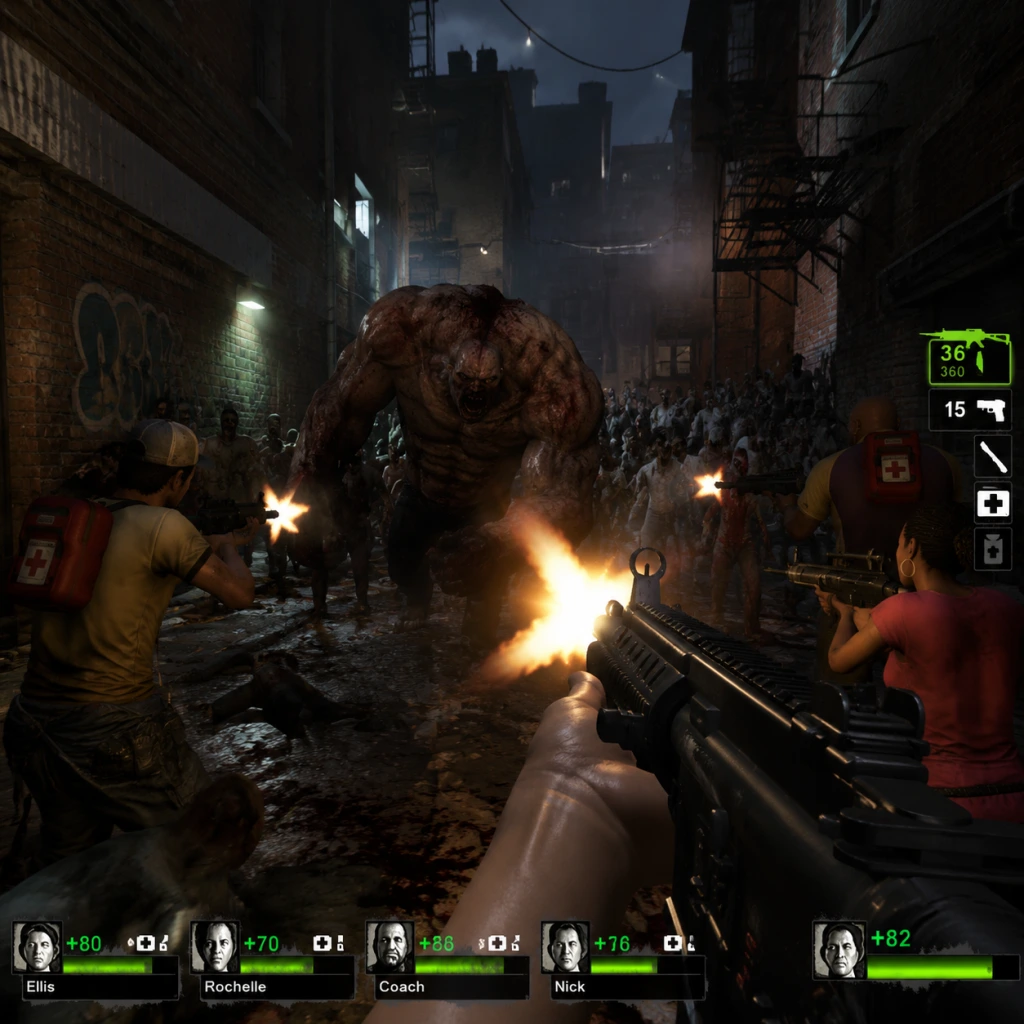
Core Gameplay
Core Gameplay Guide for Left 4 Dead 2
Left 4 Dead 2 is a cooperative first-person shooter with no traditional RPG levels or skill trees. "Progression" here refers to player skill growth, campaign completion, difficulty mastery, and unlocking achievements/characters. The game is structured around four-player co-op campaigns, each comprising multiple levels (maps) that culminate in a finale. Below is a breakdown of core gameplay organized by player progression tiers.
Overall Gameplay Loop
The loop is simple: survive from start safe room to end safe room in each level, fighting through standard Infected (Common, Hunters, Boomers, etc.) and special infected. Health, weapons, and supplies are scavenged along the way. Team coordination is critical. Each campaign has a set path but offers minor exploration for hidden supplies.
Combat/Interaction Systems
- Weapons: Pistols (infinite ammo), shotguns (pump, auto, combat), assault rifles (M16, AK-47, SCAR), SMGs, snipers (hunting rifle, AWP), melee (frying pan, katana, golf club, etc.), throwables (pipe bomb, molotov, bile jar), and explosives (grenade launcher).
- Special Infected: Each requires specific tactics (e.g., Jockey rides, Charger grabs, Spitter acid, Smoker tongues, Hunter pounces, Tank and Witch).
- Health/Items: Medkits heal 80 HP; pills give temporary health (50); defibrillators revive dead teammates. Adrenaline speeds actions. Pain pills and first aid are shared.
- Friendly Fire: Always on (except safe rooms). Manage fire carefully.
- No XP or levels. Unlock new characters by completing campaigns (e.g., Coach, Ellis, Rochelle, Nick are default; other survivors unlocked via achievements or DLC).
- Achievements: Many tied to difficulty, special kills, or unique actions (e.g., “Akimbo Assassin” using dual pistols).
- Difficulty Tiers: Easy, Normal, Advanced, Expert. Higher difficulties grant no new items but reward with achievement progress and bragging rights.
- Game Modes Progression: Start with Campaign, then unlock Scavenge, Survival, Versus, and Realism after playing certain modes or through menu selection (unlocks are non-linear; all modes available from start in L4D2).
- Campaigns: Each campaign acts as a quest chain with 5 levels (except The Passing which has 3). Objectives: reach safe room → cross bridge/defend area → final fight. No side quests, but optional areas contain extra supplies (e.g., hidden rooms with defibrillators or molotovs).
- Item Scavenging: Explore off the main path for weapon upgrades, health, and throwables. Example: In “Dark Carnival” level 3, you can find a chainsaw backstage.
- No main quest tracking: The HUD shows health, ammo, and team status; waypoints guide you to next area.
- No buying or selling. All items are found on the map. Weapons spawn in fixed locations (e.g., tier 1 weapons early, tier 2 later). Ammo piles refill primary weapon ammo. Explosives and health are limited per map.
- AI Director: Adjusts item scarcity, horde size, and special infected placement based on player performance (e.g., fewer items on easier runs, more specials if team is strong).
- No character customization or stat boosts. All survivors are identical in gameplay stats (health, speed, damage). Only cosmetic differences.
- Team Roles: Not formal, but players naturally specialize (e.g., one uses shotgun for clearing, another with sniper for specials). Melee weapons are best for conserving ammo.
- Focus: Learn controls, identify special infected, and basic teamwork. Play through first campaign “No Mercy” or easier DLC campaigns like “Dead Center” on Easy or Normal.
- Gameplay Loop: Follow the group, shoot common zombies, help teammates when pinned. Use melee and pistols frequently to save ammo.
- Combat Tips: Listen for audio cues (Boomer gurgle, Hunter scream). Prioritize special infected over common. Stay close to team to avoid being isolated.
- Exploration: Stick to the main path initially; later, explore side rooms for extra supplies. Example: In “Dead Center” first map, the gun store has tier 1 weapons and a defibrillator.
- Missions: Just follow the objective marker. No fail states except death; you respawn in safe rooms (if teammates survive). Try to complete full campaigns.
- Economy: Use medkits sparingly; heal only when below 50 HP. Pills for temp health in emergencies. Save pipe bombs for hordes.
- Skill Growth: Learn to aim for the head (more damage for most weapons), understand weapon ranges, and practice spinning to shoot specials that grab teammates.
- End of Early Game: Complete 2-3 campaigns on Normal. Unlock achievements like “Ghost Hunter” (kill a Witch without disturbing her).
- Focus: Master special infected counters, improve accuracy, and start Versus mode for PvP. Team coordination becomes critical.
- Gameplay Loop: Move methodically as a group, use bait tactics (one player lures Boomer then others shoot), and communicate via voice or quick chat (Z key).
- Combat Tips: Learn to “shove” (right mouse or space) to push Infected away, then shoot. For Charger: wait for charge then side-step. For Jockey: shoot before it jumps on you. Use double-tap to dodge.
- Exploration: Know hidden weapon spawns (e.g., on “Dark Carnival” the field of tents holds a grenade launcher). Memorize safe room locations for finales.
- Missions: Start playing Realism mode (no outlines on teammates, no health indicators on specials). Complete “Hard Rain” campaign for its weather effects.
- Economy: Now you manage ammo types. Tier 2 weapons (M16, auto shotgun) are generally better; save tier 1 for later or until you find upgrades. Share defibrillators for dead teammates; revive with them if possible.
- Skill Growth: Learn to use bile jar on a Tank to make Common Infected attack it. Master molotov throws to block chokepoints. Practice “kiting” (running in circles) against Tanks.
- End of Mid Game: Complete all campaigns on Advanced. Unlock characters like Gnome Chompski (for achievement). Start understanding The Director’s pacing.
- Focus: Expert difficulty (1-2 hits from specials kill you). Team composition (weapon roles) matters. Perfect your movement and awareness.
- Gameplay Loop: Extremely slow pacing. Every corner is dangerous. Use “corner peeking” to aggro enemies without exposing. No health regeneration; medkits are precious.
- Combat Tips: Always carry a melee for immediate crowd control. For Tanks, use environment (scavenge gas cans/propane tanks for explosions). Aim for headshots exclusively; body shots are wasteful.
- Exploration: Learn every item spawn (even random spawns). Example: On “The Parish”, the final bridge has no supplies; you must carry all needed items from previous maps.
- Missions: Complete Expert campaigns as a team. Use glitch spots (like closet in “Swamp Fever” finale) only if accepted. In Versus, play both survivor and infected sides.
- Economy: On Expert, you often skip medkits for defibrillators because death is common. Pills are better than medkits for temp health. Fire ammo (if modded) is not available vanilla; use incendiary rounds from bile jars.
- Skill Growth: Master the art of “saving” (shooting specials off teammates at last moment). Learn to “trade” items efficiently (one player carries defib, another carries medkit).
- End of Late Game: Complete all campaigns on Expert. Earn achievements like “What Are You Trying to Prove?” (survive a campaign on Expert with Realism).
- Focus: Challenge runs (e.g., solo melee-only, no medkits). Achievements completion. Custom campaigns from Steam Workshop. Speedrunning communities.
- Gameplay Loop: Replay campaigns with self-imposed rules. For achievements like “The Quick and the Dead” (kill a Witch with a melee weapon) or “Confederacy of Crunches” (kill a Charger while it’s charging).
- Combat Tips: Learn advanced techniques like “rocket jumping” with grenade launcher (for speedruns). Use console commands (sv_cheats 1) for testing, then apply in official runs.
- Exploration: Explore all hidden locations (e.g., the ‘Jake’s Room’ in Dark Carnival). Find every easter egg (e.g., Gnome Chompski in Dead Center).
- Missions: Play Mutations (weekly rotating modes) like Last Gnome on Earth, Taannnkkk!, or Versus Survival. Each offers unique twists.
- Economy: No new economy; instead, you master conserving items. For speedruns, you skip all optional pickups.
- Skill Growth: Learn to “shoot the Witch without enraging” (one headshot on Easy Expert is possible). Master the Xbox 360 controller vs. keyboard & mouse differences (e.g., acceleration).
- Endgame Structure: No official endgame content beyond achievements. Community content (custom maps, mutation mods) provides endless replayability. Many players aim for 100% achievement completion (1000/1000 Gamerscore or all Steam achievements). Others join competitive Versus leagues (like L4D2 Versus League).
Progression (Player Skill & Unlocks)
Exploration & Missions ("Quests")
Economy (No Currency)
Character/Build Growth (None)
---
Progression Tiers
Early Game (First 2-3 Campaigns & Easy/Normal Difficulty)
Mid Game (Multiple Campaigns on Advanced Difficulty, Versus Basics)
Late Game (Expert Campaigns, Versus Competitive)
Endgame (All Achievements, Mutations, Modding, Speedruns)
---
Note: Left 4 Dead 2’s core gameplay is fundamentally about cooperative survival and skill mastery rather than traditional progression. Each tier represents increasing difficulty, deeper game knowledge, and community engagement. Use the above as a roadmap to transition from novice to expert.