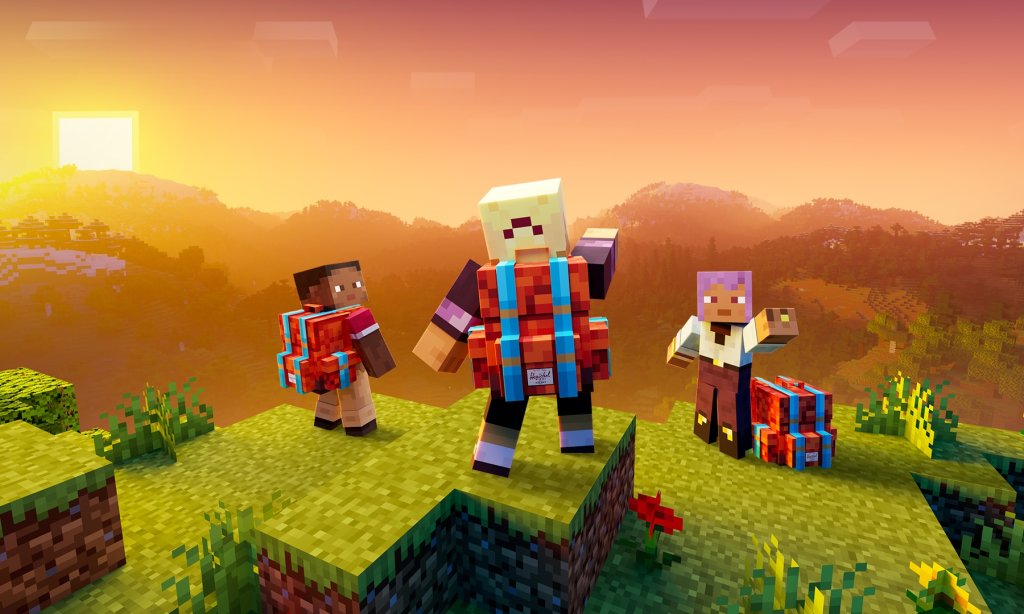
Game Introduction
Game Introduction: Minecraft
Genre
Minecraft is a sandbox survival game that blends elements of action-adventure, open-world exploration, and creative construction. Its genre-defining mechanics have spawned the "survival-crafting" and "voxel-based building" subgenres.
Developer & Publisher
- Developer: Mojang Studios (formerly Mojang AB), a Swedish game developer founded by Markus "Notch" Persson. Since 2014, Mojang has been a subsidiary of Xbox Game Studios (Microsoft).
- Publisher: Xbox Game Studios (Microsoft) on all platforms (console, PC, mobile), except for certain older/regional versions.
- Pre-release: Minecraft was first publicly available on May 17, 2009, as an alpha version (Classic).
- Official full release: November 18, 2011, following a beta period.
- Key editions: Java Edition (original), Bedrock Edition (unified cross-platform version released in 2017), and legacy console editions (discontinued).
- Major updates: The game receives continuous free content updates (e.g., Caves & Cliffs, The Nether Update, Trails & Tales).
- PC: Windows, macOS, Linux (Java Edition); Windows 10/11 (Bedrock Edition via Microsoft Store)
- Consoles: Xbox One, Xbox Series X|S, PlayStation 4, PlayStation 5, Nintendo Switch
- Mobile: iOS, Android (Bedrock Edition)
- Other: Amazon Fire TV, Raspberry Pi (legacy), Windows Mixed Reality VR, Oculus Rift (via Bedrock), etc.
- Players start in a world with no memory or context.
- They must gather resources, build shelter, and survive against hostile creatures that appear at night.
- The ultimate goal (if chosen) is to defeat the Ender Dragon in a dimension called The End, which triggers a simple end credit sequence written as a philosophical poem. After defeating the dragon, an exit portal appears, and the player can choose to return to the Overworld – but the game continues indefinitely.
- The Nether: A hellish, cavernous realm filled with lava, dangerous mobs, and unique resources.
- The End: A barren, void-like dimension where the Ender Dragon resides.
- Total player agency: No forced goals, quests, or linear paths.
- Procedural generation: Every world is unique, ensuring infinite replayability.
- Emergent gameplay: The player creates their own stories through building, exploring, and surviving.
- Scalable complexity: Easy to start (punch a tree, make a crafting table) but offers deep systems (redstone engineering, enchanting, potions).
- Multiplayer connectivity: Join friends’ servers or massive public communities (like Hypixel).
- Casual players: Children, families, and anyone who enjoys relaxed building and exploration.
- Hardcore builders: Architects, engineers, and artists who create massive structures, pixel art, or redstone machines.
- Survival enthusiasts: Players who enjoy tough, resource-management gameplay with perma-death options (Hardcore mode).
- Modding community: Tech-savvy users who modify the game with custom content (Java Edition).
- Survival Mode: Players must gather resources, maintain health/hunger, and fend off hostile mobs. Crafting and exploration are essential.
- Creative Mode: Unlimited resources, flight, and invulnerability – pure building and experimentation.
- Adventure Mode: Designed for custom maps with restricted interactions (e.g., cannot break blocks without proper tools).
- Spectator Mode: Ghost-like mode that allows flying through terrain and viewing the world from any perspective.
- Hardcore Mode: A variant of Survival with permadeath and locked difficulty (Hard).
- Offline: All game modes can be played fully offline in single-player (no internet connection required after installation).
- Online: Multiplayer is supported via:
- Cross-platform multiplayer: Bedrock Edition supports play across PC, console, mobile, and VR.
- Minecraft Marketplace (Bedrock Edition): A store for community-created maps, skins, texture packs, and mini-games – many free, some paid.
- Minecraft Dungeons: An action-adventure spin-off released as a separate game (with DLCs like “Jungle Awakens” and “Flames of the Nether”).
- Minecraft Legends: A real-time strategy spin-off released in 2023.
- Minecraft Education Edition: A classroom-focused version with lesson plans (available via subscription).
Release Timeline
Platforms
Minecraft is available on virtually every modern gaming platform:
Story Overview
Minecraft does not have a traditional narrative-driven story. Instead, it presents a player-defined emergent narrative set in a procedurally generated world. The only "story" is the optional progression path:
Setting
The game takes place in a blocky, 3D world made entirely of 1x1 meter cubes (voxels). The primary dimension is the Overworld, which features diverse biomes (forests, deserts, mountains, oceans, etc.). Two other dimensions exist:
Main Characters
Minecraft has no named protagonists or NPCs with backstories. The player controls a customizable character (default "Steve" or "Alex") who is essentially a silent avatar. The only significant "character" is the Ender Dragon (the final boss), which serves as a non-verbal adversary. Villagers (passive NPCs) and Illagers (hostile variants) inhabit structures but lack dialogue or personality.
Core Appeal
Minecraft’s appeal lies in its boundless creativity and freedom:
Target Audience
Game Modes
Minecraft offers several core modes:
Online/Offline Support
- Local LAN: Up to 8 players connected on the same network.
- Online servers: Thousands of public servers or private servers run by players.
- Realms: Mojang-hosted subscription-based servers for small groups (up to 10 players).
DLC & Expansions Overview
Minecraft’s core game receives regular free updates (themes like “Caves & Cliffs” or “The Wild Update”) that add new biomes, mobs, and features. Paid content includes:
No traditional paid expansions exist for the base Minecraft game itself (aside from cosmetic DLC).
What Makes This Game Unique?
Minecraft stands apart due to its voxel-based, modifiable world that encourages unscripted creativity. It is one of the best-selling video games of all time (over 300 million copies as of 2023) and has become a cultural phenomenon. Its simplicity (punch a tree, build a shelter) belies immense depth in crafting recipes, redstone circuitry, and enchanting. The game’s open-endedness has led to a massive community that creates custom mods, maps, and adventure maps, effectively extending the game infinitely. Minecraft also pioneered the cross-platform unified experience (Bedrock Edition) and remains a benchmark for family-friendly, accessible, and limitless gaming.