Game Introduction
Overview
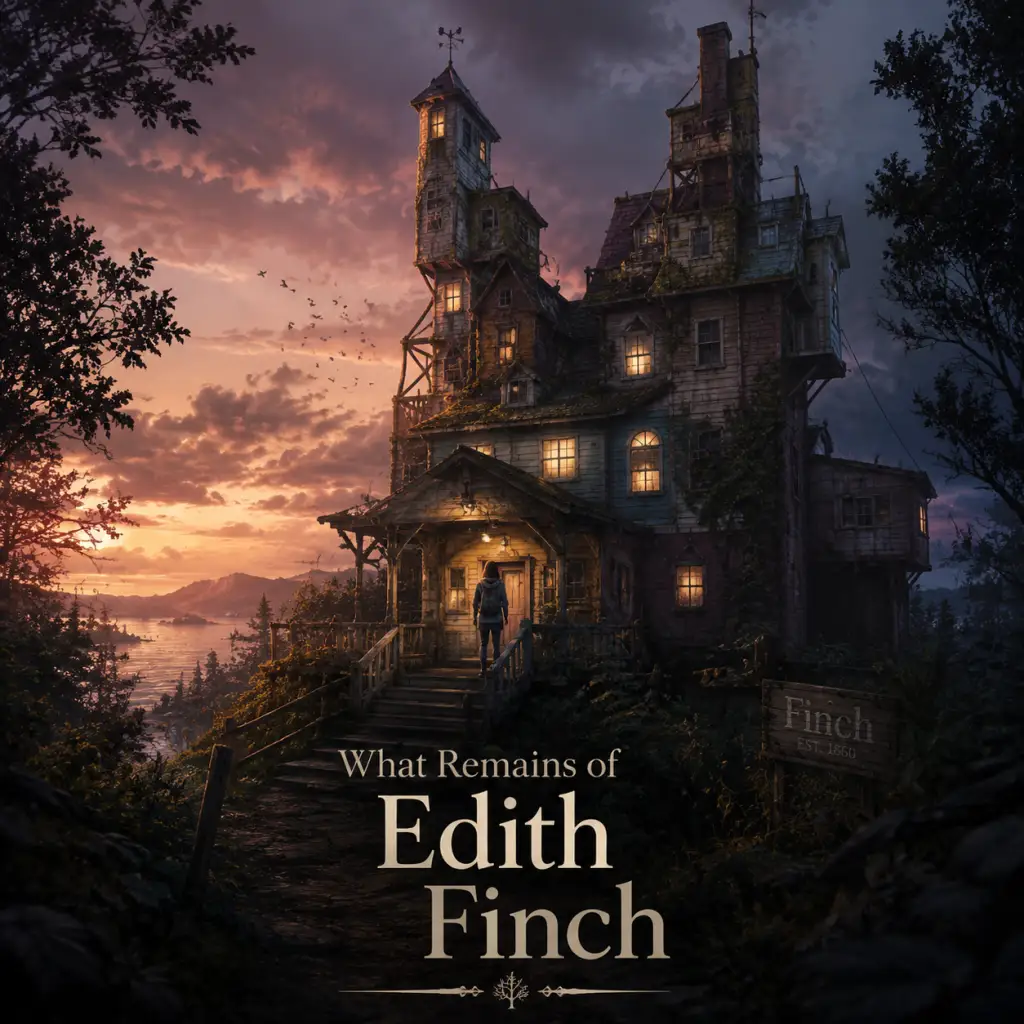
"What Remains of Edith Finch" is a critically acclaimed narrative-driven adventure game developed by Giant Sparrow and published by Annapurna Interactive. The game was initially released on April 25, 2017 for PlayStation 4 and PC (via Steam, GOG, and Epic Games Store). It later launched on Xbox One on July 19, 2018, followed by Nintendo Switch on July 4, 2019. The game is also playable on PlayStation 5 and Xbox Series X|S via backward compatibility.
Genre
The game is a first-person narrative exploration game, often classified as a "walking simulator" but elevated by its deeply interactive storytelling and magical realism. It blends elements of adventure, puzzle, and horror, but the primary focus is on immersive narrative.
Developer & Publisher
- Developer: Giant Sparrow, an independent game studio based in Santa Monica, California, known for their previous game "The Unfinished Swan."
- Publisher: Annapurna Interactive, the video game division of Annapurna Pictures, renowned for publishing artistic, story-driven titles like "Journey," "Stray," and "Florence."
- Initial Release: April 25, 2017 (PS4, PC)
- Xbox One: July 19, 2018
- Nintendo Switch: July 4, 2019
- Additional Platforms: Playable on PS5 and Xbox Series X|S through backward compatibility with enhancements.
- PC (Windows, Mac, Linux - via Steam, GOG, Epic Games Store)
- PlayStation 4
- PlayStation 5 (backward compatible)
- Xbox One
- Xbox Series X|S (backward compatible)
- Nintendo Switch
- Edith Finch: The protagonist and narrator. A 17-year-old girl who returns to her childhood home after her mother's death.
- Dawn Finch: Edith's mother, who sealed off parts of the house and kept the family history hidden.
- Sanjay Finch: Edith's father, who died when she was young (details emerge through a letter).
- Other Finch family members: The game includes stories of various relatives: Molly (died from eating poisonous berries, experienced a surreal fantasy), Barbara (teenager killed in a storm), Calvin (died on a swing set), Sam (uncle who died hunting), Walter (uncle who lived in the basement and died in a train accident), Gregory (baby drowned in bathtub), Gus (teenager died in a storm), Milton (mysterious uncle who disappeared), Lewis (cousin who died in a cannery while daydreaming). Each story is told through a unique gameplay mechanic.
- Players who enjoy narrative-driven games with minimal gameplay challenges (no combat, no fail states).
- Fans of "walking simulators" like "Gone Home," "Firewatch," "The Vanishing of Ethan Carter."
- Those interested in experimental storytelling, dark themes, and family drama.
- Suitable for mature audiences due to themes of death, loss, and some disturbing imagery.
Release Timeline
Platforms
Story Overview
The game follows Edith Finch, the last surviving member of the Finch family, as she returns to her ancestral home in Orcas Island, Washington. She explores the decaying mansion and pieces together the stories of her deceased relatives. Each family member died under unusual and often tragic circumstances, and the player experiences their final moments through interactive vignettes. The overarching mystery revolves around a supposed family curse that has claimed the lives of nearly every Finch. Edith's journey is both a personal exploration of her family history and a meditation on death, legacy, and the stories we leave behind.
Setting
The game is set primarily in the Finch family mansion, a sprawling, labyrinthine house filled with secrets, artifacts, and hidden rooms. The house itself feels like a character—its architecture reflects the eccentricities of each generation. The setting also includes brief excursions into the surrounding forest and ocean. The time periods span from the early 1900s to the present day, with each relative's story taking place in a distinct era.
Main Characters
Core Appeal
The game's core appeal lies in its emotional storytelling and creative gameplay vignettes. Each relative's death is presented with a distinct art style and interactive mechanic—for example, one story is told through comic panels, another through a shifting perspective, and another through a daydream sequence where the player controls a boy's fantasy life while his hands continue mundane work. The game masterfully uses the interactive medium to evoke empathy and reflection on mortality. The sense of exploration in the empty house, discovering notes and artifacts, builds a deep sense of mystery and melancholy.
Target Audience
Game Modes
The game is single-player only, with a linear but non-linear structure in terms of which family stories you can explore. The main story is told sequentially as Edith explores the house, but you can revisit the house after completing the game to find additional details. There are no difficulty settings, multiplayer, or alternative modes.
Online / Offline Support
The game is entirely offline single-player. No online features, achievements are tied to platform (Steam, PSN, Xbox Live, etc.). The Nintendo Switch version is playable in handheld or docked mode. No online connections required.
DLC / Expansion Overview
There is no paid DLC or expansions for "What Remains of Edith Finch." The game is a self-contained experience. However, the developers released a free "Extended" update on PC that included additional collectibles and an easter egg related to "The Unfinished Swan." The Nintendo Switch version includes a "Secrets" mode that unlocks developer commentary and hidden objects, but no major content expansions.
What Makes This Game Unique
Several aspects set it apart:
1. Unprecedented Narrative Integration: Each family member's story is told through a unique gameplay mechanic that mirrors their personality and cause of death—tying form and content together seamlessly.
2. Emotional Depth: The game tackles the heavy topic of death with grace, leaving players with a sense of wonder rather than despair.
3. Replayability through Discovery: The mansion is filled with hidden details—notes, photos, toys, and letters—that enrich the lore. Players often revisit to fully understand the family history.
4. Critical Acclaim: It won numerous Game of the Year awards and is often cited as one of the best examples of storytelling in video games.
5. Short but Memorable: The game can be completed in about two hours, making it a perfect evening experience that leaves a lasting impact.