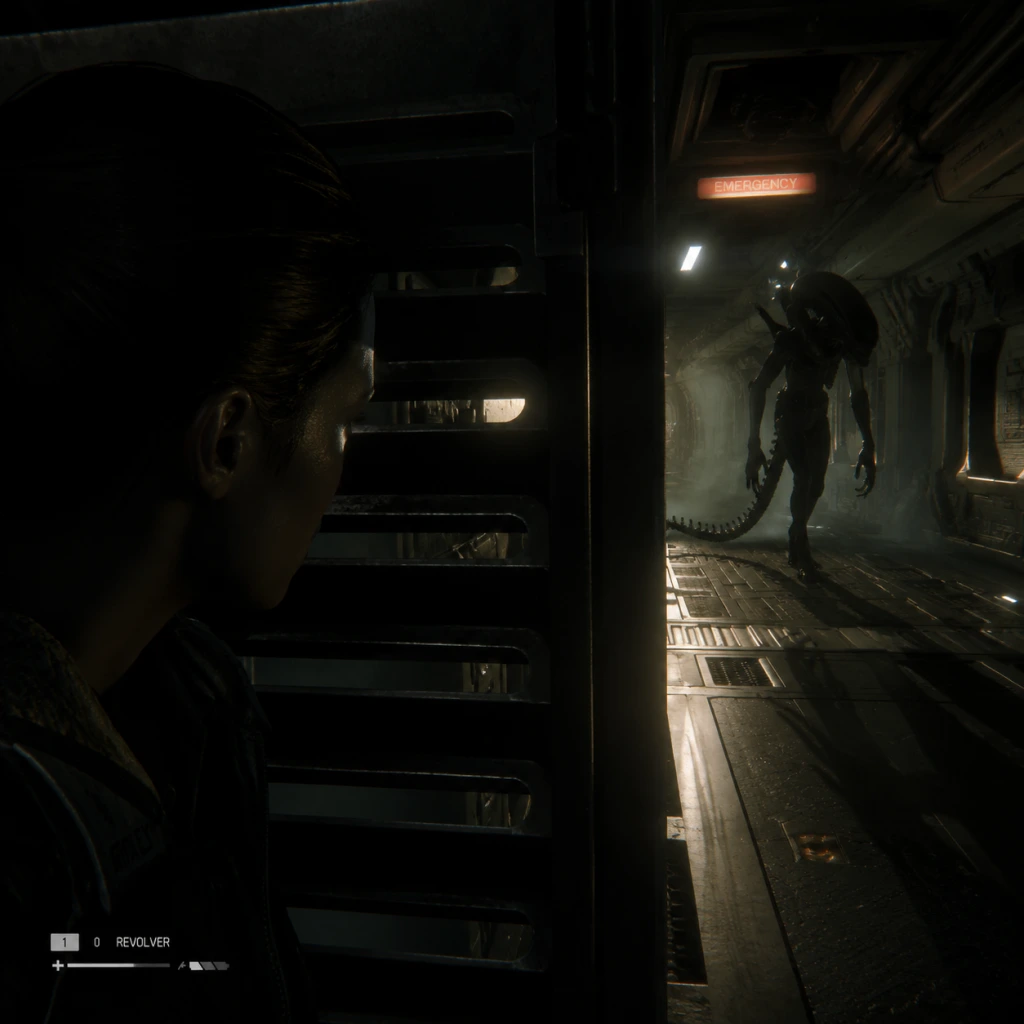
Core Gameplay
Introduction
Alien: Isolation is a first-person survival horror game that emphasizes stealth, resource management, and tension over combat. The core gameplay loop involves navigating the derelict Sevastopol station while evading a single, nearly indestructible Xenomorph and other hostile humans and synthetic "Working Joes." You must scavenge for resources, craft tools and weapons, solve environmental puzzles, and complete mission objectives to progress. There is no traditional character leveling or class system; progression is defined by the tools you acquire, your growing knowledge of the station’s layout, and your mastery of stealth and evasion. The game is structured around a linear story divided into 18 chapters, each with distinct areas and threats. Below, the core gameplay elements are broken down by player progression tiers, though note that the story is strictly linear and there is no open-world free play endgame.
Player Progression Tiers
Early Game (Chapters 1–5: The Arrival to The Quarantine)
Main Gameplay Loop: Learn the basics of stealth, hiding, and using the motion tracker. Objectives are clear: reach Sevastopol station, find survivors, and attempt to contact the Anesidora.
- Combat/Interaction Systems: You start with only a wrench for blunt melee (effective against humans but dangerous). No firearms yet. The primary interaction is using the motion tracker to detect moving objects (including the Alien) and hiding in lockers, under tables, or behind vents. The first encounter with the Xenomorph (Chapter 3) forces you to master silent movement and distraction.
- Progression: Obtain the Ion Torch (Chapter 2) to open sealed doors and cut through vents. Gain the first crafting tool: the Fabricator. Unlock basic blueprints for “Noisemaker” (distraction) and “Flashbang” (temporary stun). Health is limited; you can craft Medkits from scavenged supplies.
- Exploration: Linear corridors of Sevastopol’s entry areas (e.g., Transit Hub, San Cristobal Medical Facility). You are guided by waypoints but can explore side rooms for resources and lore logs. Early locked doors require keycards or hacking (simple minigame).
- Quests/Missions: “Welcome to Sevastopol” – reach the station; “Contact” – find the communications array; “Seegson Synthetics” – navigate the San Cristobal Medical Facility. These are story-driven with few optional objectives.
- Economy: Scavenge components like “Electronic Components,” “Scrap Metal,” and “Alcohol” from desks, lockers, and dead humanoid enemies. Use Fabricators to craft items. Credits are found but are only used to purchase from the single Merchant at the start; later, credits become irrelevant as the Merchant disappears. Rationing is critical.
- Character/Build Growth: No skill trees or stat upgrades. The only “growth” is learning enemy patterns and map layouts. Your health increases slightly as you find hidden health upgrades (blue canisters), but there are no level-up mechanics.
- Endgame Structure: Not applicable; you are in the introductory phase of a linear story.
- Combat/Interaction Systems: Acquire the Revolver (Chapter 6) – a powerful but loud weapon that attracts the Alien. Use it sparingly. Obtain the EMP Mine (Chapter 8) to disable Working Joes temporarily. The Pipe Bomb becomes craftable later (Chapter 10) for area denial. Hacking terminals (minigame) and cutting locks with Ion Torch remain essential. The Flamethrower appears in Chapter 8, providing a temporary deterrent against the Xenomorph (it will flee but return).
- Progression: New blueprints: EMP Mine, Pipe Bomb, Smoke Bomb, and increased capacity for items via hidden upgrades (e.g., tool belt upgrades). Key story line: you must access the Apollo Core by collecting three keycards. This requires backtracking across previously visited areas, now patrolled by new enemies.
- Exploration: More open environments like the Seegson Communications Center and Marshall’s Office offer multiple routes. The Vent system becomes a key traversal method, but the Alien can also use it. Explore side paths for extra resources and logs.
- Quests/Missions: “The Missing Doctor” – find Dr. Morley; “The Apollo Core” – gather keycards; “The Message” – listen to the cache logs. These involve finding specific locations and sometimes stealth missions around aggressive human survivors.
- Economy: Resource scarcity increases. You must prioritize what to craft: medical kits, noisemakers, or ammunition (revolver rounds are rare). Fabricators are your only source of crafted items; ammo for the revolver is found but not craftable. Learn to reserve components for critical tools (e.g., EMP mines for unavoidable Working Joe encounters).
- Character/Build Growth: No permanent stat increases. You may find a Security Suit upgrade (Chapter 9) that increases explosion resistance, but that’s a single-use item. Knowledge of the Alien’s behavior (e.g., it investigates sound sources) is your main progression.
- Endgame Structure: Still story-driven; no repeatable content or side quests.
- Combat/Interaction Systems: The Flamethrower becomes essential for keeping the Xenomorph at bay, but fuel is extremely limited. The Shotgun (Chapter 12) offers a powerful but noisy option against humans and Working Joes. Use the Stun Baton (Chapter 13) for quiet incapacitation of humans. The EMP effect is crucial for bypassing massed Working Joes. All weapons attract the Alien if used, so stealth is still paramount.
- Progression: No major new tools; instead, you gain access to the Mainframe and the ability to override door locks via terminal commands in some rooms. A key story beat: you must restore main power, which requires completing a complex puzzle in the Reactor (Chapter 14). Your Map updates with new waypoints but no fast travel.
- Exploration: The Reactor Core is a multi-level labyrinth with exposed floors, live steam pipes, and limited hiding spots. The Apollo Core (Chapter 15) is a tight, maze-like server room. Both areas heavily feature the Alien and Working Joes. Exploration focus is on finding alternative routes and resource caches.
- Quests/Missions: “The Power Core” – calibrate the reactor; “The Escape Plan” – reach the Torrens; “The Last Survivor” – navigate the core. These missions demand extensive backtracking through infested areas. Some optional objectives appear (e.g., find a keycard to unlock a shortcut), but they are not marked.
- Economy: Ammo and health become very scarce. You must rely on the flamethrower to deter the Alien rather than kill it. Fabricators are still present but may be in dangerous positions. Conservation is critical: use flare s (craftable) to distract the Alien instead of noisemakers if you have a shortage of components.
- Character/Build Growth: By this point you have all possible tool capacity upgrades (found earlier in the game). No further growth. Your skill at using the motion tracker and predicting the Alien’s patrol patterns is your primary “build.”
- Endgame Structure: The story is approaching its climax. There is no endgame content; endgame is essentially the final couple of chapters.
- Combat/Interaction Systems: You have access to all equipment, but resources are exhausted from the previous chapters. The final areas are linear gauntlets: first, a flooded Operations Deck with zero visibility and constant Alien patrols; then the Sevastopol Station’s external dock where you must use the flamethrower to hold off the Xenomorph while fixing an elevator. The final encounter (Chapter 18) is a scripted sequence where you must repeatedly use the flamethrower to push back the Alien while activating the Torrens’ launch sequence. Combat with other enemies is minimal; focus is solely on the final threat.
- Progression: No new tools. The game ends after the final cutscene. There is no New Game+ or difficulty-unlock content (aside from higher difficulty options from the start).
- Exploration: Linear path; no deviations. The environment is heavily scripted.
- Quests/Missions: “The Final Signal” – reach the Torrens; “The Escape” – launch the ship. These are linear with no alternatives.
- Economy: The final chapters are stingy with resources. You likely have few components left. Crafting is mostly irrelevant; you rely on pre-crafted items and the flamethrower fuel you saved.
- Character/Build Growth: None. The endgame tests your cumulative skill, not stats.
- Endgame Structure: There is no endgame after the story. The game ends and returns to the main menu. There is no free-play mode or additional content (except DLCs like “Crew Expandable” which are separate campaigns).
Mid Game (Chapters 6–10: “The Maintenance to “The Lab” )
Main Gameplay Loop: Continue evasion-based survival, now with more tools to manage enemies. The Alien’s patrol patterns become more unpredictable, and you must also handle armed humans and Working Joes.
Late Game (Chapters 11–15: “The Facehugger to The Distress Call )
Main Gameplay Loop: The tension peaks as the Alien is now nearly always present, and multiple threats coexist. You must navigate the station’s most dangerous sections – the reactor and the central Apollo Core – often with no clear safe zones.
Endgame (Chapters 16–18: “The Signal” to The Exit )
Main Gameplay Loop: Escape the station. The game pulls together all gameplay elements in a final frantic sequence. The Alien is relentless, and you must use all skills and tools to survive long enough to trigger the final cutscene.
Core Gameplay Systems Summary
The following table summarizes how each core system evolves across tiers:
| System | Early Game | Mid Game | Late Game | Endgame |
|---|---|---|---|---|
| Stealth | Basic hiding, crouch walk, use lockers. | Use vents, noisemakers, EMP mines to control enemy movement. | Flamethrower as active deterrent; must manage multiple enemies. | Pure evasion with very limited resources. |
| Combat | Wrench melee only. | Revolver, EMP mines, Pipe bomb introduction – combat draws Alien. | Shotgun, Stun Baton, Flamethrower – combat only as last resort. | Flamethrower-focused scripted encounters. |
| Crafting | Medkits, Noisemakers, Flashbangs. | Smoke bombs, EMP mines, Pipe bombs. | All above plus flares; component shortage. | Same, but fabricators limited. |
| Exploration | Linear, guided. | More branching paths, backtracking. | Complex multi-level maps (Reactor, Apollo). | Linear gauntlet. |
| Risk/Reward | Stealth is mandatory; combat rarely worthwhile. | More tools allow limited aggressive tactics, but risk high. | Small risk of using flamethrower can save time but waste fuel. | No alternative; must use flamethrower. |
| Progression | Key tools (Ion Torch, Tracker). | Flamethrower, EMP, heavy weapons. | Full toolset; knowledge of AI patterns. | Skill execution. |
Conclusion
Alien: Isolation offers a tightly paced survival horror experience without traditional RPG progression. Your character does not level up; instead, progress is defined by the expanding toolkit and your growing understanding of enemy AI and station geography. Each tier increases the intensity and complexity of threats, culminating in a climactic escape. The game rewards patience, careful resource management, and stealth above all, making it a unique example of skill-based horror progression.