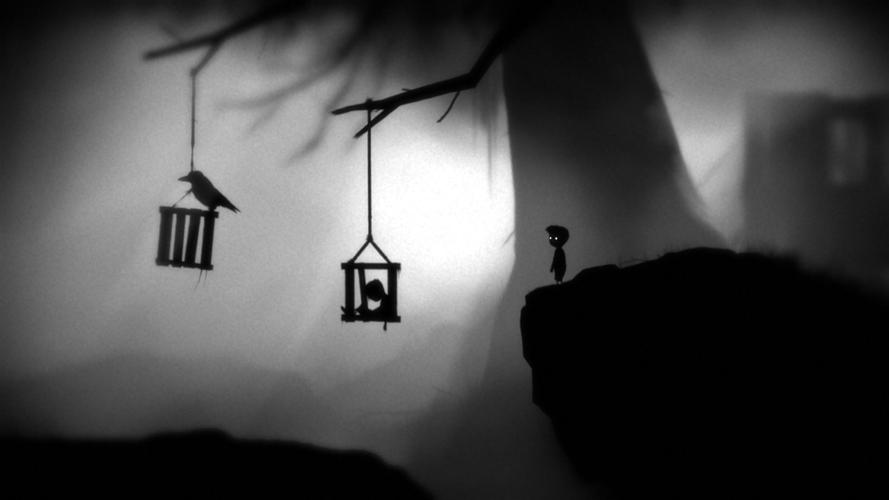
Game Tips
Game Tips
General Beginner Tips
1. Patience is key. Limbo is a game of trial and error. Each puzzle is designed to be solved by observing the environment, not by speed. Rushing often leads to repeated deaths. Take your time to look at the full screen before moving.
- Why it works: The game rarely penalizes you for waiting, but many traps are triggered by sudden movement. By pausing, you spot hidden triggers like tripwires or pressure plates.
- When to use: Always enter a new area slowly. Stand still for a few seconds to scan for moving objects, hanging ropes, or subtle shadows that indicate a threat.
2. Learn from every death. The game’s frequent deaths are not failures—they are lessons. Each time you die, note what killed you and how you could have avoided it.
- Why it works: Limbo teaches through repetition. After a few deaths, you instinctively know the timing of a bear trap or the speed of a rolling ball.
- When to use: After each death, don’t just restart immediately. Pause for a moment to recall the sequence that led to your demise. The solution often becomes obvious.
3. Use the D-pad or keyboard for precise movements. Analog sticks can cause unintended slides or falls. For pixel‑perfect jumps and careful ledge grabs, use digital input.
- Why it works: The platforming requires exact positioning. Digital input gives you consistent control without the drift of an analog stick.
- When to use: When shimmying across narrow ledges, timing jumps over gaps, or positioning on a moving platform.
Puzzle Solving Strategies
4. Interact with everything. Push crates, pull levers, flip switches, and examine ropes. Even objects that seem purely decorative may move or react.
- Why it works: Limbo’s puzzles are mechanical. Every object in a room is there for a purpose. If you see a crate, it is meant to be moved. If you see a hook, it is meant to be used.
- When to use: At the start of any new room. Before trying complex solutions, try the simplest action: push, pull, or jump on anything movable.
5. Think about cause → effect. Many puzzles require you to trigger something in one location that affects another. Look for chains, wires, or ropes that connect objects.
- Why it works: The game’s physics are consistent. A lever that raises a platform must be connected. A counterweight that opens a door must be balanced.
- When to use: When you see a mechanism but don’t see its effect, consider that it might be linked to something off‑screen. Explore the entire room to find the linked element.
6. Use the environment as a tool. Water conducts electricity, light can attract insects, and empty containers can collect liquid. Treat every element as a potential tool.
- Why it works: The game world is reactive. For example, placing a crate in water floats, which can help you reach high ledges. Using a bug‑attracting light can distract enemies.
- When to use: Whenever you’re stuck, ask yourself: “What unique property does this environment have?” Then try to exploit it.
7. Solve puzzles in reverse. Instead of trying to reach the exit, work backwards from the exit to figure out what you need.
- Why it works: Many puzzles have a clear goal (e.g., open a gate). To open it, you need a key or counterweight. Reverse‑thinking reveals the required steps.
- When to use: When forward progress feels blocked. Identify the gate or door, then trace back what is needed to operate it.
Exploration & Secrets
8. The game has no map, but landmarks repeat. Areas are connected through thematic transitions. If you see a familiar tree or building, you are likely on the right path.
- Why it works: Limbo is linear but can feel maze‑like. Landmarks help you orient yourself and confirm you haven’t missed a side path.
- When to use: After a long section, look for recurring motifs (e.g., a specific type of grass, a broken sign) to verify you are moving forward.
9. Look for hidden eggs. There are secret “golden” items (actually small, glowing spheres) that are not required but contribute to the game’s meaning and achievements.
- Why it works: Collecting all eggs unlocks an achievement/trophy and hints at deeper lore. They are often hidden behind breakable walls or requiring sequence breaks.
- When to use: After mastering the main path, revisit earlier sections. Look for cracks in the background, slightly different colored tiles, or suspicious empty spaces.
10. Side paths may lead to death or shortcuts. Not every branch is safe. Some lead to instant death but also to secret areas. Don’t be afraid to explore dangerous routes.
- Why it works: The game rewards curiosity. A seemingly deadly trap may actually be a shortcut if navigated correctly.
- When to use: After you’ve completed an area, go back and try any path you avoided earlier. Use quick saves (on PC) to test risky moves without losing progress.
Traps & Hazards
11. Watch for environmental clues. Before a trap triggers, the game often gives a visual or audio hint: a slight shimmer in the air, a faint rumbling, a change in the background sound.
- Why it works: Playdead designed the game to be fair. Every trap has a tell. For example, bear traps are set on pressure plates; you can see the plate before stepping on it.
- When to use: When entering any new area, listen for buzzing, grinding, or dripping. These sounds indicate active hazards.
12. Giant spiders are not instantly fatal. If you encounter a spider, it will try to catch you, but you can escape by staying in bright areas or using the environment to block it.
- Why it works: Spiders fear light. Even a small spotlight can deter them temporarily. Use this to plan your movement.
- When to use: When you hear skittering, stay near any light source. If the spider catches you, mash the jump button to break free before it drags you away.
13. Water is both friend and foe. Drowning is an instant death, but water can also break falls, float heavy objects, and conduct electricity.
- Why it works: The game uses water as a puzzle element. Pushing a crate into water creates a floating platform; submerging yourself under a low ceiling can avoid a sawblade.
- When to use: If a passage is filled with water, first check if you can lower the water level or add objects to change flow. Never jump into unknown water without a plan.
Intermediate Techniques
14. Chain jumps for extra height. Jumping off a moving object (like a swinging crate) gives you a higher arc. Time your jump at the apex of the swing.
- Why it works: The game’s physics apply momentum. If you jump while moving upward, you add that velocity to your own jump.
- When to use: When you need to reach a ledge that is slightly higher than your normal jump. Grab a rope or stand on a crate, let it swing, then jump at the highest point.
15. Grab ropes and pull them quickly. Some ropes lower platforms or open doors when pulled. You can jump and grab the rope mid‑air, then pull down while falling.
- Why it works: This saves time and avoids resetting the puzzle. It also allows you to combine actions (e.g., pull a rope and then run under a door before it closes).
- When to use: When a rope is too high to reach from the ground, or when you need to perform two actions in quick succession.
16. Use the environment to block enemies. Creatures like the giant spider or the mind‑control boys (the “leech” creatures) can be trapped behind objects you move.
- Why it works: Many enemies follow a simple patrol path. Placing a crate or box in their way delays them, buying you time to cross.
- When to use: When an enemy patrols a narrow corridor. Push a crate into its path, then run past while it is stuck.
Advanced Optimizations
17. Speedrun techniques save time but require precision. The most notable trick is the “slide jump”: while running, crouch and jump at the exact moment you reach a ledge to slide under low obstacles without losing speed.
- Why it works: This bypasses the need to stop and duck, shaving off seconds per section. It also allows you to skip some small puzzles entirely if you can slide past a trigger.
- When to use: After you have memorized the safe spots. Practice on the early sections where the timing is forgiving. Only attempt in areas with no immediate lethal traps.
18. Sequence breaks are possible through physics exploits. For example, you can use a falling crate to launch yourself over barriers if you stand under it just as it drops.
- Why it works: The game’s physics treat the crate’s collision with your character as a push. If timed correctly, you can gain upward velocity.
- When to use: In puzzles where the intended path is blocked but there is a heavy object above. Note: This can sometimes soft‑lock you if you bypass required triggers, so save beforehand.
19. The “double jump” glitch (PC only). In certain versions, by pressing jump and then quickly tapping the interact key while in the air, you can get a second jump. This is an exploit that can skip entire sections.
- Why it works: A brief frame‑perfect input is misinterpreted by the engine as an additional jump. It is not consistent but can be trained.
- When to use: Only if you are comfortable with game‑breaking glitches. Best used for speedrunning or reaching hidden eggs. It may not work on all ports (e.g., console versions are patched).
20. Restart the level if you miss a hidden egg. Eggs are tied to specific checkpoints. If you pass a checkpoint without collecting an egg, you cannot go back without restarting the entire chapter.
- Why it works: The game’s checkpoint system does not allow backtracking across major transitions. To avoid missing eggs, either consult a guide or vow to explore thoroughly before moving forward.
- When to use: When aiming for 100% completion. After solving a puzzle, do not proceed through the exit until you have checked every corner for an egg. If you miss one, use the chapter select (if available) or start a new game.
Final Wisdom
- There is no wrong way to play. Limbo’s strength is its openness to multiple solutions. Some puzzles can be solved by brute force, others by patience. Use the method that feels most intuitive to you.
- Audio cues are crucial. The game has minimal music but rich ambient sound. A change in volume or a new sound effect often signals an incoming hazard or a solved puzzle.
- Help is everywhere online. If you are stuck on a specific puzzle, many walkthroughs and forums exist. But try to solve it yourself first—the sense of accomplishment is part of the experience.