Game Introduction
Game Overview
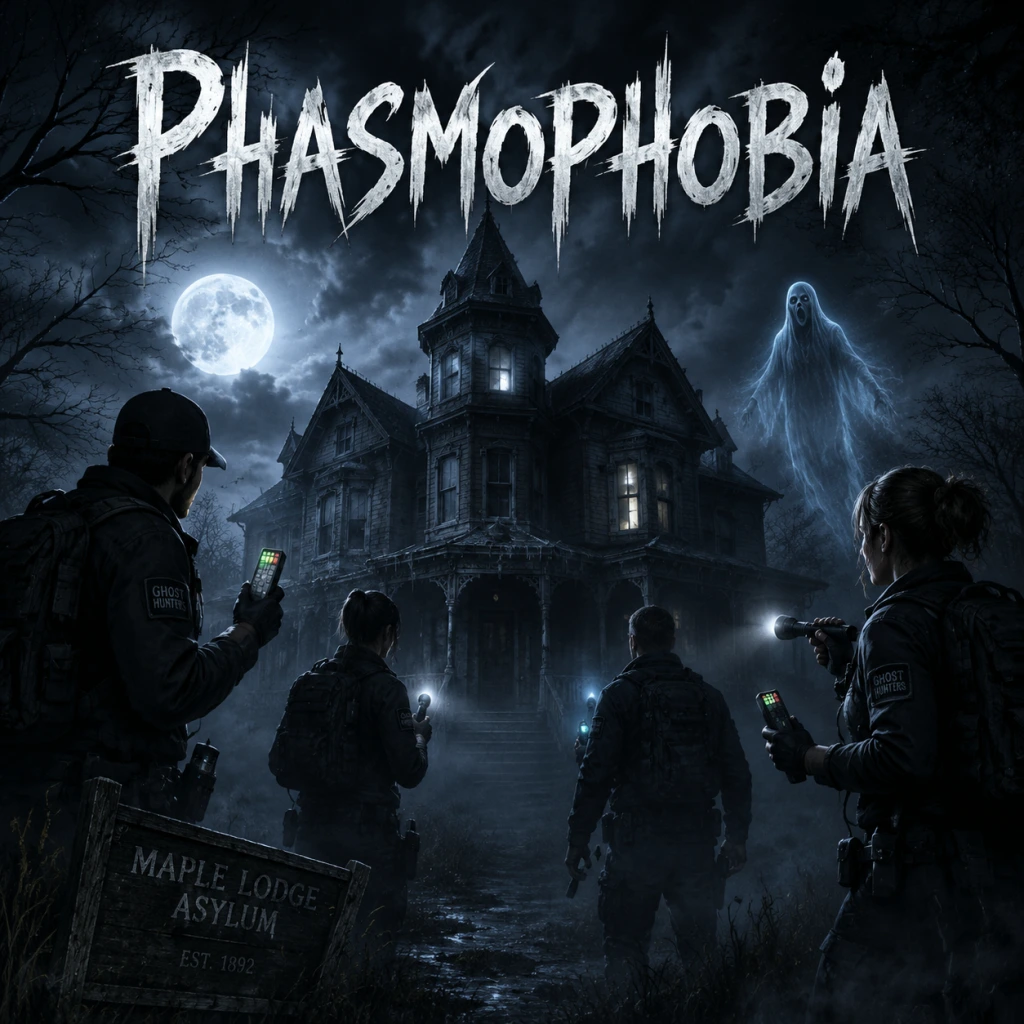
Phasmophobia is a cooperative psychological horror game developed and published by Kinetic Games. It first launched in Early Access on Steam in September 2020, quickly becoming a viral sensation. The full 1.0 release arrived on October 28, 2024, with simultaneous launches on PlayStation 5 and Xbox Series X|S. As of the latest updates, the game also fully supports PC VR (Oculus Rift, HTC Vive, Valve Index, and SteamVR headsets) and PSVR2 on PlayStation 5, offering an even more immersive experience. Phasmophobia is available on Steam, Epic Games Store, PlayStation Store, and Microsoft Store.
Story & Setting
While Phasmophobia lacks a traditional narrative campaign, its core premise is simple yet compelling: you are a member of a paranormal investigation team contracted to identify and document ghostly activity at various haunted locations. The game takes place across a series of increasingly dangerous sites—from suburban houses and abandoned asylums to a cursed prison and a high-school. Each location is procedurally designed with randomized ghost types, evidence spawns, and environmental cues, ensuring no two investigations feel the same. The overarching lore is subtle, hidden in collectible cursed objects, ghost descriptions, and the occasional “ghost death” hints, but the true story is the one you create with your team through shared fear and discovery.
Main Characters
Players do not control pre-defined characters; instead, each session you create a custom avatar with adjustable gender, appearance, and voice pitch. The only recurring “character” is the ghost, which has a unique personality determined by its type (e.g., Spirit, Wraith, Phantom, Poltergeist, Demon, etc.). The ghost’s behavior—favorite room, hunting patterns, response to equipment—is randomized, making every ghost feel like a distinct entity. There are also ghost models with unique visual designs that change each match.
Core Appeal
Phasmophobia’s appeal lies in its genuine terror, deep cooperation, and realistic ghost hunting simulation. The game uses proximity-based voice chat (walkie‑talkies and local chat) where your teammates hear you in-game and ghosts can react to your voice, creating tense moments when you must whisper or stay silent to avoid detection. The paranormal investigative tools (EMF readers, spirit boxes, UV lights, D.O.T.S. projectors, video cameras, and crucifixes) feel authentic and require teamwork to use effectively. The horror is amplified by the game’s atmospheric sound design, dynamic lighting, and the perpetual threat of being hunted by a ghost that learns from your actions.
Target Audience
- Co-op Horror Fans: Players who enjoy shared scares with friends, similar to games like Dead by Daylight or Left 4 Dead but with a slower, more methodical pace.
- Ghost Hunting Enthusiasts: Those fascinated by real-world paranormal investigations—the game’s equipment and procedures are inspired by actual ghost hunters.
- VR Gamers: The VR mode offers unparalleled immersion, making it a must-try for players with compatible headsets.
- Casual & Hardcore Players: Difficulty levels range from Amateur (friendly ghost starting without hunting) to Professional and Nightmare, plus a new Custom Difficulty system that lets you tailor every parameter.
- Streamers & Content Creators: The emergent gameplay and frequent jump scares make for highly entertaining broadcasts.
- Amateur: A tutorial-friendly mode with a longer grace period before the ghost begins hunting; ideal for learning.
- Intermediate: Standard difficulty with balanced ghost aggression and a moderate grace period.
- Professional: The ghost is more active, hunts sooner, and players have fewer safety nets.
- Nightmare: Hardcore mode where the ghost hides some evidence, making identification harder; two ghost types are possible.
- Custom Difficulty: Added in the full release, this mode allows players to adjust over 30 parameters (ghost speed, hunting frequency, sanity drain, etc.) to create their perfect challenge.
- Challenge Mode: Weekly rotating challenges with fixed settings that reward special cosmetics and currency.
- Single-Player/Co-op: Play solo or with up to 3 friends (4 players total). The game supports online multiplayer only; there is no local split-screen.
- Online Multiplayer: Full support for up to 4 players via public lobbies or private games with friends. Requires a persistent internet connection (no offline mode).
- Solo Play: You can play alone, but the game still requires an internet connection to access the hub and load maps. There is no true offline single-player component.
- Cross-Play: Full cross-play exists between PC, PlayStation 5, and Xbox Series X|S. Players can team up regardless of platform as long as they all own the game.
- Voice Chat: Built-in proximity voice chat works across platforms; you can also use third-party apps, but the in‑game system is triggered by ghost reactions.
- Proximity Voice Chat & Ghost Reaction: Your voice can attract the ghost, making whispering, hiding, and strategic communication essential.
- Procedural Evidence & Ghost AI: Each ghost type has unique behaviors (e.g., Poltergeist throws objects, Banshees target only one player) and evidence is never guaranteed, forcing players to deduce through observation.
- Realism & Immersion: The game simulates real-world investigation gear, from EMF readers to parabolic microphones, and includes sanity meters, global event triggers, and interaction logs.
- VR Integration: Full room-scale VR support with motion controls—using a spirit box by holding it to your mouth or shining a UV light by physically pointing—adds an unmatched layer of fear.
- Ever‑Evolving Experience: Continuous free updates, a passionate community, and the horror of the unknown keep even seasoned players on edge. No two investigations are alike, ensuring high replayability.
Game Modes
Phasmophobia offers several continuous game modes that affect the ghost’s aggression and available evidence:
Online/Offline Support
DLC/Expansions
Phasmophobia has no paid DLCs or expansions. All new content—including maps, ghost types, equipment, and game modes—has been added through free updates since early access. The full 1.0 release introduced the Point Hope lighthouse, Sunny Meadows Mental Institution (revamped), Camp Woodwind, and the Custom Difficulty system. Kinetic Games continues to release seasonal events (e.g., Halloween, Christmas) that add temporary ghosts and cosmetics. The only monetization is the base game purchase; no microtransactions exist.