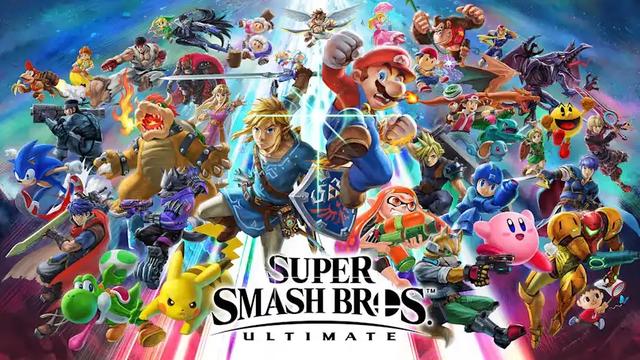
Game Introduction
Super Smash Bros. Ultimate Game Introduction
Genre: Crossover Platform Fighter / Party Brawler
Developer & Publisher: Developed by Bandai Namco Studios and Sora Ltd., with Masahiro Sakurai serving as Director. Published by Nintendo.
Release Timeline: Announced in March 2018 during a Nintendo Direct. Released worldwide on December 7, 2018 for the Nintendo Switch.
Platforms: Exclusive to the Nintendo Switch. Not available on any other system (PC, PlayStation, Xbox, or mobile).
Story Overview: The game includes a dedicated single-player mode called "World of Light". The narrative begins with the appearance of a mysterious entity named Galeem, who unleashes a burst of light that consumes all fighters and transforms them into puppets. Only Kirby escapes by hiding. The player controls Kirby (and later rescues other fighters) as they traverse a sprawling board-game-like map, defeat spirit puppets, collect Spirits, and ultimately confront Galeem and its darker counterpart Dharkon to restore the universe. The story is light-hearted but sets the stage for the central conflict.
Setting: The game features over 100 stages drawn from various Nintendo and third-party franchises (Mario, Zelda, Pokémon, Splatoon, Street Fighter, Final Fantasy, Minecraft, Kingdom Hearts, etc.). Stages range from classic locations like Peach’s Castle and Hyrule Castle to dynamic arenas like the Great Plateau and Midgar. Stages often include interactive hazards and cameo appearances.
Main Characters: Super Smash Bros. Ultimate boasts the largest roster in fighting game history—over 80 playable fighters (including Echo Fighters). The initial roster includes every fighter who ever appeared in any previous Smash game, hence the tagline "Everyone Is Here!" Key characters include:
- Mario, Link, Pikachu, Donkey Kong, Samus, Kirby, Fox
- Inkling (newcomer for Ultimate), Ridley, King K. Rool, Simon Belmont, Richter Belmont, Chrom, Dark Samus, Daisy
- DLC fighters: Joker (Persona 5), Hero (Dragon Quest), Banjo & Kazooie (Banjo-Kazooie), Terry Bogard (Fatal Fury), Byleth (Fire Emblem), Min Min (ARMS), Steve (Minecraft), Sephiroth (Final Fantasy VII), Pyra/Mythra (Xenoblade Chronicles 2), Kazuya (Tekken), and Sora (Kingdom Hearts).
- Many characters have Echo Fighters—slightly modified clones of existing fighters (e.g., Dark Pit, Lucina, Ken).
- Unmatched crossover fantasy: Fighters from dozens of franchises duke it out in absurd, joyful mayhem.
- Simple controls with deep mechanics: Moves use a single button + direction, but advanced tech like directional influence (DI), short hopping, and parrying adds high skill ceiling.
- Flexible rules: Stock, Time, Stamina, Team Battle, Special Smash, and custom item toggles let players tailor every match.
- Content richness: Hundreds of Spirits (collectible power-ups with franchise-themed abilities), a massive soundtrack (over 900 songs), and extensive customization (Mii Fighters, controls, costumes).
- Nintendo fans: The ultimate celebration of Nintendo’s history and character.
- Fighting game enthusiasts: Accessible but competitive systems attract players of all skill levels.
- Casual/party players: Local multiplayer (up to 8 players) and simple controls make it a staple for gatherings.
- Completionists: The game offers hundreds of hours of single-player content and collectibles.
- All ages: Family-friendly visuals with cartoon violence; no blood or overt gore.
- Smash (Versus): Standard fighting with customizable rules—Stock (lives), Time, Stamina, Team Battle, and Special Smash (crazy rule modifiers). Up to 8 players locally.
- World of Light: Single-player adventure mode with a board game map, spirit battles, skill trees, and boss fights.
- Classic Mode: Each fighter has a unique arcade-style run of 5–7 battles with a final boss (e.g., Master Hand, Galleom, Marx).
- Spirit Board: Hunt spirits by completing specific battle challenges.
- Training Mode: Practice combos, movement, and character-specific techniques.
- Online Modes: Quickplay (with GSP ranking), Elite Smash (for high-ranked players), Battle Arenas (custom lobbies with spectators), and Tourney (bracket-style tournaments).
- Other Modes: Mob Smash (fight waves of Mii fighters), Stadium (Home-Run Contest, Target Smash), Stage Builder (create custom stages), Replays and Video Editor, amiibo Training (train CPU fighters).
- Offline: Full single-player and local multiplayer (up to 8 players on one Switch, or via local wireless / LAN). No internet required for any offline mode.
- Online: Requires a Nintendo Switch Online subscription. Features Quickplay (casual or competitive rulesets), Elite Smash (for top players), and Battle Arenas (create private rooms). Online uses peer-to-peer connection with delay-based netcode; performance varies by connection quality.
- Multiplayer Options: Local wireless (up to 8 Switches), LAN Play (with adapter), and split-screen. No cross-platform play.
- Fighters Pass Vol. 1 (released 2019–2020): Includes 5 characters (Joker, Hero, Banjo & Kazooie, Terry, Byleth) plus their stages and music tracks.
- Fighters Pass Vol. 2 (released 2020–2021): Includes 6 characters (Min Min, Steve, Sephiroth, Pyra/Mythra, Kazuya, Sora) plus stages and music.
- Individual DLC characters are also sold separately. Additionally, numerous Mii Fighter Costumes (based on other game characters) and Spirit Boards were released for free or as part of updates.
- All DLC stages come with new music tracks. The final update (Ver. 13.0.1) completed the roster with Sora and ended active development. All DLC fighters are fully integrated into the game's modes (except World of Light progression, though they can be used after unlocking).
- "Everyone Is Here": For the first time in the series, every past fighter returns, creating a nostalgia-fueled roster of over 80 characters. Combined with DLC, the roster is the largest and most diverse in any fighting game.
- Unprecedented crossover: Characters from Nintendo, Sega, Capcom, Square Enix, Bandai Namco, Microsoft, SNK, and Disney (via Sora) interact in one game.
- Spirit System: Instead of a traditional story mode with levels, World of Light and Spirit Board use a unique collectible card system where spirits grant stat boosts and abilities, adding RPG-like depth without altering fighter movesets.
- Flexible Rule Customization: Players can toggle almost every aspect of a match—items, stage hazards, timer, stock count, handicap, and more—making it equally playable as a competitive esport or a chaotic party game.
- Music Library: Over 900 songs from hundreds of franchises, with the ability to create custom playlists for stages.
- Stage Builder: Players can design and share custom stages via online uploads.
- Accessibility: Pro controller support, GameCube controller adapter support, and extensive control remapping. The game also includes a help menu explaining every character's moves.
Core Appeal: Super Smash Bros. Ultimate is designed for both casual fun and competitive depth. Its core appeal includes:
Target Audience:
Game Modes:
Online / Offline Support:
DLC / Expansion Overview:
The game has received extensive post-launch content through two Fighters Passes:
What Makes This Game Unique:
Super Smash Bros. Ultimate is not just a fighting game; it is a love letter to gaming history, a versatile party game, and a deep competitive title, all in one package.