Core Gameplay
Core Gameplay Overview
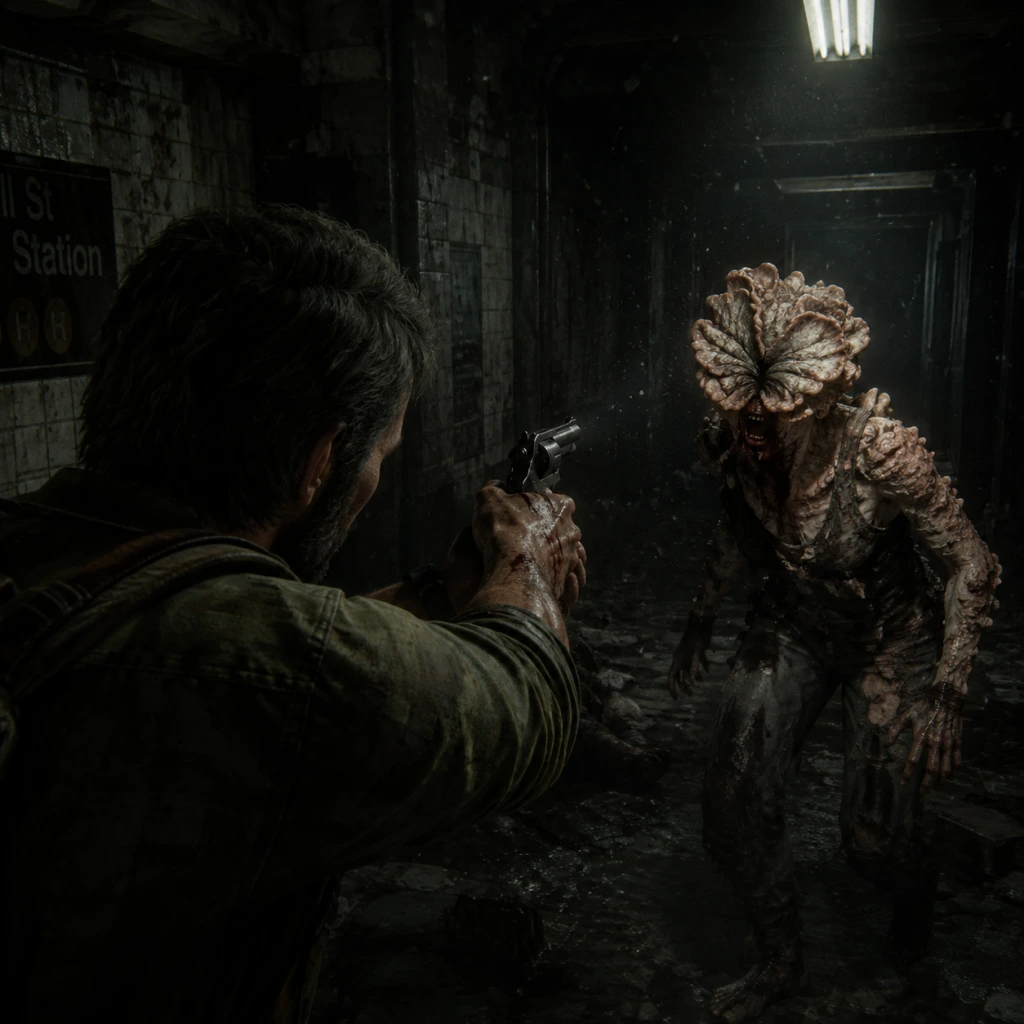
The Last of Us series blends tense stealth, brutal combat, resource management, and deep environmental storytelling. The core gameplay loop involves moving through linear and semi-open areas, scavenging for supplies, engaging enemies (human and infected) through stealth or direct combat, solving simple puzzles (ladders, pallets, workbenches), and advancing a character-driven narrative. Both Part I and Part II share this loop, though Part II adds more complex human enemy AI, prone movement, and larger sandbox-like encounters.
Below is a breakdown of the core systems and how they evolve across the player's journey, organized by typical progression tiers for the series.
---
Early Game (Chapters 1–5 in Part I / First 2–3 Hours of Part II)
Main Gameplay Loop
- Exploration & Scavenging: You start with minimal gear. Explore every corner of buildings, sewers, and streets for crafting materials (alcohol, rags, bindings, blades, sugar), ammo, supplements, and parts. Early areas are relatively linear but reward thorough searching.
- Stealth as Default: With only a few bullets and no silencer, sneaking past enemies or performing silent takedowns (clickers, humans) is essential. Listen Mode (R1) highlights enemy positions through walls.
- Combat: Encounters are small (2–4 enemies). You rely on bricks/bottles to distract, then choke out or shiv. Firearms are reserved for emergencies. The first few infected (runners, clickers) teach you sound-based detection and the importance of staying low.
- Crafting & Resources: Your inventory is very limited. Craft only what you need immediately: a shiv (to open shiv doors later) or a health kit. Molotovs and upgraded melee weapons are rare treats.
- Progression Elements: You find your first suppressor upgrade manual (Part I) and skill booklet. Supplements collected let you unlock the first few skill nodes (e.g., weapon sway reduction, health upgrade). Parts are used to upgrade firearm stats (reload speed, fire rate) at workbenches.
- Listen Mode: Works poorly against clickers (they make noise but don't show on Listen Mode). Use it sparingly because it consumes a small amount of resource (none in Part II, but it's always available).
- Melee Combat: Simple punches and a limited number of weapon swings on a 2x4. Blocking and dodging are basic (Part II adds a dodge mechanic).
- Health System: A few hits kill you. Use health kits (plant+rag+alcohol) only after combat, not during, unless desperate.
- Puzzles: Simple block pushing, ladder placement, and generator puzzles (e.g., the generator in the hotel basement in Part I).
- Increased Enemy Variety: You regularly face mixed groups of infected (runners, clickers, stalkers) and human enemies (hunters, FEDRA, Seraphites, WLF). Human enemies now communicate and flank. Stalkers hide and ambush.
- Resource Scarcity Shifts: You have more ways to craft, but enemies also drop less ammo. You must choose between crafting shivs, grenades, or health kits. Skill upgrades make you slightly more efficient.
- Combat Options Expand: You can now craft silencers for your pistol and revolver (if you found the manual). You also have access to a bow in some sections (Part I) or explosive arrows (Part II). Upgraded weapons (e.g., upgraded shotgun) become powerful tools.
- Stealth vs. Aggression: You can now afford to be more aggressive if you have upgraded weapons and armor (Part II). But the game punishes recklessness—enemies call out your position, and you can be overwhelmed.
- Exploration of Hub Areas: Larger environments like Pittsburgh (Part I) or Downtown Seattle (Part II) have multiple paths, locked doors, and hidden loot. Some doors require shivs or combinations from notes.
- Skill Books & Supplement Upgrades: You have access to several skill trees: Health, Listen Mode Distance, Weapon Sway, Crafting Speed, Stealth Speed, etc. Prioritize health and crafting speed early, then stealth speed.
- Weapon Upgrades: Each firearm can be upgraded with parts: damage, fire rate, reload speed, capacity, and scope (for rifles). Pistol upgrades are cheap and very effective.
- Crafting Recipes: You unlock better recipes through manuals: smoke bombs, proximity bombs, and improved melee weapons (with blades or bindings).
- Human Enemy AI: They use suppressing fire, attempt flanking, and can be baited with sounds. Part II's AI is more advanced—they search intelligently and remember last seen positions.
- High Stakes Combat: Enemies are tougher (bloaters, armored humans, dogs in Part II). Your resources are plentiful if you've been scavenging well, but you still need to choose wisely. The game throws larger arenas and multiple waves at you.
- Full Arsenal Unlocked: You likely have every weapon (flamethrower, military sniper, crossbow, etc.) and most upgrades. You can craft almost anything. Skill trees are nearly maxed.
- Puzzles Become Minimal: The focus is on combat and narrative climax. No more generator puzzles; instead, you navigate through intense firefights and infected hordes.
- Character Abilities: Part II gives you greater mobility (prone, hill climbing, rope swinging). In Part I, you have full stealth speed and listen mode distance.
- Max Upgrades: All weapon upgrades possible by now (if you collected enough parts and manuals). Your skill tree should be almost complete. For example, level 4 listen mode shows enemies for longer and from further away.
- Special Weapons: The flamethrower (Part I) melts infected groups but consumes fuel. The crossbow (Part I) is silent and retrievable. In Part II, the silenced submachine gun is a versatile tool.
- Environmental Mastery: You know where to find ammo stashes, and you can use environmental traps (cars with alarms, explosive barrels) to your advantage.
- New Game+: The looper after completing the story. You retain all upgrades, weapons, and skill points. Enemies remain the same difficulty, but you have maximum power from the start. This is the best time to collect missed artifacts, unlock all achievements, or tackle higher difficulty levels.
- Chapter Select: Both Part I and Part II allow you to replay any chapter with your current loadout. This is useful for collectibles or revisiting favorite encounters.
- Difficulty Tiers: After beating the game, you can start a fresh playthrough on Grounded (Part I) or Grounded+ (Part II) for a true survival experience. No HUD, no Listen Mode, enemies kill in one hit, and resources are extremely scarce.
- Permadeath Mode (Part II): A challenge mode where dying resets you to the checkpoint (easy), the chapter, or the entire game. This demands perfect execution of the core gameplay loop.
- Speedrun & No Damage Runs: The community creates challenges; the game's design supports fast movement and knowledge skips.
- Grounded Mode: Listen Mode is disabled; you rely on actual sound cues (footsteps, breaths, clicking). Crafting is rare. One bullet is precious. This is the true test of the core gameplay principles.
- New Game+ Quirks: You can skip some upgrade decisions, but you cannot respec skill points. All unused supplements and parts carry over.
- Collectibles Completion: Use Chapter Select to mop up all artifacts, trading cards (Part I), coins (Part II), and training manuals. No New Game+ required for collectibles; they persist across saves.
- Start a Grounded+ playthrough from Chapter 1 (Part I) or Jackson (Part II).
- You must survive every encounter: avoid combat when possible, use resources only when necessary, and never fail a shiv door (they break after one use).
- Combine knowledge of enemy placements with perfect stealth. The satisfaction comes from executing a flawless run.
Key Systems at This Stage
Example Encounter: The Capitol Building (Part I)
You and Ellie need to cross a flooded lobby. Use Listen Mode to spot three runners. Sneak up, choke out two, then distract the last one with a bottle and melee. Resources are scarce—save your revolver bullets for the bloater you might encounter later.
---
Mid Game (Chapters 6–9 in Part I / Middle 5–10 Hours of Part II)
Main Gameplay Loop
Key Systems at This Stage
Example Encounter: The Hotel Basement (Part I) - Generator Room
You must start a generator to open a door, but it attracts a bloater and several infected. Plan ahead: place a bomb at the generator, sprint to the door, and use a shotgun to clear immediate threats. Use Listen Mode sparingly—the bloater doesn't show up. This encounter requires careful resource management and quick thinking.
---
Late Game (Chapters 10–12 in Part I / Last 5–8 Hours of Part II)
Main Gameplay Loop
Key Systems at This Stage
Example Encounter: The Hospital (Part I) - Final Firefight
You must fight through dozens of FEDRA soldiers to reach the operating room. Use your upgraded burst rifle and shotgun. Smoke bombs to blind, then flank. Your listen mode helps track the last few enemies. Save health kits for the inevitable damage.
---
Endgame (After Final Chapter - New Game+ and Challenges)
Main Gameplay Loop
Key Systems at This Stage
Example Endgame Goal: Obtain the Platinum Trophy on Grounded+
---
Summary of Core Systems by Tier
| Tier | Stealth | Combat | Resources | Upgrades |
|---|---|---|---|---|
| Early | Mandatory; few tools | Avoid; only if forced | Very scarce | Minimal – first skills and gun upgrades |
| Mid | Effective but optional | Controlled aggression possible | Moderate – need to choose craft uses | Several skills unlocked; weapons upgraded |
| Late | Powerful, but enemies adapt | Full force – multiple weapons | Abundant if scavenged well | Near max skills and weapons |
| Endgame | Mastery required (Grounded) | Precision execution | Extremely scarce on Grounded | Maxed (NG+) |