Game Introduction
Game Introduction
Overview
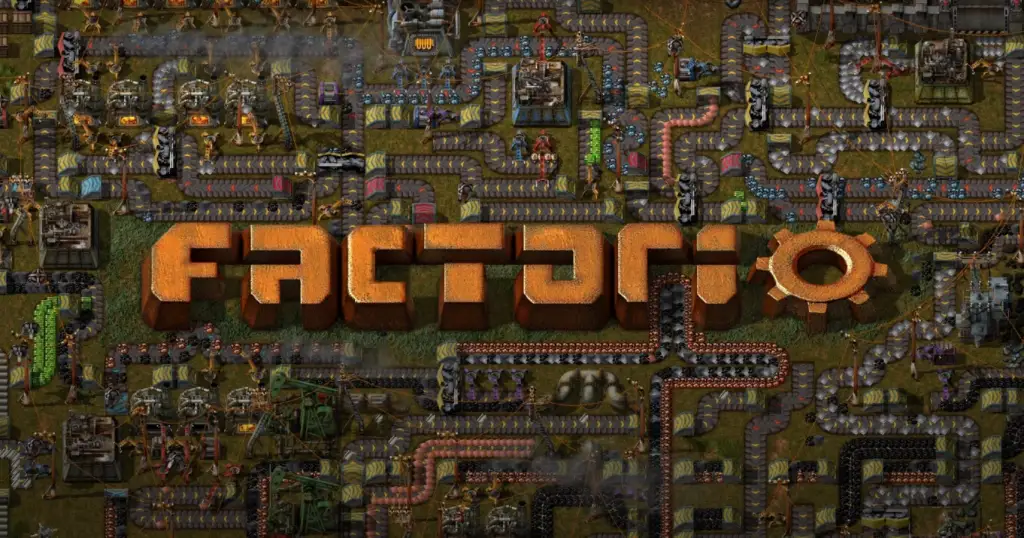
Factorio is a critically acclaimed top-down factory simulation and automation game developed and published by the Czech studio Wube Software. First released in early access on February 25, 2016, the full version 1.0 launched on August 14, 2020, after over four years of community-driven development. The game is available on Windows, macOS, Linux, and Nintendo Switch. It is not available on PlayStation or Xbox consoles. Factorio has sold over 3.5 million copies worldwide and is widely regarded as one of the finest examples of the automation genre.
Genre
- Primary Genre: Factory Simulation / Automation
- Sub-genres: Real-time Strategy, Resource Management, Sandbox, Tower Defense (limited)
- Themes: Engineering, Logistics, Optimization, Systems Thinking
- Developer: Wube Software (an independent studio based in Prague, Czech Republic)
- Publisher: Wube Software (self-published)
- Alpha / Early Access: February 25, 2016 (Steam, GOG, Humble Store, official website)
- Full Release (1.0): August 14, 2020
- Nintendo Switch Launch: October 28, 2021
- Current Version: 1.1.x (stable as of 2025), with continuous minor updates
Developer & Publisher
Release Timeline
Platforms
| Platform | Availability | Notes |
|---|---|---|
| Windows | Yes | Windows 7/8/10/11 (64-bit recommended) |
| macOS | Yes | macOS 10.12+ (Intel & Apple Silicon) |
| Linux | Yes | glibc 2.18+, 64-bit |
| Nintendo Switch | Yes | eShop download; supports touchscreen in handheld mode |
| PlayStation | No | Not planned |
| Xbox | No | Not planned |
| Mobile | No | Not available |
Story Overview
You are an engineer who crash-lands on a remote, alien planet after your spaceship suffers a catastrophic failure. With no hope of immediate rescue, your only way off the planet is to build and launch a rocket capable of carrying you back into space. However, the planet is uninhabited by intelligent life but teeming with aggressive alien creatures called Biters. To achieve your goal, you must construct an ever-growing factory that mines raw resources, refines them into intermediate products, and assembles complex machinery—all while balancing production lines, managing power, and defending your base from Biter attacks.
Setting
- World: An unnamed, procedurally generated planet with diverse biomes—deserts, forests, grasslands, and water bodies. The terrain is rich in iron, copper, coal, stone, uranium, and oil deposits.
- Time Period: Near-future sci-fi, but technology is grounded in realistic engineering principles.
- Atmosphere: Isolated and industrial. The only sounds are the hum of machines, the hiss of steam, the rattle of conveyor belts, and the occasional roar of alien creatures. The game emphasizes a solitary focus on building and optimization.
- Biters: Hostile alien creatures that come in several forms—small biters, spitters, and larger variants (e.g., behemoths). They evolve and become more aggressive as pollution spreads from your factory.
- Aliens (passive): There are no friendly or neutral creatures; all fauna is hostile.
- Seeing your factory grow from a messy spaghetti of belts to a beautifully organized, high-throughput machine.
- Solving logistical puzzles: How to supply 1,000 red circuits per minute? How to balance train networks? How to avoid bottlenecks?
- Continuous learning: The game rewards systematic thinking and teaches principles of throughput, ratios, and supply chains.
- Freedom and creativity: The sandbox nature allows for infinite designs—there is no single "correct" way to build a factory.
- Emergent gameplay: Biters attack when pollution clouds reach their nests, forcing you to balance expansion with defense.
- Engineers, programmers, and systems thinkers who love optimization and efficiency.
- Fans of simulation games like Dyson Sphere Program, Satisfactory, or Mindustry.
- Players who enjoy open-ended, non-linear sandbox games with high replayability.
- Modding enthusiasts (Factorio has a thriving modding community).
- Not suitable for players seeking narrative-driven experiences, fast-paced action, or casual gameplay.
- Offline Single-player: Fully playable without internet connection. No DRM on the standalone version (the Steam version requires Steam Client in offline mode).
- Online Multiplayer: Requires internet for joining servers or hosting headless servers. Player-hosted games can be public or private.
- Cross-platform play: Windows, macOS, and Linux players can play together. The Nintendo Switch version is not cross-platform with PC.
- Mods: Community mods are downloaded via the in-game mod portal (requires internet for first download, but can be used offline once installed).
- Factorio: Space Age (announced in February 2024, expected 2024–2025): A paid expansion that adds space platforms, interplanetary logistics, and new planets with unique resources and challenges. It is intended to extend the game beyond rocket launch into a whole new endgame.
- The base game does not have any paid DLC or microtransactions. All updates are free. The expansion will be a one-time purchase and will require the base game.
- Incredible depth and scalability: Factories can reach sizes where you are managing hundreds of trains, thousands of belts, and tens of thousands of assemblers. The game performs efficiently even with massive bases.
- No hand-holding: The game teaches through its simple interface and tooltips but never forces a specific path. The challenge is self-imposed and emergent.
- Multiplayer optimization: Factorio's multiplayer is famously smooth, with advanced latency hiding and deterministic simulation that allows thousands of players on a single server.
- Community and modding: The most mod-friendly game in its genre. Thousands of mods are available, from quality-of-life tweaks to total conversions like Space Exploration, Bob's/Angel's mods, Industrial Revolution, and Krastorio.
- Blueprints and circuit networks: Players can save and share blueprints of their factory designs, and use advanced circuit conditions to create logic gates, automated train schedules, and even Turing-complete computers within the game.
- Pollution and biter evolution: A dynamic ecosystem where your factory's pollution triggers aggressive alien evolution. This forces you to consider environmental impact or face escalating threats—a unique blend of automation and survival.
Main Characters
Factorio does not feature traditional story-driven characters. The player character is an unnamed engineer who serves as the sole human presence. There are no NPCs, dialogue, or cutscenes. The only other entities are:
Core Appeal
Factorio captivates players by offering an endless loop of planning, building, and optimization. The satisfaction comes from:
Target Audience
Game Modes
Factorio offers several official modes:
1. Freeplay (Default): The main sandbox mode. You crash-land on a procedurally generated map and must build a rocket. All technologies, resources, and enemies are present. You can customize map settings (resource richness, biter aggression, start area size, etc.).
2. Campaign: A series of scripted scenarios that teach core mechanics. There are six levels (tutorials) and three story-based missions (the original campaign was reworked for version 1.0).
3. Sandbox / Creative Mode: No enemies, unlimited resources, and all technologies unlocked from the start. Ideal for testing designs and blueprints without pressure.
4. Scenario Pack: Included with the game, offering predefined challenges like "Tight Spot" (limited space), "Wave Defense" (survive endless biter waves), and more.
5. Multiplayer: Cooperative (default) or PvP via optional mods. Supports up to hundreds of players on dedicated servers.
Online / Offline Support
DLC / Expansions Overview
As of 2025, Factorio has one major expansion announced but not yet released:
What Makes Factorio Unique
Factorio stands apart from other factory games due to several key features:
In summary, Factorio is the definitive factory simulation game—a masterpiece of game design that rewards patience, planning, and creativity. Whether you build a sleek mega-factory or a chaotic spaghetti belt mess, the journey is endlessly satisfying.