Game Tips
Overview
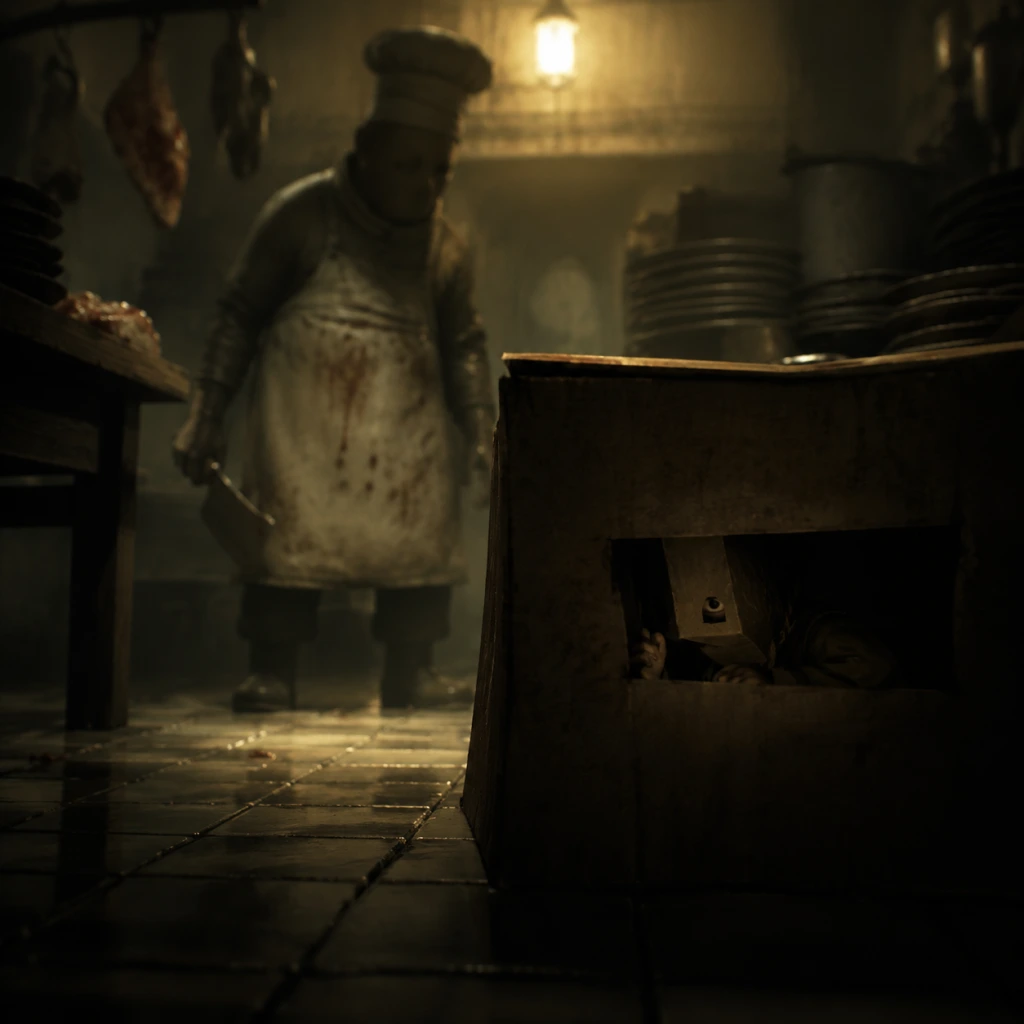
Little Nightmares II is a dark puzzle-platformer horror adventure where survival depends on stealth, observation, and quick reflexes. Unlike traditional games, there are no health bars, weapons (for most of the game), or upgrade systems. Resources are limited to collectibles (hats, glitching remains) and environmental items. This guide provides essential tips for beginners, intermediate players, and advanced optimizers, grouped by core gameplay aspects.
---
General Tips for All Players
Beginner Tips
1. Always observe before moving. Use the camera to look around corners, through gaps, and at the environment. Many threats are stationary until you trigger them. Wait for patrols to pass or for cues (like a door opening) before advancing.
- Listen carefully. Audio cues are critical. Footsteps, machinery, and monster sounds indicate danger. For example, the Hunter’s shotgun blast or the Teacher’s chalk snapping warns you to hide. Use headphones for better spatial awareness.
- Master the run button. Hold the run button (Shift on PC, R2 on consoles) to sprint, but remember that running makes noise and can attract enemies. Sprint only when you have a clear path or need to outrun a chase.
- Interact with everything. Press the interact button on levers, doors, objects. Many puzzles require precise timing. Don’t be afraid to experiment—if an object is movable, it likely serves a purpose.
- Save frequently. The game auto-saves at key points but manually check that a checkpoint icon appears after completing a section. If you die, you respawn at the last checkpoint. Avoid rushing into unknown areas without recent saves.
- Use Six wisely. Six follows you but can be directed to help with puzzles (e.g., pulling levers or standing on switches). When separated, listen for her voice to locate objectives. In chase sequences, stay close to Six to avoid getting caught.
- Hide in unexpected places. Enemies search predictable spots (lockers, under desks). Sometimes staying in plain sight behind a pillar or in shadow works better. Use the environment creatively—climb onto shelves or behind curtains.
- Master the throw mechanic. You can throw objects (like shoes, bottles) to distract enemies. Aim at hard surfaces to create a louder noise. Useful for luring the Teacher away from keys or the Hunter away from your path.
- Speedrun techniques. Certain areas allow sequence breaks. For instance, in the School section, you can jump over the Teacher’s head if timed perfectly during her spin. This saves several seconds but requires precise input on console/PC.
- Minimize deaths. Dying resets puzzle progress. For speedrunning or low-death runs, memorize the exact timings and animations. Use quicksaves on PC (manual save mods) to practice specific sections repeatedly.
- Little Nightmares II has no direct combat. Mono cannot attack enemies until the finale. All encounters are solved via stealth, evasion, or using the environment. Treat every enemy as an invincible threat until you gain the lightsaber-like weapon in Chapter 5.
- Crouch is your default state. Stay crouched (Ctrl on PC, L3 on consoles) when moving near enemies. Walking upright produces louder footsteps.
- Hold breath. When hiding in a locker or under a bed, hold your breath (Shift on PC, R2 on consoles) to reduce detection if an enemy searches nearby. Release when safe to avoid suffocation.
Intermediate Strategies
1. Learn enemy patterns. Each enemy (Hunter, Teacher, Doctor, Thin Man) has a specific behaviour cycle. For example, the Teacher scans the room in arcs; you can slip behind her during her blind spots. Study the timing to know exactly when to move.
Advanced Optimizations
1. Chain movements. In timed sequences (e.g., escaping the Doctor’s hands), plan your route to minimize stops. Learn the exact button sequence to climb, jump, and squeeze without hesitation. Practice speedrun strats like wall jumps to skip minor obstacles.
---
Stealth & Evasion (Combat Substitute)
General Principles
Enemy-Specific Tips
| Enemy | Weakness | Effective Strategy |
|---|---|---|
| Hunter | Slow turning speed, limited range | Use trees and buildings for cover. Throw bait items to lure him away from doors. Sprint only when he is reloading or distracted. |
| Teacher | Predictable patrol path, blind during chalkboard moments | Crouch-walk behind her. She cannot see you if you are below her eye level (e.g., crawling under desks). Throw objects to create noise in opposite direction. |
| Doctor | Slow movement, pauses to talk | Wait for him to stop and monologue. Then sneak past. Do not run on creaky floors—he will hear you from rooms away. |
| Thin Man | Teleports but has a wind-up before attacks | The final boss is a pattern-based chase. Run diagonally to avoid his grabs. Use the environment (TVs) to break line of sight. |
Advanced Evasion
- Use the environment as a weapon. In the Hunter’s shed, you can drop a saw blade on his head to stun him. Similarly, in the School, you can break lightbulbs to create dark spots where the Teacher cannot see you.
- Chain hiding spots. When escaping the Doctor, plan a route that moves from cover to cover (locker to under bed to behind curtain). Do not stay in one spot too long—enemies check areas they haven’t searched recently.
- Look for visual cues. Game designers highlight usable items with a faint glow or unusual colour. A lever may be slightly brighter; a drawer may be slightly ajar. Scan the screen systematically.
- Interact with Six. Six can activate switches, hold doors, or carry objects. If a puzzle requires two actions at once, command Six (press the interact button near her). For example, she can hold a lever while you climb.
- Solve puzzles in stages. Many puzzles have multiple steps. Don’t rush; understand the objective first. For instance, in the Hospital, you need to create a pathway by moving beds and then distracting the Doctor.
- Find all collectibles. Hats (replace your paper bag) and Glitching Remains (six locations) are hidden throughout. Hats are often in optional rooms or behind fake walls. Tap walls to find hollow spots. Glitching Remains appear as floating, flickering figures—approach them to trigger a cutscene.
- Explore every corner. Many secrets are behind doors that can be unlocked by solving nearby puzzles. In the Wilderness, look for loose boards you can pry open. In the City, climb onto rooftops to find hat locations.
- Replay chapters. After completing the game, chapter select allows you to revisit specific areas for missed collectibles. Use this to get achievements or 100% completion.
- Purpose: Cosmetic only. Hats replace your default paper bag. They do not affect gameplay.
- Tips: There are 13 hats in total. They are often found in hard-to-reach places. For example, the “Bat” hat is on a high shelf in the Museum; you need to push a crate to reach it. Use online guides for exact locations.
- Best hats for fun: The “Fox” hat fits the aesthetic; the “Paper Boat” hat is a callback to the first game.
- Purpose: Lore collectibles that reveal backstory. Collecting all six unlocks a new achievement and a bonus secret scene.
- Locations: One per chapter except the final one. They are always in hidden passages. For example, in the School, the Glitching Remain is inside a closet after solving the book puzzle.
- Tip: Listen for a faint static sound when near a Glitching Remain. Use that audio cue to guide you.
- None. There are no consumable items, health packs, or resources. The game relies purely on player skill. Do not worry about managing inventory.
- Levers & Switches: Pull them to activate mechanisms (platforms, doors, lights). Some require holding; others are one-time use.
- Movable Objects: Push crates, chairs, or tables to create stepping stones. Pull them to block enemy paths. In the School, you can push a bookcase to climb to higher floors.
- Breakable Items: Windows can be broken to create escape routes. Glass shatters loudly—use it to distract enemies or alert them. Beware that breaking glass may attract the Teacher.
- Liminal Spaces: Squeeze through narrow gaps (press interact on cracks). These often lead to hidden areas or alternative paths.
- Create distractions. Throw a bottle or shoe at a metal surface to create a loud sound. Enemies will investigate. This gives you a window to sneak past.
- Turn off lights. If a light is on, you are more visible. Some puzzles require you to break bulbs or pull cords to darken a room. In the Doctor’s domain, darkness reduces his detection range.
- Use shadows. Stand in dark patches to remain invisible. Learn the patrol patterns so you know when enemies look your way.
- Bunny hopping? No, the game does not allow bunny hopping. But you can chain jumps: jump immediately after landing from a previous jump to conserve a tiny amount of momentum.
- Wall jumps. Some walls have ledges you can grab. Jump and then press the grab button (E on PC, X on PS) to mantle. Quickly, you can jump off walls to reach higher platforms.
- Sprint-into-pull. When pulling a lever, start sprinting before you press interact, then immediately release to reduce the animation delay.
- Skip the School’s first encounter? Not possible legitimately—you must trigger the teacher. But you can minimize backtracking by planning the order of actions.
- Skip the Hospital elevator puzzle? No, but you can speed up the Doctor’s animation by not looking at him when he monologues. Turn the camera away to avoid triggering longer dialogue.
- Final boss skip? No, but you can damage rush the Thin Man by staying close to TVs and using the weapon immediately after each teleport.
- No currency or upgrades. The game has no economy. Do not look for shops or skill trees. All progress is story-based. The only “economy” is your trust in Six—be aware that her actions sometimes change based on hidden variables.
- Don’t panic during chases. The game often gives you a few frames to react. Stay calm, stick to the intended path, and don’t button mash. Precision is key.
- Learn from death. Each death teaches you the enemy behaviour or puzzle solution. The game is forgiving with checkpoints, so treat failures as learning opportunities.
- Enjoy the atmosphere. Little Nightmares II is a work of art. Take time to appreciate the environments, music, and storytelling. Rushing through reduces the experience.
---
Puzzle Solving & Exploration
Core Principles
Exploration Tips
---
Resource & Collectible Management
Hats
Glitching Remains
Other Collectibles
---
Environmental Mastery
Interaction Elements
Advanced Environmental Tricks
---
Advanced Techniques & Speedrunning
Movement Optimization
Sequence Breaks
Economy (Non-Existent)
---
Final Tips
1. Play with headphones. The sound design is crucial for immersion and detection. Subtle audio cues like the Hunter’s breathing or the Teacher’s footsteps give away positions.
---
For 100% completion, refer to dedicated collectible guides. Use chapter select to replay any missed sections. Good luck, Mono.