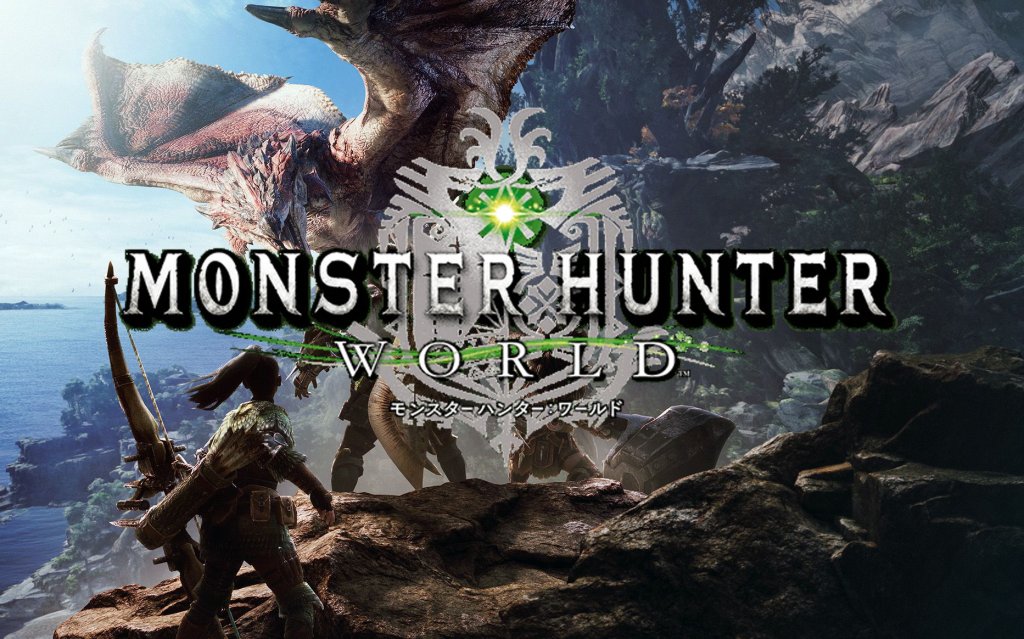
Game Introduction
Game Introduction: Monster Hunter: World
Overview
Monster Hunter: World is an action role-playing game developed and published by Capcom. Released in January 2018 for PlayStation 4 and Xbox One, with a PC (Steam) version following in August 2018, it is the fifth mainline installment in the long-running Monster Hunter series. The game redefined the franchise by introducing a fully connected, seamless open-world design and unprecedented accessibility while retaining the deep, challenging gameplay that fans love. A major expansion, Monster Hunter World: Iceborne, launched in September 2019 on consoles and January 2020 on PC, adding a new region, story, monsters, master rank quests, and mechanics.
Platforms
- PlayStation 4 (PS4)
- Xbox One
- PC (Microsoft Windows via Steam)
- PlayStation 5 and Xbox Series X|S (via backward compatibility with enhanced performance)
- The Hunter (Player Character) – A silent protagonist whose actions drive the narrative. Fully customizable appearance and equipment.
- Handler – The Hunter’s ever-present partner, providing quest information, navigation, and comic relief.
- Commander – Leader of the Fifth Fleet, overseeing operations from Astera.
- Field Team Leader – A seasoned hunter who guides the player through early quests.
- Serious Handler – A no-nonsense member of the Research Commission, especially prominent in the Iceborne story.
- The Admiral – Legendary hunter and head of the Research Commission.
- Trappers, Researchers, and Smithy – Key support NPCs who manage resources, research, and weapon crafting.
- Newcomers – World is the most accessible entry, with a lengthy tutorial, simplified systems, and an open-world that lowers the barrier to entry.
- Veterans – Despite accessibility, the game retains deep mechanics and high difficulty, especially in endgame content and Master Rank (Iceborne).
- Co-op Enthusiasts – The game shines in multiplayer, with easy SOS flares and seamless drop-in/drop-out co-op.
- Loot-Grind Fans – Players who enjoy Diablo or Destiny-style progression loops will appreciate the endless grind for decorations, augmentations, and layered armor.
- Story Quests (Assignments) – Linear narrative progression, often introducing new monsters or areas.
- Optional Quests – Repeatable hunts for materials, farming, and unlocking gear upgrades.
- Investigations – Randomized quests with modified conditions (time limit, number of faints, rewards) offering bonus drops.
- Expeditions – Free-roam mode to explore locales, gather resources, and hunt without a formal quest.
- Arena Quests – Fixed equipment challenges for solo or two-player, focusing on skill rather than gear.
- Event Quests – Time-limited special hunts with unique rewards, often for collaboration cosmetics or extreme challenges.
- Special Assignments (Iceborne) – Story-based quests that unlock new regions, mechanics, and final bosses.
- The Guiding Lands (Iceborne) – Endgame open-world region where players can lure specific monsters, gather unique materials, and fight tempered and elder dragons.
- Offline – The entire story can be played solo with a companion Palico (AI-controlled cat). The game does not require an internet connection except for updates and online multiplayer.
- Online – Up to 4 players can hunt together. The SOS Flare system allows players to summon help mid-quest. Session-based matchmaking lets players gather in hubs before quests. Voice chat and text chat are supported on all platforms.
- Cross-play – Not supported. PS4, Xbox One, and PC players cannot play together.
- Dedicated Servers – Capcom uses peer-to-peer connections for quest sessions, but a server handles matchmaking and sessions.
- Monster Hunter World: Iceborne – The only major paid expansion. It adds:
- Free Title Updates – Capcom released several free updates post-launch and during Iceborne, including:
- Microtransactions – Cosmetic only: gesture packs, sticker sets, hairstyles, and layered armor sets (no pay-to-win).
- A seamless, open-world with no loading screens between zones in a locale.
- Living ecosystems – Monsters interact with each other and the environment; you can use the terrain to your advantage (e.g., triggering a falling boulder, luring a monster into a trap, or using a dam to create a flood).
- True co-op integration – The SOS Flare allows any player to join any quest, eliminating the old complex lobby system.
- High-quality visuals and sound – The game is stunning on all platforms, with detailed monster animations, dynamic weather (e.g., rainstorms, day/night cycles), and a sweeping orchestral score.
- Accessibility without dumbing down – While tutorials and UI improvements welcome newcomers, the core combat remains punishingly difficult, rewarding mastery and preparation.
Story & Setting
Set in the New World—a vast, uncharted continent across the sea—players take on the role of a Hunter sent by the Commission to investigate the mysterious Elder Crossing. This periodic migration of colossal Elder Dragons threatens the ecological balance. The story follows the Hunter as they establish the Fifth Fleet base in Astera, a mobile town built on a ship, and later relocate to the Seliana Supply Cache in the Iceborne expansion. The narrative weaves through discovering the ancient Everstream, battling the fearsome Zorah Magdaros, and eventually confronting the hidden cause behind the Elder Crossing: the colossal Xeno'jiiva. In Iceborne, the plot expands to the frozen Hoarfrost Reach, where a new threat, Velkhana, triggers a dangerous interaction between two legendary Elder Dragons.
Main Characters
Gameplay & Core Appeal
Monster Hunter: World combines third-person action combat with deep RPG mechanics and loot-driven progression. The core loop: hunt massive monsters, carve parts, craft better gear, and hunt even stronger monsters. Combat requires mastery of 14 unique weapon types (e.g., Great Sword, Charge Blade, Bow), each with distinct movesets and strategies. The game emphasizes preparation, environmental interaction, and teamwork. Monsters behave like living ecosystems—they hunt, sleep, eat, fight each other, and can be affected by terrain traps, environmental hazards, and status effects. The Slinger, a versatile tool, allows grappling, launching projectiles, and using environmental ammo. Iceborne added the Clutch Claw, enabling wall slams and tenderizing monster parts.
Target Audience
Game Modes
Online & Offline Support
DLC & Expansions
- A new story chapter set in the Hoarfrost Reach.
- Master Rank (a new difficulty tier above High Rank).
- New monsters (e.g., Banbaro, Barioth, Glavenus, Velkhana, Shara Ishvalda).
- The Clutch Claw mechanic.
- The Guiding Lands – an endgame biome where players control monster spawns.
- New weapon attacks for all 14 types.
- New armor sets, layered armor, and the Rajang / Furious Rajang variants.
- Deviljho, Lunastra, Behemoth (Final Fantasy XIV crossover), Leshen (The Witcher 3 crossover), Safi'jiiva, Alatreon, Fatalis.
- Seasonal festivals (Appreciation Fest, etc.) offering limited-time events and gear.
What Makes Monster Hunter: World Unique
Before World, the series was niche, with segmented zones and less approachable systems. World broke that mold by offering:
Conclusion
Monster Hunter: World stands as Capcom’s best-selling game of all time (over 22 million copies by 2024), and for good reason. It revitalized a beloved franchise, introduced millions to the thrill of the hunt, and set a new standard for action RPG co-op gameplay. Whether you’re a seasoned hunter or a complete beginner, the New World awaits—full of danger, discovery, and the unyielding satisfaction of taking down your first (or hundredth) colossal beast.