Game Introduction
Game Introduction
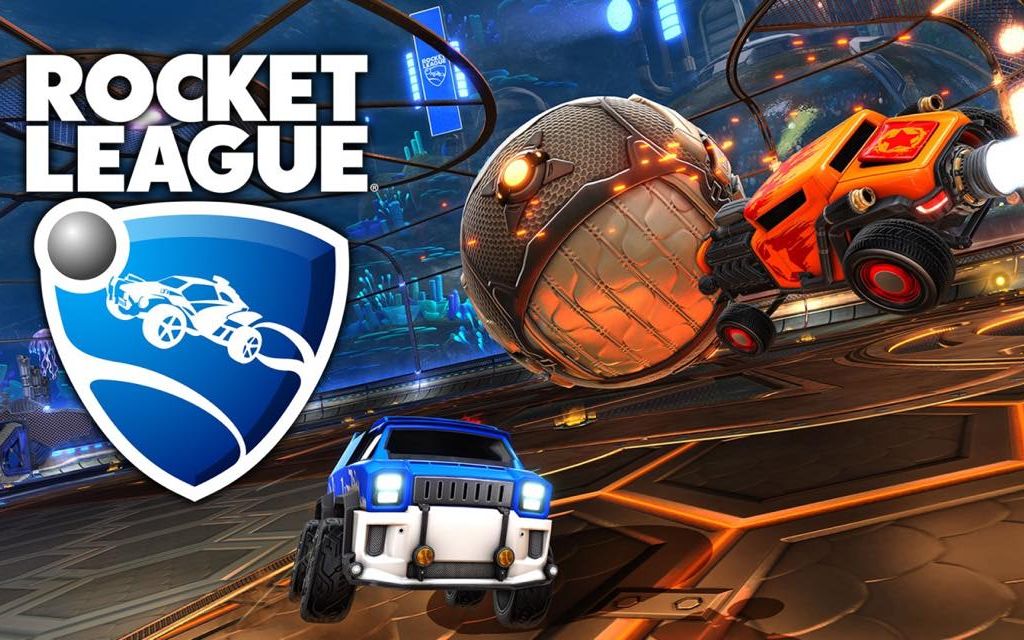
Rocket League is a high-octane hybrid of arcade-style soccer and vehicular mayhem, developed and published by Psyonix. Originally released on July 7, 2015 for PlayStation 4 and Windows, it quickly expanded to Xbox One (February 2016), Nintendo Switch (November 2017), and later to all current-gen platforms (PS5, Xbox Series X|S) with native enhancements. On September 23, 2020, Rocket League transitioned to a free-to-play model, removing the purchase barrier and welcoming millions of new players. It is available on PC, PlayStation 4/5, Xbox One/Series X|S, Nintendo Switch, and Linux/macOS via Steam (though official support ended for macOS/Linux in 2020).
Story & Setting
Rocket League has no traditional narrative or single-player campaign. The "story" is purely emergent: players are rocket-powered cars competing in massive, enclosed arenas. The setting is a fictional sports league where teams of custom vehicles hit a giant ball into the opponent's goal. The only "characters" are the cars themselves, each with unique appearances and customizable parts. There are no named protagonists or antagonists – the focus is entirely on gameplay and competition.
Core Appeal
Rocket League’s core appeal lies in its simple-to-learn, impossible-to-master mechanics. Players control a car that can jump, boost, dodge, and flip to strike a ball. The physics are exaggerated but consistent, enabling spectacular aerial plays, wall bounces, and team coordination. Matches are fast-paced (5 minutes long) with sudden-death overtime. The game rewards creativity, precision, and teamwork while maintaining a low barrier to entry: anyone can drive and hit the ball, but mastering aerials, rotations, and boost management takes hundreds of hours.
Target Audience
Rocket League appeals to a broad audience:
- Casual players who enjoy pick-up-and-play fun with friends.
- Competitive gamers seeking a deep ranked mode with seasons and rewards.
- Esports enthusiasts – the game has a thriving professional scene with major tournaments like the Rocket League Championship Series (RLCS).
- Fans of sports games who want a twist on traditional soccer.
- Solo players can queue in matchmaking, but the game is best enjoyed with friends.
- Soccar (standard 3v3, 2v2, 1v1) – the core mode, scored by goals.
- Extra Modes (rotating): Hoops (basketball), Snow Day (ice hockey with a puck), Rumble (power-ups like grappling hooks and freeze), Dropshot (destructible floor panels), and Heatseeker (homing ball).
- Seasonal Events – limited-time modes like Spike Rush, Gridiron (football), and Chaos (4v4).
- Training – free-play, custom drills, and a workshop for PC.
- Custom Matches – private lobbies with full rule customization.
- Tournaments – in-game tournaments with brackets at various skill levels.
- Split Screen – local multiplayer for up to 4 players on console and PC.
- Offline – Exhibition matches vs AI, season mode (offline league), free play, training, and local split-screen multiplayer require no internet connection.
- Online – Casual, ranked, extra modes, tournaments, and all progression (Rocket Pass, item drops, trading) require internet. The game uses Epic Games account linkage (since 2020) for cross-platform play, friends list, and inventory sync. Cross-platform matchmaking is enabled by default across all platforms, though console players can disable it in settings.
- Rocket Pass – a seasonal progression system with 70+ tiers of cosmetic rewards (wheels, decals, goal explosions, player banners). A premium track costs 1000 credits (approx. $10) and pays back enough credits to purchase the next pass.
- Item Shop – rotating daily/weekly cosmetics, including licensed vehicles from other media (e.g., Fast & Furious, Batman, Back to the Future, Hot Wheels). Prices range from 200–2000 credits.
- Blueprint System – earned after matches; blueprints can be crafted into items for credits or traded up.
- No pay-to-win – all gameplay-affecting mechanics are identical for every account. Visual customization is purely cosmetic.
- Bundles and starter packs are also available on some platforms.
- Esports Shop – team decals and fan rewards supporting RLCS teams.
Game Modes
Rocket League offers a variety of modes, both competitive and casual:
Online & Offline Support
Rocket League is primarily an online experience with dedicated servers. Fully offline play is limited:
DLC, Expansions, and Microtransactions
Since going free-to-play, Rocket League relies on optional monetization:
What Makes Rocket League Unique
Rocket League stands alone in the gaming landscape as a perfect fusion of two simple concepts: cars and soccer. Its physics system allows for infinitely creative plays – players can hit the ball at extreme angles, chain aerial maneuvers, and use the walls and ceiling in ways no other sports game permits. The game’s momentum-based movement and boost management create a deep skill gap while remaining fun for beginners. No other title offers the same blend of fast-paced action, elegant physics, and team-based competition. The rock-solid netcode and cross-platform play mean you can team up with friends on any console or PC seamlessly. Rocket League has also nurtured one of esports’ most accessible and watchable scenes, where matches are decided by split-second decisions and mechanical skill. Over a decade after its initial release, Rocket League remains a benchmark for indie-turned-triple-A success and a constant source of “just one more match” addiction.